Author: admin_spark

  • क्या ईश्वर का अस्तित्व है?

    एक धर्मशास्त्री और एक कवि के बीच हालिया हुई दिशाविहीन बहस पर
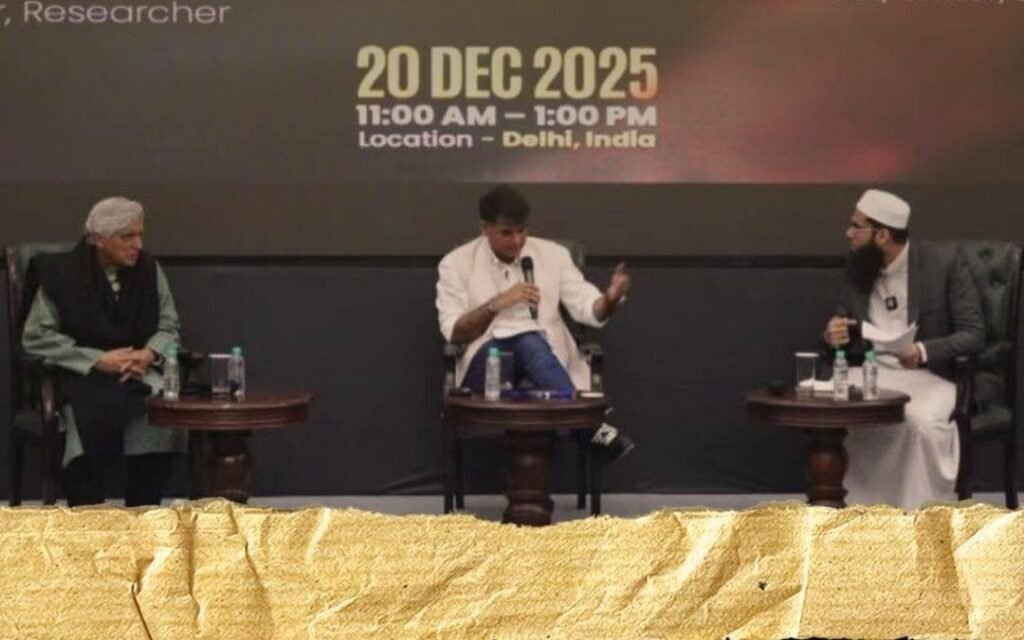
    हिन्दी समाचार आउटलेट ललनटॉप ने हाल में ‘क्या ईश्वर का अस्तित्व है?’ शीर्षक से एक बहस का आयोजन किया। इस बहस में आस्तिकों की ओर से धर्मशास्त्री मुफ़्ती शमाइल नदवी और नास्तिकों की ओर से कवि जावेद अख़्तर आमने-सामने थे। इस बहस की सबसे बड़ी समस्या यह थी कि यह असमानों के बीच की बहस थी। एक तरफ़ धर्मशास्त्र का विशेषज्ञ था, और दूसरी तरफ़ एक कवि, जिसे न तो विज्ञान में और न ही दर्शन के क्षेत्र में कोई विशेषज्ञता है। इस बहस के सन्दर्भ में वे एक साधारण व्यक्ति (layman) ही थे। इतिहास इस बात का साक्षी रहा है कि सुसंगत भाववाद और यांत्रिक भौतिकवाद के संघर्ष में अक्सर भाववाद विजयी रहा है—और इस बहस में भी यही देखने को मिला। हालाँकि, यह भी एक तथ्य है कि मुफ़्ती शमाइल द्वारा दिये गये तर्क सुसंगत भाववाद के नज़रिये से भी साधारण थे—कई स्थानों पर तो ऊबकाई दिलाने तक अपवर्ज्य थे—जिन्हें एक सुसंगत द्वन्द्वात्मक भौतिकवादी विश्वदृष्टिकोण से आसानी से ध्वस्त किया जा सकता था। लेकिन एक लिबरल कवि, जिसका विश्वदृष्टिकोण निगमनात्मक, अनुभववादी, प्रत्ययवादी और यांत्रिक भौतिकवादी है, उससे इसकी अपेक्षा करना ही अनुचित था। परिणामस्वरूप, यह बहस नूराकुश्ती बनकर रह गयी—जहाँ दो “बुद्धिमान” व्यक्ति दोन किहोते सरीखी नाटकीय मुद्राओं में गत्ते की तलवारों से लड़ते प्रतीत हो रहे थे। दुर्भाग्यवश, सोशल मीडिया पर इसे “ईश्वर पर सबसे बड़ी बहस” के रूप में प्रचारित किया गया और यूट्यूब पर इसके वीडियो को लाखों बार देखा गया। जावेद अख़्तर द्वारा दिये गये कमज़ोर तर्कों ने मुफ़्ती शमाइल के अनुयायियों को यह घोषित करने का अवसर दे दिया कि उन्होंने बहस जीत ली है और यह आस्तिकों की नास्तिकों पर निर्णायक विजय है। साइण्टिस्ट्स फ़ॉर सोसाइटी का मानना है कि किसी धर्म में विश्वास करना या न करना पूरी तरह व्यक्तिगत मामला है, और वह धर्म को राज्य और सार्वजनिक जीवन से पूर्णतः अलग रखने की माँग करता है। लेकिन यह बहस अब केवल व्यक्तिगत आस्था तक सीमित नहीं रही; यह वैज्ञानिक और भौतिकवादी विश्वदृष्टिकोण, तर्क और विवेक से जुड़ी एक सार्वजनिक विमर्श बन चुकी है। इसलिए, प्रतिबद्ध वैज्ञानिकों, भौतिकवादियों और तर्कवादियों के रूप में हमारा यह कर्तव्य है कि हम इस बहस में विज्ञान, भौतिकवाद और तर्कणा पर बेतुकी बातों से किये गये हमलों का प्रतिवाद करें। वास्तव में, विज्ञान का पूरा उद्देश्य गतिमान पदार्थ का अध्ययन करना है। इसलिए एक सच्चा वैज्ञानिक अनिवार्य रूप से भौतिकवादी होता है—और यही बात एपिक्यूरस, डेमोक्रिटियस, डार्विन, हाल्डेन, स्टीफन जे. गूल्ड, आइन्स्टीन, सकाता, ताकेतानी और हॉकिंग ने हमें सिखायी है।

    मुफ़्ती शमाइल द्वारा रखी गयी चतुराईपूर्ण ग़लत पूर्वधारणाओं पर

    अपने वक्तव्य की शुरुआत में ही मुफ़्ती शमाइल कुछ ऐसे मापदण्ड या कसौटियाँ तय करते हैं एवं उनके अनुसार इन्हें ही किसी भी तर्क की वैधता परखने के लिए एकमात्र वास्तविक पैमाना माना जाना चाहिए। इसी क्रम में वे इस बहस में तर्कों की विश्वसनीयता जाँचने के लिए विज्ञान और वैज्ञानिक प्रमाणों को वैध कसौटी मानने से इंकार कर देते हैं। मुफ़्ती शमाइल के अनुसार, विज्ञान प्राकृतिक और भौतिक संसार का एक अनुभवसिद्ध अध्ययन है, जबकि ईश्वर पारलौकिक और आध्यात्मिक जगत से सम्बन्धित है। इसलिए ईश्वर के अस्तित्व को सिद्ध या ख़ारिज़ करने की क्षमता विज्ञान और अनुभवसिद्ध अवलोकन के दायरे से बाहर है। इसके बाद, अपने भोले और अनजान प्रतिद्वन्द्वी को आश्वस्त करने के लिए वे यह स्वीकार करते हैं कि वे अपने किसी भी तर्क को प्रमाणित करने के लिए न तो दैवीय अवधारणा का और न ही धार्मिक ग्रन्थों का सहारा लेंगे। अन्ततः वे यह घोषणा करते हैं कि केवल तर्क और विवेक ही किसी भी तर्क की वैधता परखने के एकमात्र मानदण्ड होंगे।

    जावेद अख़्तर ने शुरुआती कुछ ही मिनटों में पूरी बहस गँवा दी, जब उन्होंने मुफ़्ती को इन बेतुके और निरर्थक मानकों के साथ आसानी से बच निकलने दिया। सबसे पहले, मुफ़्ती शमाइल ने अलौकिक और आध्यात्मिक जगत के अस्तित्व को एक निर्विवाद सत्य के रूप में पहले ही मान लिया और इसी आधार पर विज्ञान और अवलोकन को इस जगत के अध्ययन के लिए अपर्याप्त घोषित कर दिया, क्योंकि उनके अनुसार विज्ञान केवल प्राकृतिक और भौतिक संसार का ही अध्ययन कर सकता है। लेकिन क्या इस बहस का मूल उद्देश्य ही यही नहीं था कि इस कथित अलौकिक और आध्यात्मिक यथार्थ के अस्तित्व को सिद्ध किया जाये? दूसरे शब्दों में, मुफ़्ती शमाइल ने उसी चीज़ को पहले से मान लिया, जिसे उन्हें इस बहस के दौरान सिद्ध करना था। उनके तर्क का आधार (premise) और निष्कर्ष (conclusion) एक ही है—कि एक अलौकिक सत्ता/यथार्थ मौजूद है। अतः हमारे सम्मानित मुफ़्ती साहब को अपनी ही पूँछ काटते हुए एक चतुर साँप के रूप में कल्पित करना किसी भी अर्थ में ईशनिन्दा नहीं होगी—जो वृत्ताकार तर्क (circular logic) और पुनरुक्तिपूर्ण भ्रांति (tautological fallacy) के जाल में स्वयं ही फँसा हुआ है। इसी पूर्वधारणा का उपयोग वे बाद में बहस में जावेद अख़्तर के इस तर्क का खण्डन करने के लिए करते हैं कि समय की अवधारणा केवल प्राकृतिक जगत पर लागू होती है; और चूँकि ईश्वर अलौकिक जगत से सम्बन्धित है, इसलिए समय की अवधारणा उस पर लागू नहीं होती—और इसीलिए यह पूछना कि ब्रह्माण्ड बनाने से पहले ईश्वर क्या कर रहा था, एक अप्रासंगिक और अतार्किक प्रश्न है। इसके बाद वे यह भी विस्तार से कहते हैं कि चूँकि ईश्वर वह “अनिवार्य सत्ता” (Necessary Being) है, जिसने स्वयं दिक् और काल की रचना की है, इसलिए वह कभी भी दिक् और काल की सीमाओं में नहीं बँधा हो सकता। इस लेख में आगे चलकर हम “अनिवार्य सत्ता” के इस खोखले तर्क पर विस्तार से चर्चा करेंगे। लेकिन यहाँ पाठकों को यह याद रखना चाहिए कि मुफ़्ती शमाइल ने एक बार भी यह सिद्ध करने का प्रयास नहीं किया कि समय के अस्तित्व में आने से पहले ईश्वर कैसे मौजूद था और उसने दिक् और काल (time and space) की रचना कैसे की। उन्होंने इसे बस एक सार्वभौमिक और परम सत्य की तरह उछाल दिया—मानो इसके लिए किसी भी प्रकार के सत्यापन या प्रमाण की आवश्यकता ही न हो।

    दूसरी ओर, मुफ़्ती शमाइल तर्क और विवेक को विज्ञान तथा भौतिक जगत के विरुद्ध खड़ा कर देते हैं, मानो तर्क और विवेक, भौतिक यथार्थ और वैज्ञानिक पद्धति की परिधि से बाहर अवस्थित हों। वैज्ञानिक पद्धति को नकारने की अपनी जल्दबाज़ी में मुफ़्ती शमाइल “शुद्ध तर्क” और “शुद्ध विवेक” की शरण में चले जाते हैं—अर्थात् ऐसे पूरी तरह अमूर्त तर्क और विवेक कि, जिसका कोई भौतिक आधार नहीं है, जो विचारों और कल्पनाओं के लोक में तमपिशाचों की तरह विचरते हैं और प्राकृतिक संसार की सीमाओं को लाँघकर पारलौकिक जगत में प्रवेश कर सकते हैं। कोई भी स्कूली छात्र बता सकता है कि तर्क और विवेक भौतिक यथार्थ से ही अमूर्तीकृत और सामान्यीकृत होते हैं तथा उसी भौतिक यथार्थ को अधिक वैज्ञानिक और सुस्पष्ट ढंग से समझने के उपकरण के रूप में कार्य करते हैं। लेकिन जब आप एक ओर भौतिक संसार की सीमाओं से परे किसी चीज़ के अस्तित्व को पहले ही मान लेते हैं और दूसरी ओर तर्क व विवेक को वैज्ञानिक पद्धति तथा भौतिक वास्तविकता से अलग कर देते हैं, तब आप तर्क और विवेक का मनमाने ढंग से, अपनी कल्पनाओं के अनुसार उपयोग कर सकते हैं—ताकि अपने पारलौकिक तर्कों का समर्थन किया जा सके और किसी पारलौकिक सत्ता के अस्तित्व को “सिद्ध” किया जा सके। ठीक इसी का इस्तेमाल मुफ़्ती शमाइल शुरुआत से ही करते हैं।

    निस्सन्देह, मुफ़्ती शमाइल यह भली-भाँति जानते थे कि इस प्रकार की बहस में बिग बैंग और उद्विकास जैसी अवधारणाएँ अनिवार्य रूप से सामने आएँगी। इसलिए, उन्होंने पहले से ही एक तरह का पूर्वाक्रमण (प्री-एम्प्टिव स्ट्राइक) करते हुए विज्ञान को ही पूरी तरह ख़ारिज कर दिया और तर्क व विवेक को वैज्ञानिक पद्धति से अलग कर दिया, ताकि इन अवधारणाओं के प्रयोग को प्रारम्भ में ही निष्प्रभावी किया जा सके।

    लेकिन यह तथ्य कि जावेद अख़्तर ने मुफ़्ती शमाइल को इतनी गम्भीर और आत्मघाती पूर्वधारणाओं के साथ सहजता से निकल जाने दिया—जो किसी भी तार्किक बहस की बुनियाद को ही ढहा देती हैं—दरअसल स्वयं उनके वैज्ञानिक पद्धति की कमज़ोर समझदारी को ही उजागर करता है। वास्तव में, जावेद अख़्तर इतने ईमानदार थे कि उन्होंने स्वीकार कर लिया कि वे विज्ञान के सहारे बहस नहीं करेंगे—क्योंकि उसमें वे स्वयं को कमज़ोर मानते हैं—बल्कि सामान्य बोध (कॉमन सेंस) के आधार पर बहस करेंगे। काश, सामान्य बोध (कॉमन सेंस) स्वयं तर्क कर सकता! तब हमें उस बहस के दौरान विवेक और तर्क की जो यातनापूर्ण दुर्दशा देखने को मिली, उसका साक्षी नहीं बनना पड़ता।

    सबसे पहले ही यह स्पष्ट कर देना ज़रूरी है कि लल्लनटॉप पर ईश्वर के अस्तित्व को लेकर जो बहस हमने देखी, वह अपने मूल में भौतिकवाद और भाववाद के बीच चली आ रही पुरानी बहस की एक साधारण-सी पुनरावृत्ति से अधिक कुछ नहीं है। दोनों पक्षों की सारी दलीलें—या कहें कुतर्क—अपने सार में पदार्थ और विचार, अस्तित्व और चेतना के बीच प्राथमिकता के मूल प्रश्न पर आकर सिमट जाती हैं। भौतिकवादी विश्वदृष्टिकोण, अपनी विभिन्न धाराओं के बावजूद, यह मानता है कि पदार्थ प्राथमिक है और विचार पदार्थ से उत्पन्न होते हैं तथा पदार्थ को बदल भी सकते हैं। इसके विपरीत, भाववादी विश्वदृष्टिकोण, अपनी अनेक उपधाराओं के बावजूद, यह मानता है कि विचार ही प्राथमिक है और पदार्थ मात्र विचारों की अभिव्यक्ति है। यही इस पूरी बहस का मूल तत्व है, जिसे जावेद अख़्तर समझने में स्पष्टतः असफल रहे।

    सृजनवाद (क्रियेशनिज़्म), आकस्मिकता का सिद्धान्त, कारणों की अनन्त प्रतिगमन और “अनिवार्य सत्ता” पर

    मुफ़्ती शमाइल का मूल तर्क यह है कि हर वस्तु—चाहे वह प्लास्टिक की गेंद हो, फूल हो या कार—किसी न किसी द्वारा बनायी गयी है। इसी तर्क को आगे बढ़ाते हुए वे इस निष्कर्ष पर पहुँचते हैं कि ब्रह्माण्ड भी किसी ने बनाया होगा। यह हर धर्म के पुरोहितों द्वारा प्रतिपादित सृजनवादी सिद्धान्त का एक पारम्परिक रूप है। हर वस्तु और हर घटना का अस्तित्व किसी कारण या किसी कारण-सूत्र द्वारा निर्धारित होता है। दूसरे शब्दों में, हर चीज़ आकस्मिक या किसी अन्य चीज़ पर निर्भर होती है, जिसके बिना उसका अस्तित्व सम्भव नहीं। इसके बाद मुफ़्ती शमाइल कहते हैं कि हम इन आकस्मिकताओं में अनन्त रूप से पीछे नहीं जा सकते; अर्थात् हम एक कारण से उसके कारण और फिर उसके कारण की ओर अनन्त तक नहीं बढ़ सकते, क्योंकि ऐसा होने पर हमारा अस्तित्व ही सम्भव नहीं होगा। कारण-कार्य की इस लम्बी श्रृंखला में हमें किसी एक बिन्दु पर रुकना होगा, और वही सबका परम कारण होगा—या मुफ़्ती शमाइल के शब्दों में, “अनिवार्य सत्ता” (Necessary Being)। यह “अनिवार्य सत्ता” ही एकमात्र स्वतंत्र सत्ता है, जो किसी अन्य पर निर्भर नहीं है। वही सभी सृष्टियों की सृष्टिकर्ता है, स्वयं दिक्-काल का भी रचयिता—और इसीलिए एकमात्र शाश्वत सत्ता है। “अनिवार्य सत्ता” या अन्तिम सृष्टिकर्ता की यह खोज वस्तुतः भौतिक जगत की सीमा निर्धारित करने और प्रथम कारण को किसी विचार में खोजने का ही एक तरीका है। केवल भाववादी ही नहीं, बल्कि यांत्रिक भौतिकवादी भी अक्सर प्रथम-कारण की इस अवधारणा को स्वीकार करते रहे हैं, जिसका उदाहरण न्यूटन की “प्रथम प्रेरणा” (first impulse) की संकल्पना है। यदि हम इतिहास के पन्ने पलटें, तो पाते हैं कि सुसंगत भौतिकवादी और द्वन्द्वात्मक भौतिकवादी दृष्टिकोण से अनेक वैज्ञानिकों और दार्शनिकों ने इस प्रथम-कारण के दावे का खण्डन किया है। डेमोक्रिटियस और एपिक्यूरस से लेकर दिदरो और मार्क्स तक; ओपारिन, लेवोण्टिन और बर्नाल से लेकर सकाता, युकावा और ताकेतानी तक—सभी ने यह माना है कि गतिमान पदार्थ ही एकमात्र परम श्रेणी है, और पदार्थ के उत्पन्न होने तथा नष्ट होने की प्रक्रिया ही एकमात्र शाश्वत परिघटना है।

    मुफ़्ती शमाइल यह मानकर चलते हैं कि वास्तविक, भौतिक संसार में कारणों का अनन्त प्रतिगमन सम्भव ही नहीं है, और वे यह बताये बिना ही इसे एक स्वयंसिद्ध सत्य की तरह घोषित कर देते हैं कि ऐसा क्यों असम्भव है। वे यह भी स्पष्ट नहीं करते कि शाश्वत गति में पदार्थ का अस्तित्व दार्शनिक रूप से असम्भव क्यों माना जाये। न ही जावेद अख़्तर के पास इतना दार्शनिक और वैज्ञानिक विशेषज्ञता थी कि वे मुफ़्ती शमाइल को इस मूलभूत प्रश्न पर खींच सकें। आज बिग बैंग इतना व्यापक रूप से स्वीकृत वैज्ञानिक सिद्धान्त बन चुका है कि बहुत कम धर्मशास्त्री इसकी प्रामाणिकता को सीधे खारिज कर पाते हैं। इसलिए, बिग बैंग को खुलकर नकारने के बजाय, वे अब इस तथ्य का लाभ उठाते हैं कि बिग बैंग से पहले क्या था, यह अभी अज्ञात है, और इसी आधार पर यह दावा करते हैं कि ईश्वर या “अनिवार्य सत्ता” ने ही बिग बैंग के माध्यम से ब्रह्माण्ड की रचना की।

    इसके विपरीत, सुसंगत और द्वन्द्वात्मक भौतिकवादी यह मानते हैं कि भले ही बिग बैंग के बाद स्वयं दिक्-काल की निर्माति हुई हो, परन्तु इससे पहले जो कुछ भी अस्तित्व में था, वह भौतिक जगत के बाहर नहीं था। यदि बिग बैंग से पहले केवल कोई ‘फील्ड’ ही मौजूद था, तब भी वह भौतिक जगत का ही हिस्सा होगा—जब हम पदार्थ को एक दार्शनिक श्रेणी के रूप में परिभाषित करते हैं, न कि अनिवार्य रूप से केवल एक भौतिक (फिज़िकल) श्रेणी के रूप में। वास्तव में, कैसिमिर प्रभाव—अर्थात क्वाण्टम निर्वात में होने वाले उतार-चढ़ाव—और डार्क एनर्जी तथा डार्क मैटर की उपस्थिति, बिग बैंग मॉडल की अपूर्णता की ओर संकेत करती हैं और इस प्रश्न की ओर भी कि “बिग बैंग से पहले” क्या अस्तित्व में था। विज्ञान को यह कहने में कोई संकोच नहीं है कि इन घटनाओं के बावजूद, जो बिग बैंग से पहले किसी भौतिक अस्तित्व की ओर संकेत करती हैं, हम अभी निश्चित रूप से नहीं जानते कि बिग बैंग से पहले क्या था। लेकिन द्वन्द्वात्मक भौतिकवादी ज्ञान-सिद्धान्त यह प्रतिपादित करता है कि भले ही यह आज अज्ञात हो, भविष्य में इसे निश्चित रूप से जाना जा सकता है।

    ज्ञात और अज्ञात का अन्तर्विरोध

    ज्ञान के विकास के क्षेत्र में ज्ञात और अज्ञात के बीच का अन्तर्विरोध निरन्तर मौजूद रहता है, और यह अन्तर्विरोध स्वयं गतिशील होता है। जो आज अज्ञात है, वह कल ज्ञात हो जाता है; लेकिन तब तक अज्ञात का एक नया क्षितिज सामने आ चुका होता है। ज्ञात का निरन्तर टूटकर अज्ञात और ज्ञात में बदलना, और साथ ही अज्ञात का भी लगातार ज्ञात और अज्ञात में विभाजित होते जाना—इन दोनों के बीच बना रहने वाला अविच्छिन्न अन्तर्विरोध ही ज्ञान की गति है; यही विज्ञान की गति है। ज्ञात और अज्ञात के इस अन्तर्विरोध के माध्यम से न केवल वर्तमान के बारे में हमारा ज्ञान—विस्तारात्मक रूप से भी और गहन रूप से भी—बढ़ता है, बल्कि अतीत के बारे में हमारी समझ और ब्रह्माण्ड के विकास की प्रक्रिया की समझ भी निरन्तर गहरी होती जाती है।

    भाववादी अज्ञात को “अनिवार्य सत्ता”, किसी परम विचार या ईश्वर से प्रतिस्थापित कर देते हैं—जैसा कि इस बहस में मुफ़्ती शमाइल करते हैं। उनके लिए, केवल इसलिए कि आज हम यह निश्चित रूप से नहीं जानते कि बिग बैंग से पहले क्या था, कारणों की अनन्त प्रतिगमन की प्रक्रिया वहीं ढह जाती है, और उसी शून्य को भरने के लिए वे “अनिवार्य सत्ता” की अवधारणा चुपके से ले आते हैं। अज्ञेयवादी अज्ञात को रहस्यमय बना देते हैं और यह दावा करते हैं कि अज्ञात को कभी भी पूरी तरह जाना नहीं जा सकता। भाववादियों और अज्ञेयवादियों के विपरीत, सुसंगत और द्वन्द्वात्मक भौतिकवादी यह मानते हैं कि हर अज्ञात को जाना जा सकता है, लेकिन उसका ज्ञान स्वयं एक नये अज्ञात को जन्म देगा। पदार्थ निरन्तर गति में है। इसका अर्थ है कि हमारा भौतिक संसार लगातार बदल रहा है, और जब तक हम किसी प्रक्रिया के बारे में ज्ञान प्राप्त करते हैं, तब तक वह प्रक्रिया स्वयं बदल चुकी होती है। दूसरे शब्दों में, भौतिक जगत के बारे में हमारी संज्ञानात्मक समझ, स्वयं भौतिक जगत में होने वाले परिवर्तनों से पीछे रह जाती है। इसी कारण सुसंगत और द्वन्द्वात्मक भौतिकवादियों के लिए कोई शाश्वत, अपरिवर्तनीय परम सत्य नहीं होता। किसी भी क्षण का परम सत्य उस क्षण में मौजूद अनन्त सापेक्ष सत्यों का कुल योग होता है। लेकिन ठीक अगले ही क्षण, भौतिक जगत में हुए परिवर्तन के कारण, अनन्त सापेक्ष सत्यों का यह कुल योग बदल जाता है और उसके साथ परम सत्य भी बदल जाता है। इसलिए विज्ञान कभी यह दावा नहीं करता कि किसी एक समय पर उसके पास सभी उत्तर मौजूद हैं। विज्ञान का एकमात्र दावा यह है कि हर चीज़ जानी जा सकती है। इसके विपरीत, धर्म यह दावा करता है कि उसके पास पहले से ही सभी उत्तर हैं—क्योंकि वह कभी सही प्रश्न ही नहीं पूछता।

    द्वन्द्वात्मक भौतिकवादी यह भी मानते हैं कि जब तक हमारे सामाजिक जीवन में अज्ञात का पक्ष प्रमुख बना रहेगा, तब तक किसी न किसी रूप में पारलौकिक और अलौकिक वास्तविकताओं का सहारा लिया जाता रहेगा। दूसरे शब्दों में, जब तक सामाजिक असुरक्षा बनी रहेगी, तब तक किसी न किसी रूप में धर्म भी अस्तित्व में बना रहेगा। आदिम और दास समाजों में लोग प्रकृति-देवताओं की पूजा करते थे, क्योंकि उनका पूरा अस्तित्व प्रकृति की अन्धी शक्तियों की दया पर निर्भर था। इसी तरह पूँजीवादी समाज में, भले ही हमने प्रकृति के गति-नियमों की कहीं बेहतर समझ विकसित कर ली हो और आदिम समाजों की तुलना में प्रकृति की अन्धी शक्तियों को काफी हद तक नियंत्रित करने में सफल भी हुए हों, फिर भी शोषणकारी पूँजीवादी व्यवस्था द्वारा पैदा की गयी अनिश्चितता बनी रहती है। लोगों की यही असुरक्षा और अनिश्चित भविष्य उन्हें किसी ऐसी अलौकिक सत्ता की शरण में धकेल देता है, जो इन अनिश्चितताओं से निपटने में उनकी सहायता कर सके। यह स्थिति तब तक बनी रहेगी, जब तक लोग समाज के गति के नियमों के प्रति सचेत नहीं हो जाते और इस चेतना के आधार पर समाज और अपने जीवन को बदलने में सक्षम नहीं हो जाते।

    ज्ञात और अज्ञात के बीच का अन्तर्विरोध वर्गीय समाजों में केवल भौतिकवाद और भाववाद के बीच संघर्ष के रूप में ही नहीं, बल्कि धर्म और विज्ञान के बीच संघर्ष के रूप में भी प्रकट हुआ है। चाहे यह बात कितनी ही कड़वी क्यों न लगे, लेकिन तथ्य यही है कि धर्म ने अक्सर उन लोगों का उत्पीड़न और दमन किया है जो विज्ञान के पक्ष में खड़े थे, क्योंकि विज्ञान प्रत्यक्ष या अप्रत्यक्ष रूप से प्रचलित दमनकारी सामाजिक सम्बन्धों को तथा ईश्वर और उस शासक वर्ग की सत्ता को चुनौती देता रहा है, जो अपनी वैधता ईश्वर से ग्रहण करता था। इसलिए जब मुफ़्ती शमाइल बहस में यह कहते हैं कि धर्म विज्ञान में बाधा नहीं डालता, तो यह एक सरासर झूठा दावा है। इब्न सीना से लेकर इब्न रुश्द तक और गैलीलियो से लेकर ब्रूनो तक—अनेकों वैज्ञानिक और विचारक इस सच्चाई के जीवित प्रमाण हैं। भारत में क्या चार्वाक, कणाद और आर्यभट्ट के लेखन को योजनाबद्ध ढंग से दबाया और हाशिये पर नहीं डाला गया, ताकि उनके क्रान्तिकारी विचार आम जनता तक न पहुँच सकें? मुफ़्ती शमाइल विज्ञान और “विज्ञानवाद” के बीच एक बनावटी भेद भी करते हैं और कहते हैं कि धर्म विज्ञान में नहीं, बल्कि “विज्ञानवाद” में बाधा डालता है—अर्थात इस विचार में कि ज्ञान प्राप्त करने का एकमात्र वैध तरीक़ा वैज्ञानिक पद्धति है। अब यह निर्णय हम विद्वान पाठकों पर छोड़ते हैं कि यदि वैज्ञानिक पद्धति में बाधा डालना विज्ञान में बाधा डालने के बराबर नहीं है, तो फिर उसे और क्या कहा जाये?

    आकस्मिकता और अनिवार्यता का द्वन्द्व

    इतिहास आकस्मिकता और अनिवार्यता के द्वन्द्व के माध्यम से आगे बढ़ता है। अनिवार्यता से आशय उन व्यापक वस्तुगत परिस्थितियों और गति के नियमों से है, जो इन परिस्थितियों की सीमाएँ निर्धारित करते हैं। आकस्मिकता से आशय उस विशिष्ट और ठोस रूप से है, जिसके माध्यम से अनिवार्यता स्वयं को अभिव्यक्त करती है। अनिवार्यता केवल अनेक संयोगों के माध्यम से ही अस्तित्व में रहती है, और आकस्मिकता स्वयं अनिवार्यता द्वारा ही निर्धारित, सीमित और संरचित होता है। दूसरे शब्दों में, ठोस नियमों द्वारा परिभाषित वस्तुगत परिस्थितियों के एक व्यापक ढाँचे के भीतर, पदार्थ की विभिन्न रूपों में अनेक व्यवस्थाएँ सम्भव होती हैं। ये विभिन्न रूप ऊपर से मनमाने और आकस्मिक प्रतीत हो सकते हैं, लेकिन अन्तिम विश्लेषण में वे उसी व्यापक ढाँचे के वस्तुगत नियमों द्वारा संचालित होते हैं। स्वतंत्रता का अर्थ है अनिवार्यता को उसके सार में समझना—अर्थात् उन गति के नियमों को समझना जो हमारे सामाजिक और प्राकृतिक संसार को संचालित करते हैं—और इसी समझ के आधार पर समाज और प्रकृति को सचेत रूप से बदलना। लेकिन जब तक हम संयोग और अनिवार्यता के बीच के इस अन्तर्विरोध को नहीं समझते, तब तक या तो हम नियतिवाद के जाल में फँस जाते हैं—जैसा कि मुफ़्ती शमाइल के मामले में दिखता है, जहाँ वे हर चीज़ को पूर्वनिर्धारित मानते हैं—या फिर अनियतिवाद और मनोगतवाद के शिकार हो जाते हैं—जैसा कि जावेद अख़्तर के मामले में, जहाँ वे यह कह देते हैं कि प्रजनन की प्रक्रिया भी पूरी तरह यादृच्छिक है और कोई शुक्राणु संयोगवश किसी अण्डाणु से जुड़ जाता है। जावेद अख़्तर यह नहीं समझते कि शुक्राणुओं और अण्डाणुओं का बनना, किसी शुक्राणु का अण्डाणु से जुड़ना और युग्मनज (ज़ायगोट) का विकास—यह सब तभी सम्भव होता है जब पहले से कुछ पूर्वशर्तें पूरी हों, और यह पूरी प्रक्रिया मानव जीवविज्ञान के कुछ ठोस नियमों के माध्यम से ही घटित होती है। यदि ऐसा न होता, तो अण्डाणु और शुक्राणु में मौजूद कुछ विशिष्ट गुणसूत्रों (क्रोमोसोम) के संयोजन से सन्तान का एक निश्चित लिंग कैसे निर्धारित होता है, इसे कभी समझाया ही नहीं जा सकता था, और सन्तान का लिंग पूरी तरह एक आकस्मिक घटना मात्र होता।

    दूसरी ओर, मुफ़्ती शमाइल ब्रह्माण्ड की “पूर्णता” पर मुग्ध दिखाई देते हैं और यह घोषणा करते हैं कि इतनी जटिल व्यवस्था इतनी सुचारु रूप से काम नहीं कर सकती, यदि इसे “अनिवार्य सत्ता” द्वारा रचा और संचालित न किया गया हो। जब कुछ आवश्यक पूर्वशर्तें पूरी हुईं, तो हाइड्रोजन और हीलियम गैसें ठण्डे होकर निहारिकाओं (नेब्युला) के रूप में संघनित हुए, जिनसे आगे चलकर तारे और आकाशगंगाएँ बनीं। अब कौन-से तारे पहले बनेंगे, यह व्यापक ब्रह्माण्डीय नियमों के अन्तर्गत कार्य करने वाली आकस्मिकता का प्रश्न है। ब्रह्माण्ड के विकास के एक निश्चित चरण पर सरल अणुओं से जटिल अकार्बनिक यौगिक उत्पन्न हुए। अब कौन-से जटिल अकार्बनिक यौगिक पहले बनेंगे और उनके विशिष्ट गुण क्या होंगे—यह अकार्बनिक रसायन के नियमों के भीतर घटित होने वाला संयोग का ही परिणाम है। आगे कुछ अन्य परिस्थितियों में, ये जटिल अकार्बनिक यौगिक एक विशेष ढंग से व्यवस्थित होकर कार्बनिक यौगिकों में रुपान्तरित हुए। यह व्यवस्था किन-किन विशेष प्रक्रियाओं से बनी—यह भी कार्बनिक रसायन के व्यापक नियमों के अन्तर्गत प्रकट होने वाली आकस्मिकता ही है। हाइड्रोथर्मल वेण्ट्स में, जहाँ जीवन के लिए आवश्यक परिस्थितियाँ—जैसे गर्म पानी की उपलब्धता, अनुकूल ऊर्जा-प्रवणता और कार्बनिक अणुओं की पर्याप्त सघनता—उपलब्ध थीं, वहाँ पहले एककोशिकीय जीव उत्पन्न हुए। अब इन एककोशिकीय जीवों में कौन-से विशेष गुण होंगे, यह जैव-रसायन के व्यापक नियमों के अन्तर्गत कार्य करने वाली आकस्मिकता का परिणाम था। इसी प्रकार, अफ्रीका के उष्णकटिबन्धीय वर्षावनों में वानरों की विभिन्न प्रजातियों में से केवल एक विशेष प्रजाति का अलग होकर सवाना क्षेत्रों में आना और मानवों के पूर्वज बनना—यह भी व्यापक वस्तुगत अनिवार्य परिस्थितियों की सीमाओं के भीतर घटित हुई आकस्मिकता ही था।

    मुफ़्ती शमाइल आकस्मिकता या स्व-स्फूर्तता की भूमिका को पूरी तरह नकार देते हैं। आकस्मिकता-सिद्धान्त (कॉन्टिंजेंसी थ्योरी) और कारणों की अनन्त प्रतिगमन की असम्भव्यता को सिद्ध करने के लिए, श्रोताओं में से एक अन्य मौलवी ने टिप्पणी की कि जावेद अख़्तर का कवि होना इस बात का प्रमाण है कि उन्हें किसी अन्य कवि ने कविता सिखायी होगी; और उस कवि का भी कोई शिक्षक रहा होगा—और यह सिलसिला पीछे की ओर चलते-चलते अन्ततः ऐसे पहले कवि तक पहुँचेगा, जिसे किसी ने नहीं सिखाया, अर्थात् जिसे “अनिवार्य सत्ता” या ईश्वर ने ही रचा होगा। उस मौलवी के अनुसार, यदि ऐसा न होता, तो जावेद अख़्तर कवि ही नहीं बन सकते थे। यहाँ मुफ़्ती शमाइल और उनके सहयोगी जिस मूल बिन्दु को नज़रअन्दाज़ कर जाते हैं, वह यह है कि कविता इतिहास के एक विशेष मोड़ पर उत्पन्न हुई। पहली कविता शब्दों की एक ऐसी विशिष्ट और गुणात्मक रूप से नयी व्यवस्था रही होगी, जो उससे पहले अस्तित्व में ही नहीं थी। शब्दों की यह नई संरचना स्वयं एक आकस्मिकता का परिणाम थी—हालाँकि यह आकस्मिकता समाज और भाषा के गति के नियमों द्वारा निर्धारित सीमाओं के भीतर ही घटित हुई थी। यही तर्क समाज और प्रकृति में हर नई परिघटना के उद्भव पर समान रूप से लागू होता है। निस्सन्देह, कोई भी द्वन्द्वात्मक भौतिकवादी स्वस्फूर्तता को वस्तुीकृत या सारतत्व में परिवर्तित नहीं कर सकता। लेकिन स्व-स्फूर्तता और आकस्मिकता की भूमिका को पूरी तरह नकार देना भी एक प्रकार की पद्धतिगत संकीर्णता (मेथडोलॉजिकल मायोपिया) ही होगी।

    यहाँ आइन्स्टीन का प्रसिद्ध कथन “ईश्वर पासे नहीं खेलता” भी हमारे कानों में गूँजता है। निस्सन्देह, आइन्स्टीन आस्तिक नहीं थे, लेकिन उनका आशय यह था कि प्रकृति में सब कुछ पूर्वनिर्धारित है। यह नियतिवाद, अनिश्चितता सिद्धान्त को लेकर हुई बहस में कोपेनहेगन स्कूल के मनोगतवाद और अज्ञेयवाद के प्रति आइन्स्टीन की प्रतिक्रिया थी।

    हम इस बहस के विवरण में नहीं जाएँगे, लेकिन इतना अवश्य पुनः रेखांकित करेंगे कि यदि आकस्मिकता और अनिवार्यता के इस द्वन्द्व को ठीक से नहीं समझा गया, तो केवल मुफ़्ती शमाइल और जावेद अख़्तर ही नहीं, बल्कि आइन्स्टीन, बोर और हाइज़ेनबर्ग जैसे महान वैज्ञानिक भी नियतिवाद, मनोगतवाद और अज्ञेयवाद के गड्ढे में गिर सकते हैं और वस्तुगत या व्यक्तिपरक भाववाद के लिए रास्ता खोल सकते हैं।

    नैतिकता की अनैतिहासिकता, ईश्वर और ग़ज़ा पर

    बहस का एक बड़ा हिस्सा इस प्रश्न पर ख़र्च किया गया या कहें कि व्यर्थ किया गया कि – बुराई क्यों अस्तित्व में है और कौन तय करता है कि क्या नैतिक है और क्या अनैतिक। इस प्रश्न पर दोनों पक्षों की मुख्य समस्या यह थी कि ‘अच्छा’, ‘बुरा’, ‘नैतिक’ और ‘अनैतिक’ जैसी श्रेणियों को कुछ पूर्ण, शाश्वत और मानवीय स्वभाव में अन्तर्निहित अमूर्त श्रेणियों की तरह लिया गया। इन श्रेणियों को उनके ऐतिहासिक सन्दर्भ से पूरी तरह काट दिया गया, और यह मूल तथ्य पूरी तरह नज़रअन्दाज़ कर दिया गया कि ये श्रेणियाँ मानव समाज के इतिहास में कुछ विशिष्ट चरणों पर उत्पन्न हुईं और सामाजिक संरचनाओं तथा सामाजिक सम्बन्धों के बदलने के साथ निरन्तर बदलती भी रही हैं। उदाहरण के लिए, आदिम शिकारी–संग्रहकर्ता समाजों में, केवल न्यूनतम जीवन-निर्वाह से अधिक संचय करना और उसे अपने पास रखना अनैतिक माना जाता था और सामाजिक रूप से हतोत्साहित किया जाता था। लेकिन पूँजीवादी समाज में, उत्पादन प्रक्रिया में भाग लिए बिना भी अधिक से अधिक हड़पने की क्षमता को उत्सव की तरह मनाया जाता है। इसी तरह, आदिम समाजों में किसी बच्चे की वंश-परम्परा को उसकी माता के माध्यम से निर्धारित करना एक ‘अच्छी’ और ‘वांछनीय’ बात मानी जाती थी। लेकिन वर्गीय समाजों में इसे ‘बुरा’ और ‘अवांछनीय’ समझा जाने लगा। सामन्ती समाज में, ईश्वर-प्रदत्त राजा और सामान्य जनता के बीच समानता का विचार ‘अनैतिक’ माना जाता था, जबकि पूँजीवादी समाज में शासक और शासित के बीच औपचारिक और क़ानूनी समानता स्थापित हुई और इसे प्रगतिशील बुर्जुआ वर्ग द्वारा एक ‘अच्छी’ और सकारात्मक बात माना गया।

    इसी प्रकार, ईश्वर का भी अपना एक इतिहास है। अतीत में ऐसा समय था जब न तो धर्म था और न ही ईश्वर। जॉर्ज थॉमसन के अनुसार, आदिम समाजों में जादू और टोटेमवाद के भीतर ही धर्म, विज्ञान और कला एक अविभाजित रूप में समाहित थे। इसके बाद बहुईश्वरवादी पैगन धर्मों का उदय हुआ—भूमध्यसागर के आसपास के क्षेत्र में हेलेनिक पैगन धर्म और यूरोप के आन्तरिक भागों में जर्मेनिक पैगन धर्म। ये पैगन धर्म बहुईश्वरवादी थे और प्राकृतिक शक्तियों की पूजा करते थे। यूरोप और भूमध्यसागर के तटीय क्षेत्रों में दास समाज के विघटन और सामन्तवाद के उदय के दौर में पैगन धर्मों की जगह ईसाई धर्म ने ले ली। भारत में, जिसे मोटे तौर पर हिन्दू धर्म कहा जाता है, उसका भ्रूण रूप आरम्भिक वैदिक काल में उभरा, जब भारतीय उपमहाद्वीप शिकारी–संग्रहकर्ता समाज से स्थायी कृषि-आधारित समाज की ओर संक्रमण कर रहा था। उत्तर वैदिक काल में यह कुछ हद तक सुदृढ़ हुआ और बाद के विभिन्न सामाजिक ढाँचों में इसमें गुणात्मक परिवर्तन आते रहे। हालाँकि जावेद अख़्तर ने धर्म की बदलती प्रकृति के विचार की ओर संकेत तो किया, लेकिन अपने यांत्रिक भौतिकवादी दृष्टिकोण के कारण वे इस मूलभूत बात को स्पष्ट रूप से स्थापित नहीं कर पाये कि स्वयं ईश्वर भी एक ऐतिहासिक उत्पाद है और उसका अस्तित्व इतिहास के साथ बदलता रहा है।

    किसी विशेष समाज के नैतिक मूल्य और सद्गुण उस समाज के सामाजिक सम्बन्धों पर निर्भर करते हैं—अर्थात् इस पर कि उत्पादन, वितरण, श्रम का सामाजिक विभाजन और राज्यसत्ता किस प्रकार संगठित हैं। आज की दुनिया की बुराइयाँ पूँजीवादी और साम्राज्यवादी संरचनाओं की ही उपज हैं। जिस समाज में उत्पादन सामाजिक होता है लेकिन अधिग्रहण निजी, जहाँ उत्पादन का उद्देश्य लोगों के लिए एक मानवीय और गरिमापूर्ण जीवन सुनिश्चित करना नहीं बल्कि केवल अधिकतम मुनाफ़ा कमाना होता है—वहाँ शोषण, सामाजिक उत्पीड़न, ग़रीबी, कुपोषण, भूख और युद्ध स्थाई विशेषताएँ बने रहते हैं। इसलिए ग़ज़ा में हर दिन दर्जनों बच्चों की मौत को ईश्वर की “परीक्षा” बताना और यह कहना कि बाद में उन्हें उसका प्रतिफल मिलेगा—जैसा कि मुफ़्ती शमाइल मानते हैं—न केवल अस्वीकार्य है, बल्कि घृणित और अमानवीय भी है। यह कथन इतना विकृत और अमानवीय है कि कोई भी संवेदनशील इंसान इसे स्वीकार नहीं कर सकता। ग़ज़ा में मारे गये हज़ारों बच्चों को केवल इस बात की जाँच का माध्यम मान लेना कि कौन अच्छा है और कौन बुरा, या यह कहना कि सर्वज्ञ ईश्वर इन बच्चों को ऐसे टीके दे रहा है जिनका लाभ हम समझ नहीं सकते लेकिन जिन पर हमें आस्था रखनी चाहिए—ये केवल धर्मशास्त्रीय दावे नहीं हैं, बल्कि अश्लील और विकृत वक्तव्य हैं, जिनका किसी भी तरह की सभ्य बहस में कोई स्थान नहीं होना चाहिए। लेकिन विडम्बना यह है कि ग़ज़ा में बच्चों की मौत के सवाल पर जावेद अख़्तर भी पूरी तरह निःशब्द दिखाई दिये। यह तथ्य कि फ़िलिस्तीन में ज़ायनवादी सेटलर–औपनिवेशिक परियोजना अमेरिका और अन्य उन्नत पूँजीवादी देशों के साम्राज्यवादी हितों की सेवा के लिए रची गयी एक साज़िश है—जिसे समझना जावेद अख़्तर की उदार बुर्जुआ चेतना की समझ से परे है। परिणामस्वरूप, वे केवल इतना ही बुदबुदा पाये कि “ज़्यादातर लोग शान्ति से रहना चाहते हैं और कुछ लोग ग़लत रास्ता अपना रहे हैं।” लेकिन इस प्रश्न का जावेद अख़्तर के पास कोई जवाब नहीं है कि आख़िर इज़रायल क्यों ग़लत रास्ता अपना रहा है?

    जावेद अख़्तर की सीमाओं पर

    जावेद अख़्तर एक लिबरल बुद्धिजीवी हैं, जिनका विश्वदृष्टिकोण निगमनवादी, अनुभववादी, प्रत्ययवादी और यांत्रिक भौतिकवादी है। जैसा कि ऊपर उल्लेख किया गया है, उनके पास न तो दर्शन का ठोस वैचारिक आधार है और न ही वैज्ञानिक पद्धति की गहरी समझदारी है। इसी कारण वे इस “अन्तिम युद्ध” को केवल “सहज बोध” के सहारे लड़ने की कोशिश करते हैं। बहस के दौरान यह बात बार-बार उजागर होती है। उदाहरण के लिए, जब वे पूरी बहस का शायद सबसे बेतुका कथन देते हैं कि “बहुमत तय करता है कि क्या अच्छा है और क्या बुरा”, तो यह उनके अनुभववादी दृष्टिकोण को नंगा कर देता है। यह एक दुर्भाग्यपूर्ण दृश्य था कि जो व्यक्ति स्वयं को भौतिकवाद का प्रतिनिधि बताता है, वह इस प्रश्न पर एक भाववादी द्वारा इतनी आसानी से घेर लिया गया। किसी विशेष क्षण पर बहुमत निश्चित रूप से किसी ग़लत बात या किसी ग़लत व्यक्ति का समर्थन कर सकता है। क्या सही है और क्या ग़लत—यह इस बात से तय नहीं होता कि किसी समय लोग क्या सोचते हैं, बल्कि इससे तय होता है कि आम मेहनतकश जनता के हित में क्या है। विज्ञान, इतिहास और हमारा समग्र विश्वदृष्टिकोण ही वे विश्लेषणात्मक चश्मे हैं, जिनके माध्यम से हम यह तय करते हैं कि लोगों के हित में क्या है और क्या नहीं। अब उस दूसरे सबसे हास्यास्पद तर्क की ओर आते हैं, जिसे उन्होंने अपनी घनी मूर्खताओं की तरकश से निकालकर दर्शक-दीर्घा में बैठे अपने लिबरल समर्थकों पर चला दिया—धर्म और शराब के बीच की तुलना। उनका दावा था कि शराब यदि सीमित मात्रा में पी जाये—यानी रोज़ दो पैग—तो वह सेहत के लिए अच्छी हो सकती है; समस्या यह है कि ज़्यादातर लोग दो पैग पर नहीं रुकते और ज़्यादा पीने लगते हैं, जिससे सारी गड़बड़ियाँ पैदा होती हैं। इसी तरह, जावेद अख़्तर के अनुसार धर्म भी यदि “संयम” में लिया जाये तो ठीक है; समस्या तब पैदा होती है जब लोग धर्म में पूरी तरह “नशे” में डूब जाते हैं और समाज की सारी बुराइयाँ खड़ी कर देते हैं। सबसे पहले तो ऐसा लगता है कि हमारे सम्मानित जावेद अख़्तर स्वयं उदारतावाद के इस मीठे अमृत की अपनी दैनिक ख़ुराक पर क़ाबू नहीं रख पाये। यह वही क्लासिक उदारतावादी तर्क है कि हर चीज़ अगर संयमता में घटित हो तो ठीक है और अति में हो जाये तो समस्या बन जाती है। एक उदारतावादी शोषण को संयमता में चाहता है, ग़रीबी को संयमता में, बच्चों की हत्या को संयमता में, युद्ध को संयमता में, न्याय को संयमता में—और इसी तरह आगे अन्य चीज़ें को भी संयमता से होना चाहिए। इसके अतिरिक्त, पूरी बहस के दौरान जावेद अख़्तर द्वारा यूरोप का एक प्रकार से महिमामण्डन भी देखने को मिला, जिसने फिर से उनकी बुर्जुआ उदारतावादी कल्पना को उजागर कर दिया। जावेद अख़्तर द्वारा बहस में उद्धरित गयी ऐसी अनेक अन्य उदारतावादी और यांत्रिक भौतिकवादी मूर्खताएँ भी हैं, जिनका यहाँ विस्तार से वर्णन करना सम्भव नहीं है।

    इतना कहना ही पर्याप्त होगा कि भौतिकवाद और भाववाद के बीच हज़ारों वर्षों से चली आ रही बहस और संघर्ष के लम्बे इतिहास में शायद ही कभी भौतिकवाद को उतनी शर्मनाक स्थिति का सामना करना पड़ा हो, जितना लल्लनटॉप पर हुई इस बहस में हुआ। मुफ़्ती शमाइल के वे सभी अनुयायी, जो इस बहस के परिणाम को आस्था और आस्तिकता की विज्ञान और नास्तिकता पर निर्णायक जीत के रूप में मना रहे हैं, उन्हें यह याद रखना चाहिए कि यह असमानों के बीच हुई बहस थी। यह एक ओर धर्मशास्त्र में भली-भाँति प्रशिक्षित, सुसंगत वस्तुगत भाववादी और दूसरी ओर एक लिबरल कवि—सह—सहज बोध पर निर्भर यांत्रिक भौतिकवादी के बीच की मुठभेड़ थी, जो अठारहवीं सदी के दिदरो और वोल्तेयर जैसे रैडिकल बुर्जुआ भौतिकवादियों के स्तर तक भी नहीं पहुँच पाया था—उन्नीसवीं सदी के द्वन्द्वात्मक भौतिकवाद की तो बात ही छोड़ ही दीजिए। इतिहास साक्षी है कि ऐसी टक्करों में सुसंगत भाववाद अक्सर यांत्रिक भौतिकवाद पर विजय प्राप्त करता है। इसलिए इसे भाववाद की भौतिकवाद पर जीत कहना ग़लत होगा। यह वास्तव में एक कमज़ोर और अपर्याप्त रूप से तैयार यांत्रिक भौतिकवाद पर सुसंगत भाववाद की जीत भर है—न कि भौतिकवाद पर भाववाद की।

    यहाँ यह बात भी स्पष्ट कर देना ज़रूरी है कि हम नास्तिकता को अपने-आप में और अपने-आप के लिए ऐतिहासिक रूप से प्रगतिशील नहीं मानते। हम यह नहीं मानते कि केवल नास्तिक होना ही किसी व्यक्ति को अनिवार्य रूप से ऐतिहासिक रूप से प्रगतिशील बना देता है। हमारी प्रगतिशीलता की एकमात्र कसौटी सत्य के प्रति हमारी प्रतिबद्धता है और यह कि हम उत्पीड़कों के साथ खड़े हैं या उत्पीड़ितों के साथ। यदि केवल नास्तिक होना ही किसी को प्रगतिशील बना देता, तो सावरकर और जिन्ना भी प्रगतिशील कहलाते! यदि नास्तिकता का अर्थ ही प्रगतिशीलता होता, तो नव नास्तिकतावाद (न्यू एथीज़्म) के ‘चार घुड़सवारों’ में से एक क्रिस्टोफ़र हिचेन्स—जिन्होंने इराक पर अमेरिकी आक्रमण का समर्थन किया—और केरल के तर्कणावादी समूह एसेसन्स ग्लोबल (esSENCE Global), जो इज़रायल का समर्थन करता है, उन्हें भी प्रगतिशील मानना पड़ता!

    लल्लनटॉप से एक अपील

    यह लेख साइण्टिस्ट्स फ़ॉर सोसाइटी द्वारा लल्लनटॉप के मंच पर हाल ही में आयोजित ‘क्या ईश्वर का अस्तित्व है?’ विषयक बहस में एक हस्तक्षेप के रूप में लिखा गया है। साइण्टिस्ट्स फ़ॉर सोसाइटी समाज के प्रति प्रतिबद्ध वैज्ञानिकों, प्रोफ़ेसरों और छात्रों का एक मंच है, जो आम जनता के बीच और आम जनता के लिए विज्ञान तथा वैज्ञानिक दृष्टिकोण की रक्षा और प्रचार के लिए संकल्पबद्ध है। इसी कारण हमें आशा है कि लल्लनटॉप बहस के लोकतांत्रिक सिद्धान्तों का पालन करेगा, हमारे इस हस्तक्षेप को अपने मंचों पर प्रकाशित करेगा और इसे बहस के दोनों प्रतिभागियों तक पहुँचायेगा। हमें यह भी पूरा विश्वास है कि यह लेख विभिन्न अनौपचारिक माध्यमों से मुफ़्ती शमाइल और जावेद अख़्तर तक अवश्य पहुँचेगा। पूर्ण विनम्रता के साथ, हम दोनों को उनके समय और सुविधा के अनुसार किसी भी स्थान पर इस विषय पर एक खुली बहस के लिए आमंत्रित करते हैं। हमें यह भी विश्वास है कि अपने-अपने विचारों में दृढ़ आस्था रखने वाले लोकतांत्रिक सार्वजनिक बुद्धिजीवी होने के नाते, वे इस लेख का उत्तर देने से पीछे नहीं हटेंगे। कम से कम इतना तो हम मुफ़्ती शमाइल और जावेद अख़्तर से अपेक्षा कर ही सकते हैं।

  • CRIMINAL NEGLIGENCE OF THE FASCIST TRIPLE ENGINE GOVERNMENT KILLS 14 PEOPLE DUE TO WATER CONTAMINATION IN INDORE

    Once again the criminal negligence of the fascist government has claimed innocent lives of the common masses, this time in the ‘cleanest city’ of Indore. Indore faces a severe health emergency as contaminated drinking water allegedly caused by sewage leakage triggered a diarrhoea and vomiting outbreak. This has resulted in at least 14 deaths and 200 patients admitted for treatment so far. By mid-December, residents of the Bhagirathpura locality noticed that their tap water looked discoloured and smelt foul. In fact, according to Indore Mayor himself, the locals have been complaining about the polluted water since 2024. According to a study published in the Indian Journal of Occupational and Environmental Medicine, 20 percent of sewage water is dumped untreated directly into the water supplies of Indore, while 80 percent of its sewers are under-utilized or blocked. No effective action was taken by the authorities and officials even after the locals repeatedly complained about poor water quality. Many locals were forced to use the contaminated water due to lack of alternatives, which resulted in the outbreak of waterborne diseases like diarrhoea, affecting thousands of residents. Laboratory reports confirm bacterial contamination which happened due to infrastructure lapses, resulting in sewage mixing with drinking water.

    This incident is another example of how the government pays little-to-no heed to the lives of common people. When cabinet minister Kailash Vijayvargiya was confronted by a journalist about the incident, he dismissed the question as ‘useless’ and used foul language on camera. At a time when people of his assembly constituency were dying and writhing in pain on hospital beds, Kailash Vijayvargiya was busy tweeting birthday wishes to Jyotiraditya Scindia, covering up the number of deaths and dismissing them as “natural deaths”. It must be remembered that after the strong public resentment against the government on the issue — where women of Bhagirathpura went upto the extent of forcing Kailash Vijayvargiya flee from their locality — the authorities have suspended the few low-level officials like Deputy Engineers and Assistant Engineers in order to pacify the anger of the people, while people like Kailash Vijayvargiya escape unscathed.

    Clean water is a basic human right, and the fascist BJP government is depriving the masses of it at both the state and centre levels. This can be seen by the hazardous amount of uranium and other heavy metals found in Delhi’s groundwater. Talking about Madhya Pradesh in particular, according to a CAG report on water management in Bhopal and Indore published in 2019 — between 2013 and 2018, 4,481 water samples failed to meet drinking water standards. Only 56 percent of families in the two cities were given tap connections. As a result, around 3.62 lakh families in Bhopal and 5.33 lakh families in Indore were deprived of access to safe drinking water. Over the same period, nearly 5.45 lakh cases of waterborne illnesses were officially recorded.

    If we investigate the roots of such problems, we will find that the criminal negligence of the fascist government and the profit-centric capitalist system are responsible for such systematic catastrophes whose effects are borne mainly by the poor and the toiling masses. On hand the BJP, along with its puppet media, doesn’t stop beating the trumpet of “Four Trillion Economy”, “Vikshit Bharat” and “Vishwaguru”. While, on the other hand, it cannot even provide basic necessities like clean air and water to its citizens. Its nothing short of an awful irony that 14 children died due to water pollution in a city which has been declared the “cleanest city of India” for eight consecutive years. It must also be remembered that BJP has won the Indore Lok Sabha seat for ten consecutive times since 1989. BJP has also ruled over the state continuously since 2003, barring only a 15 months period between 2018 and 2020 when Congress came to power. BJP, along with the entire machinery of Sangh Parivar, has utilized this period not to provide basic sanitation and health care services to the people of the state, but to convert the state into a laboratory of fascist politics. Footsoldiers of RSS organised in Bajrang Dal, Vishwa Hindu Parishad and other lumpen organizations run amock, communalising the state — from lynching Muslims, racking up the issue “love jihad”, demolishing their homes and expelling them from market places to attacking the Christians for celebrating Christmas and on bogus “religious conversion” allegations.

    The fascists in power use communal politics to divert the attention of the masses from their real issues. Madhya Pradesh features at the bottom quarter of almost every human development indicator. It is worth noting that Madhya Pradesh has the worst Infant Mortality Ratio (IMR) and the highest Mother Mortality Ratio (MMR) in the whole country. Official data acknowledges that Madhya Pradesh has over one million malnourished children, of whom nearly 1.36 lakh are classified as severely wasted. This places the state well above the national average: while severe and moderate malnutrition among children under five stood at 5.40% nationwide in April 2025, Madhya Pradesh recorded an alarming 7.79%. Anaemia further deepens this crisis. With 57% of women in the state suffering from anaemia, the health of future generations is compromised even before birth. Data from the Union government’s Nutrition Tracker App reveals that in May 2025, 45 of Madhya Pradesh’s 55 districts fell into the “red zone,” indicating that over 20% of children were underweight for their age. In October 2025, at least 24 children under the age of five died in Chhindwara and adjoining areas of the state due to the consumption of a contaminated cough syrup. The mismanagement in government hospitals in MP is evident from the fact that in September 2025, two newborn babies died after being bitten by rats in the government medical college in Indore, following which similar incidents of eat bites were reported from many hospitals across the state. In May 2025, six children suffering with Thalassemia were tested HIV positive due to infected blood transfusion. The apathy of the fascist regime towards public health of the citizens is not limited to Madhya Pradesh alone, but is a countrywide phenomena. Who can forget the charred bodies of seven babies burnt alive in the neo-natal ward of a private hospital in Delhi in May 2024!

    Scientists for Society believes access to clean water and public healthcare are basic human rights and condemns the Madhya Pradesh government whose negligence has claimed many innocent lives. We demand an immediate and impartial inquiry on the matter and strict action against those responsible, including cabinet minister Kailash Vijayvargiya. SFS also appeals to the people of Madhya Pradesh and the country to see through the communal fascist politics of RSS-BJP and unite on the real issues like education, employment, public health, sanitation, clean air and water.

  • 𝐃𝐨𝐞𝐬 𝐆𝐨𝐝 𝐄𝐱𝐢𝐬𝐭?

    𝑶𝒏 𝒕𝒉𝒆 𝑹𝒆𝒄𝒆𝒏𝒕 𝑴𝒊𝒔𝒑𝒍𝒂𝒄𝒆𝒅 𝑫𝒆𝒃𝒂𝒕𝒆 𝑩𝒆𝒕𝒘𝒆𝒆𝒏 𝒂 𝑻𝒉𝒆𝒐𝒍𝒐𝒈𝒊𝒂𝒏 𝒂𝒏𝒅 𝒂 𝑷𝒐𝒆𝒕

    The Hindi news outlet ‘Lallantop’ recently organized a debate with the title ‘Does God Exist?’ Mufti Shamail Nadwi — a theologian representing the theists — faced off against Javed Akhtar — a poet representing the atheists. The only problem with this debate was that it was a debate between the unequals. On one hand was an expert in the field of theology. On the other hand, was a poet who has no expertise in science or philosophy, and therefore, as far as this debate is concerned, is a layman. History has shown that in the struggle between consistent idealism and mechanical materialism, the former has mostly emerged victorious, as was seen in this debate. Well, as a matter of fact, the arguments made by Mufti Shamail were also ordinary from a consistent idealist standpoint — even obnoxious to the extent of nauseating at many places — which could have easily been demolished from a consistent dialectical materialist perspective. But, to expect it from a liberal poet with a deductive, empiricist, positivist and mechanical materialist worldview is too much to ask! As a result, the debate was nothing but a sham toothless fight — two “wise” men going at each other with paper mache swords and a lot of Quixotic posturing. Unfortunately, the debate was hyped in the social media as the “biggest debate on God” and its videos on YouTube saw millions of views. The weak arguments made by Javed Akhtar bolstered the followers of Mufti Shamail to declare him the winner in the debate and to claim that it is a definitive victory of the theists over the atheists. Well, ‘Scientists for Society’ holds that to believe in a religion or not is purely a personal matter, and calls for a strict separation of religion from the State and public sphere. However, this debate is now not merely confined to the personal choice or opinion of an individual, but has become a matter of public discourse on scientific and materialist worldview, on logic and rationalism. Therefore, as committed scientists, materialists and rationalists, we believe it is our bounden duty to defend science, materialism and rationalism from the gibberish thrown at it in this debate. In fact, the whole purpose of science is to study matter in motion. Therefore, a genuine scientist must also be a materialist and this is what Epicurus, Democritus, Darwin, Haldane, Stephen J Gould, Einstein, Sakata, Taketani and Hawking have taught us.

    𝐎𝐧 𝐭𝐡𝐞 𝐒𝐡𝐫𝐞𝐰𝐝 𝐏𝐫𝐞𝐬𝐮𝐦𝐩𝐭𝐢𝐨𝐧𝐬 𝐨𝐟 𝐌𝐮𝐟𝐭𝐢 𝐒𝐡𝐚𝐦𝐚𝐢𝐥

    In the very beginning of his speech, Mufti Shamail delineates a set of standards or yardsticks which, according to him, can be the only genuine parameters to judge the validity of any argument. As part of this, Mufti Shamail rejects science and scientific evidence as valid yardstick to judge the credibility of the arguments in this debate. Science, according to Mufti Shamail, is an empirical study of the natural and physical world, and as God belongs to the supernatural and the metaphysical realm, it is beyond the purview of science and empirical observation to prove or disprove its existence. Then, to placate his innocent unsuspecting opponent he concedes that he is not going to use revelation and religious scriptures to validate any argument either. Finally, he declares that only reason and logic can be the sole parameters to judge the validity of any argument.

    Javed Akhtar lost the entire debate in these first few minutes when he let Mufti get away with these absurd and nonsensical standards. First of all, Mufti Shamail assumed beforehand the existence of a supernatural and metaphysical realm as an unquestionable truth and thereby rejected science and observation as insufficient tools to study this realm, because science can only study the natural and the physical world. But, wasn’t the whole point of this debate to prove the very existence of this supernatural and metaphysical reality? In other words, Mufti Shamail began by presupposing the very thing that he had to prove in the course of this debate. The premise and the conclusion of Mufti’s arguments are the same – that a supernatural being/reality exists. Therefore, it won’t be a blasphemy to imagine our esteemed Mufti as a sly snake biting his own tail, entrapped in a circular logic and a tautological fallacy. He uses this presupposition, later in the debate, to counter Javed Akhtar’s claim that the concept of time applies only to the natural world, and because God belongs to the supernatural world, the concept of time doesn’t apply to him, and hence what God did before making the universe is an irrelevant and illogical question. He then goes on to elaborate this by saying that as God is the “Necessary Being” who created time and space itself, he can never be within boundaries of time and space. We will come to the bogus argument of “Necessary Being” later in the essay. But here the readers must remember that Mufti Shamail doesn’t, even once, try to prove how God existed before time and he created time and space. He just blurted it like a universal and absolute truth that requires no verification.

    Secondly, Mufti Shamail juxtaposes logic and reason against science and the material world, making it seem like logic and reason stand outside the physical reality and outside the scientific method. Mufti Shamail, in his eagerness to reject the scientific method, creeps into the embrace of “Pure Logic” and “Pure Reason”, i.e. completely abstract logic and reason that has no material grounding — floating in the realm of ideas and fantasies like dementors, capable of transcending the natural world into the supernatural sphere. Any school student can tell that logic and reason are abstracted and generalized from the material reality and act as tools to understand this material reality in a more scientific and definitive manner. But, once you have assumed something beyond the boundaries of the physical world as a given and, at the same time, divorced logic and reason from scientific method and material reality, you can then use logic and reason whimsically, according to your own fantasies to support your other-worldly arguments and prove the existence of a supernatural being. This is precisely what Mufti Shamail does from the very beginning itself.

    Undoubtedly, Mufti Shamail knew very well that in a debate like this, concepts like Big Bang and Evolution would invariably find their ways into the debate. Therefore, in a pre-emptive strike, he nullified the usage of these concepts by rejecting science altogether and severing logic and reason from the scientific method. But, the fact that Javed Akhtar let Mufti Shamail slip away with such erroneous presuppositions that shatter the very foundations of a logical debate only demonstrates his own feeble grasp over the scientific method. In fact, Javed Akhtar was honest enough to acknowledge that he was not going to debate with the help of science — which he is self-admittedly weak at, but with “common sense”! Alas, if only “common sense” could argue, we would not have to witness the torturous travesty of reason that we saw during the debate!

    Let us make it clear at the very outset that the debate on the existence of God that we saw on Lallantop is, in its essence, nothing more than a mediocre reiteration of the old debate between materialism and idealism. All the arguments, or rather sophistries, from both sides, in their crux, boil down to the primary question of primacy of matter or idea, of being or consciousness. The materialist worldview, notwithstanding its different strands, believes that matter is primary and ideas are derived from matter, and can change matter in return. The idealist worldview, in spite of its many subsections, believe that idea is primary and matter is just a manifestation of ideas. This is the kernel of the whole debate, which Javed Akhtar seemingly failed to understand.

    𝐎𝐧 𝐂𝐫𝐞𝐚𝐭𝐢𝐨𝐧𝐢𝐬𝐦, 𝐂𝐨𝐧𝐭𝐢𝐧𝐠𝐞𝐧𝐜𝐲 𝐓𝐡𝐞𝐨𝐫𝐲, 𝐈𝐧𝐟𝐢𝐧𝐢𝐭𝐞 𝐑𝐞𝐠𝐫𝐞𝐬𝐬 𝐨𝐟 𝐂𝐚𝐮𝐬𝐞𝐬 𝐚𝐧𝐝 𝐭𝐡𝐞 “𝐍𝐞𝐜𝐞𝐬𝐬𝐚𝐫𝐲 𝐁𝐞𝐢𝐧𝐠”

    The core argument of Mufti Shamail is that everything — from a plastic ball, to flowers and a car — is created by someone. So, by extrapolating this argument, he reaches the conclusion that the universe must also have been created by someone. This a classic Creationist theory propounded by the high priests of every religion. The existence of everything and every phenomenon is determined by a cause or a reason. In other words, everything is contingent or dependent on some other thing, without which it cannot come into existence. Then, Mufti Shamail says that we cannot infinitely go back in the contingencies, i.e. we cannot keep going back from one cause to its cause and then to its cause ad infinitum, because in that case we won’t exist. We have to stop at one point in this long chain of causality and that will be the absolute cause of everything, or in the words of Mufti Shamail, the “Necessary Being”. This “Necessary Being” is the only independent entity, not dependent on anything else. It is the creator of all creations, the creators of space and time itself — and hence the only eternal entity. This quest to find the “Necessary Being” or the ultimate creator is nothing but a way to limit the extent of the material world and find the first-cause in some idea. Not only idealists but also mechanical materialists often adhere to this concept of first-cause, as exemplified by the Newtonian concept of “first impulse”. If we flip through the pages of history, we find that many scientists and philosophers, from a consistent materialist and dialectical materialist standpoint, have refuted this claim of first-cause. From Democritus and Epicurus to Diderot and Marx, from Oparin, Lewontin and Bernal to Sakata, Yukawa and Taketani — all have held that matter in motion is the only absolute category, that the process of matter coming into being and passing away is the only eternal phenomenon.

    Mufti Shamail axiomatically declares that infinite regress of causes is not possible in the real, physical world, without caring to explain why it is not possible. He doesn’t explain why matter in eternal motion is ontologically impossible. Neither does Javed Akhtar have the philosophical and scientific rigour to drag Mufti onto this fundamental question. Today, the Big Bang has become such a widely accepted scientific theory that not many theologians can reject its veracity. Therefore, instead of explicitly rejecting the Big Bang, they now exploit the fact that what existed before the Big Bang is still unknown to claim that God or the “Necessary Being” created the universe through the Big Bang. On the other hand, consistent and dialectical materialists assert that even if space-time itself was created after the Big Bang, whatever existed prior to it was not outside the material world. Even if only a field existed before the Big Bang, it still is part of the material world — when we define matter as a philosophical category and not necessarily as a physical category. In fact, the Casimir effect, i.e. fluctuations in the quantum vacuum and the presence of Dark Energy and Dark Matter do point towards the incompleteness of the Big Bang model and towards what existed “Before the Big Bang”. Science has no qualms in saying that in spite of these phenomena hinting at a material existence before the Big Bang, we don’t yet definitively know what existed before the Big Bang. However, the dialectical materialist theory of knowledge avows that even if it is unknown today, it can certainly be known in the future.

    𝐓𝐡𝐞 𝐂𝐨𝐧𝐭𝐫𝐚𝐝𝐢𝐜𝐭𝐢𝐨𝐧 𝐛𝐞𝐭𝐰𝐞𝐞𝐧 𝐭𝐡𝐞 𝐊𝐧𝐨𝐰𝐧 𝐚𝐧𝐝 𝐭𝐡𝐞 𝐔𝐧𝐤𝐧𝐨𝐰𝐧

    In the sphere of the development of knowledge, the contradiction between the known and the unknown is continuously present, and this contradiction is itself dynamic. What is unknown today becomes known tomorrow; yet by that time a new horizon of the unknown has already been revealed. The constant breaking of the known into the unknown and the known, and simultaneously the continual breaking of the unknown into the known and the unknown, together with the uninterrupted contradiction between them—this is the movement of knowledge; this is the movement of science. Through this contradiction between the known and the unknown, not only does our knowledge of the present expand — both extensively as well as intensively — but so does our understanding of the past and how the universe developed.

    Idealists replace the unknown with a “Necessary Being”, with an Absolute Idea or with a God — as Mufti Shamail does in the debate. For him, just because today we do not definitively know what existed before the Big Bang, the infinite regress of causes collapses at that point, and he then smuggles in the idea of the “Necessary Being” to fill that unknown. Agnostics mystify the unknown and claim that the unknown can never be fully known. As opposed to the Idealists and the Agnostics, consistent and dialectical materialists claim that every unknown can be known, but that in turn will produce a new unknown. Matter is perpetually in motion. That means our material world is perpetually changing, and by the time we gain knowledge about a process, that process itself is changed. In other words, our cognition of the material world lags behind the changes in the material objective world itself. Therefore, for consistent and dialectical materialists, there is no eternal Absolute Truth. Absolute Truth at any given moment is the sum total of infinite relative truths at that moment. But, at the very next moment, the Absolute Truth changes as the sum total of infinite relative truths changes due to change in the material world itself. Therefore, science never claims to have all the answers at a given moment. The only assertion made by science is that everything is knowable. Religion, on the other hand, claims to possess all the answers because it never asks the correct questions.

    Dialectical Materialists also assert that as long as the aspect of the unknown remains the dominant aspect in our social lives, recourse in some or the other form of metaphysical and supernatural reality will remain. In other words, till the time social insecurity and economic uncertainty persist, religion in some form or the other will continue to exist. In the primitive and slave societies people prayed to the Nature-Gods because their whole existence was at the mercy of blind forces of nature. Similarly, in capitalist society, although we have a better understanding of the natural laws of motion and have been able to tame the blind forces of nature much more than primitive societies, the uncertainty produced by the exploitative capitalist system persists. This vulnerability and insecure destinies of people push them into the embrace of some kind of supernatural entity or mysticism which can help them navigate through these uncertainties. This will continue till the time people are conscious of the laws of motion of society and can change the society and their lives with this consciousness.

    The contradiction between the known and the unknown has manifested itself in class societies not only as a struggle between Materialism and Idealism, but also as a struggle between Religion and Science. No matter how bitter a pill it might be to swallow, the fact remains that religion has often persecuted and repressed those who stood by the side of science because science often challenged, directly or indirectly, the existing oppressive social relations and the authorities of the God and the ruling class who drew their legitimacy from God or some divine power. So, when Mufti Shamail says in the debate that religion doesn’t hinder science — it is a blatantly false statement. Scientists from Ibn Sina to Ibn Rushd and from Galileo to Bruno hold testimony to this fact. In India, weren’t the writings of Charavak, Kanad and Aryabhatta systematically suppressed and sidelined so as to prevent their radical ideas from reaching the masses. Mufti Shamail also makes a bogus distinction between Science and “Scientism” and says that religion doesn’t hinder science but “Scientism”, i.e. the idea that scientific method is the only valid way to gain knowledge. We leave it up to the learned readers to decide if obstructing the scientific method isn’t equivalent to obstructing science, then what is?

    1. 𝐓𝐡𝐞 𝐃𝐢𝐚𝐥𝐞𝐜𝐭𝐢𝐜𝐬 𝐨𝐟 𝐂𝐡𝐚𝐧𝐜𝐞 𝐚𝐧𝐝 𝐍𝐞𝐜𝐞𝐬𝐬𝐢𝐭𝐲

    History moves through the dialectics of chance and necessity. Necessity refers to broad objective conditions and the laws of motion defining the limits of these conditions. Chance refers to a particular and concrete form through which necessity manifests itself. Necessity exists only through a multiplicity of chances, and chance is conditioned, limited and structured by necessity. In other words, within a broad framework of objective conditions defined by concrete laws, various arrangements of matter in different forms are possible. These different forms might seem arbitrary and accidental, but in the last instance are governed by the objective laws of the broader framework. Freedom means understanding the necessity in its essence, understanding the laws of motions that govern our social and natural worlds and changing the society and the nature in a conscious way. But, unless we grasp the contradiction between chance and necessity we are bound to fall into the trap of either determinism — as seen in the case of Mufti Shamail where he believes everything is predetermined, or indeterminism and subjectivism — as seen in the case of Javed Akhtar where he goes on to say things like reproductive process is also purely random where a sperm randomly attaches to an egg. What Javed Akhtar doesn’t understand is that for sperms and eggs to be produced and a sperm to attach to an egg and for zygote to develop, it can only happen when some other preconditions are already met and this process is manifested only through some concrete laws of human biology. If that was not the case, why combinations of certain chromosomes in the egg and the sperm produce the offspring of a certain sex could never be explained and sex of the offspring would be purely an accident.

    On the other hand, Mufti Shamail is amused at the perfection of the universe and declares that such a complex system cannot work so perfectly if it was not created and operated by the “Necessary Being”. When some necessary preconditions were met, hydrogen and helium cooled down to form Nebulae which in turn formed stars and galaxies. Now, which stars will be produced first is a matter of chance operating within broader laws of cosmology. At a certain point of our cosmic evolution complex inorganic compounds emerged from simple molecules. Now, which complex inorganic compounds will first be produced and with what particular characteristics is a matter of chance, playing out within the laws of inorganic chemistry. Under some other certain conditions, these complex inorganic compounds arranged themselves in a particular way to form organic compounds. Now, in what particular ways this arrangement happens is a matter of chance manifesting within the broader laws of organic chemistry. In the hydrothermal vents where necessary conditions of life were fulfilled by availability of warm water and conducive energy gradients and sufficient concentration of organic molecules, the first single-celled organisms emerged. Now, what particular attributes these single-celled organisms had was a matter of chance playing out within broader laws of bio-chemistry. Among the different species of apes in the tropical rainforests of Africa, why only one particular species separated out, came into the Savannahs and became the ancestors of humans is a matter of chance operating under the limits of broader necessary objective conditions. Mufti Shamail negates the role played by chance or spontaneity completely. In order to prove his contingency theory and impossibility of infinite regress of causes, another cleric from the audience commented that the fact that Javed Akhtar is a poet means there must be another poet who must have taught him poetry, and that poet also must have a teacher and this sequence goes back continuously till we reach upto the first poet who was not taught by anyone, and that means he was created by the “Necessary Being” or the God. Had this not been the case, according to this cleric, Javed Akhtar wouldn’t have been a poet! Here, the point missed by Shamail and his accomplice is that poetry emerged at a particular juncture in history. The first poetry must be a specific arrangement of words in a qualitatively new way that did not exist till then. This arrangement of words in a new form is a matter of chance which, of course, was operating within the limits set by the laws of motion of society and language. The same logic applies to the emergence of every new phenomenon in society as well as in nature. Undoubtedly, a dialectical materialist cannot reify and essentialize spontaneity. But to discard the role played by spontaneity and chance altogether would be a methodological myopia.

    Here, the famous quote of Einstein that “God doesn’t play dice” also rings in our ears. Of course, Einstein was not a theist but what he meant here was that in nature everything is predetermined. This determinism was Einstein’s reaction to the subjectivism and agnosticism of the Copenhagen school in the debate around the uncertainty principle. We won’t go into the details of this debate, but would reassert that if this dialectics of chance and necessity is not understood properly let alone the Mufti Shamails and Javed Akhtars, even the greatest of scientists like Einstein, Bohr and Heisenberg can fall into the pit of determinism, subjectivism and agnosticism and give way to either objective or subjective idealism.

    2. 𝐎𝐧 𝐭𝐡𝐞 𝐀𝐡𝐢𝐬𝐭𝐨𝐫𝐢𝐜𝐢𝐭𝐲 𝐨𝐟 𝐌𝐨𝐫𝐚𝐥𝐢𝐭𝐲, 𝐆𝐨𝐝 𝐚𝐧𝐝 𝐆𝐚𝐳𝐚

    A good amount of time in the debate was dedicated to, or rather wasted on, the question of why evil exists and who decides what is moral and what is immoral. The main problem from both sides on this question was that the categories of ‘good’, ‘evil’, ‘moral’ and ‘immoral’ are treated as some absolute, eternal, ethereal categories innate to humans. These categories are cut-off from their history and whole point, that these categories emerged at certain conjunctures of human society and continuously changes according to changing social structures and social relations, is completely missed. For example, in the primitive hunting-gathering societies hoarding and appropriating more than required for bare survival was considered immoral and was socially discouraged. But in the capitalist society the ability to appropriate more and more without participating in the production process is celebrated. In the primitive societies, tracing the lineage of a child through its mother was considered a ‘good’ and ‘desirable’ thing. But in the class societies it was considered a ‘bad’ and ‘undesirable’ thing. In a feudal society, the idea of equality between a God-ordained king and the common masses was an ‘immoral’ idea, whereas in the capitalist society formal and legal equality between the ruler and the ruled was established and was considered a ‘good’ thing by the progressive bourgeoisie.

    Similarly, God also has a history. There was a time in the past where there were no religion and no God. As George Thomson says, in the primitive societies magic and Totemism encapsulated religion, science and art within it in undifferentiated form. Then came the Pagan religions — Hellenic Pagan religions around the Mediterranean and Germanic Paganism in the interiors of Europe. These Pagan religions were polytheistic and worshiped the natural forces. Pagan religions gave way to Christianity around the time of the disintegration of slave society and emergence of feudalism in Europe and the Mediterranean coast. In India, what can loosely be called Hinduism emerged in its embryonic state in the early Vedic period when the Indian subcontinent was transforming from a hunting-gathering society to a sedentarized agricultural society. It was consolidated to an extent in the later Vedic period and changed qualitatively under different social structures. Although Javed Akhtar asymptotically alluded to the idea of changing nature of religion, he could not drive home the fundamental idea that God itself has a history due to his own mechanical materialist worldview.

    The moral values and virtues of a particular society depend on the social relations of that society, i.e. on the ways in which production, distribution, social division of labour and state power are organized. The evils of today’s world are products of the capitalist and imperialist structures. In a society in which production is social but appropriation is private, where production is done only for maximizing the profit and not to ensure good humane life for the people, exploitation, social oppression, poverty, malnutrition, hunger and wars will remain a permanent feature. Therefore, dozens of children dying every day in Gaza is not God’s way of taking a test and recompensing them later, as Mufti Shamail thinks. Well, this statement is so sickening and inhumane that no sane human being can accept it. To imagine thousands of dead children in Gaza as mere subjects of a test to judge who is good and who is bad, or to say that the all-knowing God is giving these kids injection whose benefits we cannot comprehend but must have faith in, are not mere theological assertions but obscene and perverted statements that must not have any place in a self-proclaimed civilized debate. But, the sorry state of affairs is that even Javed Akhtar was speechless on the question of why children are dying in Gaza. The fact that the Zionist settler-colonial project in Palestine was a conspiracy to serve the imperialist interest of the US and other advanced capitalist countries is beyond the comprehension of the liberal bourgeois mind of Javed Akhtar. Moreover, this twisted and depraved line of “argumentation” let the Zionists and imperialists go off scot free for the genocide and misery they are inflicting upon millions of Palestinians and makes mockery of the Palestinian national liberation struggle. Consequently, Akhtar just managed to blabber some liberal gibberish that “most people would like to live in harmony and just some people play foul”. Why exactly is Israel playing foul? — Javed Akhtar has no answers to this.

    3. 𝐎𝐧 𝐭𝐡𝐞 𝐋𝐢𝐦𝐢𝐭𝐚𝐭𝐢𝐨𝐧𝐬 𝐨𝐟 𝐉𝐚𝐯𝐞𝐝 𝐀𝐤𝐡𝐭𝐚𝐫

    Javed Akhtar is a liberal poet with a deductivist, empiricist, positivist and mechanical materialist worldview. As mentioned above, he has no solid foundation in philosophy or scientific method and thus employs only “common sense” to fight this “ultimate battle”. This is demonstrated many a times during the course of the debate. For example, when he says the most absurd statement of the entire debate that “the majority decides what is good and what is bad”, it exposes his empiricist outlook. It was an unfortunate sight that a person claiming to represent materialism was so easily cornered by an idealist on this question. The majority of the people can definitely support an incorrect thing or a wrong person at a particular moment. What is correct and what is incorrect is not determined by what people think at one moment but what is in the interests of the common working people. Science, history and our worldview becomes those analytical lenses through which we decide what is in the interests of the people and what is not. Coming to the second most ludicrous argument that he pulled out of his dense quiver of inanity and shot at his liberal supporters sitting in the audience was drawing an analogy between religion and alcohol. He claimed that consuming alcohol in moderation —i.e. two pegs a day— is apparently good for health but the problem with alcohol is that most people don’t stop at just two pegs and keep consuming more and that creates all the mess. Similarly, religion — if consumed in moderation is fine, according to Javed Akhtar, but the problem is people can’t consume it in moderation and they get completely drunk on religion and create all the evils in the society. First of all, it seems like our esteemed Javed Akhtar couldn’t control his daily intake of the sweet elixir of liberalism! This is a classic liberal argument that anything in moderation is fine and anything in excess becomes a problem. A liberal wants exploitation in moderation, poverty in moderation, killing of children in moderation, war in moderation, justice in moderation and so on and so forth. Furthermore, throughout the debate we saw a glorification of Europe by Javed Akhtar which again betrayed his bourgeois liberal fantasy. There are many other liberal and mechanical materialist inanities spewed by Javed Akhtar in the debate, all of which we can’t elaborate here.

    It will only suffice to say that in the long history of debate and struggle between Materialism and Idealism spanning thousands of years, never was Materialism so embarrassed as it was in this debate on Lallantop. All the followers of Mufti Shamail who are celebrating the outcome of this debate as the definitive victory of faith and theists over science and atheists must remember that it was a debate between the unequals. Between a consistent objective idealist well trained in theology and a liberal poet—cum—”commonsensical” mechanical materialist who hasn’t even reached up to the standards of the 18th century radical bourgeois materialists like Diderot and Voltaire, let alone dialectical materialism of the 19th century. In encounters like this, as evident in history, consistent idealism triumphs over mechanical materialism. Therefore, it is not a victory of idealism over materialism but the victory of consistent idealism over a poor and ill-prepared version of mechanical materialism.

    Here, we would also want to make it clear that we do not ascribe atheism to be historically a progressive thing in itself and by itself. We do not believe that just being an atheist necessarily makes a person historically progressive. The only test of our progressiveness is our commitment to truth and whether we stand with the oppressors or the oppressed. If only being an atheist could make a person progressive, then Savarkar and Jinnah would also have been progressive! If atheism meant progressiveness, then Christopher Hitchens — one of the “four horsemen” of new atheism who supported the American invasion of Iraq , and esSENCE Global — a Kerala based rationalist group supporting Israel, would also be deemed progressive!

    4. 𝐀𝐧 𝐀𝐩𝐩𝐞𝐚𝐥 𝐭𝐨 𝐋𝐚𝐥𝐥𝐚𝐧𝐭𝐨𝐩

    This essay is written by ‘Scientists for Society’ as an intervention in the recent debate organized by ‘Lallantop’ on the topic ‘Does God Exist?’ ‘Scientists for Society’ is a forum of socially concerned scientists, professors and students who are committed to defend and propagate science and scientific approach among the common masses and for the common masses. Therefore, we hope that ‘Lallantop’ would adhere to democratic principles of a debate and publish our intervention on their platforms.

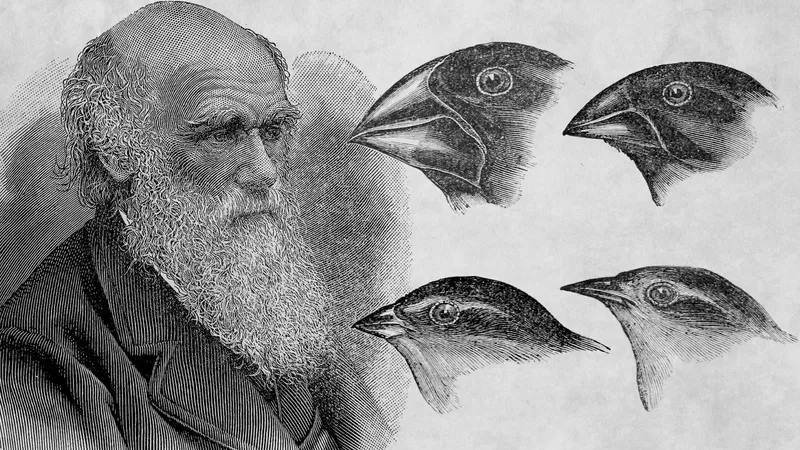
  • Deletion of Lessons on Darwin’s theory of Evolution from syllabus of 10th class: Attack on Rationality

    Deletion of Lessons on Darwin’s theory of Evolution from syllabus of 10th class: Attack on Rationality

    NCERT earlier this year removed lessons on Darwin’s theory of evolution and periodic table from the syllabus of class 10th students. This is in line with the policies of the Modi government since its coming into power. It has constantly attacked the natural sciences and history. Indian Science Congress is one such example where ‘cow science’ and myths instead of Indian history and natural science were propagated. Social sciences have also been the target of this onslaught. Modi government and its paternal organization, RSS’s ideology is contradictory to the logic of history of nature and society. Darwin and the theory of evolution are part of the history of natural sciences, which were important in establishing the modern understanding of the nature. The latest attack is in line with the trend that includes what happened at the Indian Science Congress, IIT Kharagpur’s Calender, challenges to DNA analysis of our ancestors to deny the Aryan migration in the Indian subcontinent. It can be predicted that more such attacks on education will soon follow. Darwin’s theory of evolution is one such conception that has faced a lot of challenges from the ruling classes and religious institutions over the period of time. It has been mocked and faced censorship even in the 20th century. But the latest attack on Darwin’s theory in India is not the repetition of an old or medieval barbaric attack; rather, this is a part of the modern anti-modernist and anti-rational attitude spread by fascists and far-right groups.

    NCERT has defended the removal by saying that the lessons on Darwin are removed only for 10th class students and are present in 11th and 12th standard. But this is problematic because the number of students who will opt out of science from class 11th and those who drop out of school is huge in comparison to those who actually pursue science in 11th and 12th. This also shows that the profit-driven education system retains the technical and advanced study of evolution for further studies in Genetics and biology in general for research, but the lessons introduced in class 10th that generate a general outlook of the world are deleted. Natural sciences have an effect of enlightenment on the common masses. Modern natural sciences were born with the rise of capitalism in western Europe. Galileo’s discoveries established the viewpoint of Copernicus, and Bruno and Robert Hooke’s cell in cork were found in Leeuwenhoek’s experiments. Galen’s purity of body and impure air was challenged by the anatomical studies of Vesalius and Vinci. Natural science established that the world in itself is transitional and changes. The strata of nature changes under different laws of motion.

    Not only does it change under the different laws of motion, but it was also revealed that the form of existence of the material world is in motion. The reason of motion is the internal contradiction present in everything. As this constituting internal conflict is different for different material things, the study of different material entity has different laws of motion and thus a different branch of natural science.

    “So all have birth and perishable frame,
      Thus the whole nature of the world itself
      Must be conceived as perishable too.
      For, verily, those things of which we see
      The parts and members to have birth in time
      And perishable shapes, those same we mark
      To be invariably born in time
      And born to die. And therefore when I see
      The mightiest members and the parts of this
      Our world consumed and begot again,
      ‘Tis mine to know that also sky above
      And earth beneath began of old in time
      And shall in time go under to disaster.”

    The viewpoint of Lucretius, the primitive dialectics was established and yet negated by modern science. Negated in the sense that the development was understood concretly and not in abstraction. This logic of change is the first reason for targeting evolutionary theory. Although Darwin had problem in understanding this development through jumps.

    He understood change only as a gradual process, but the radical ruptures in the evolution of life, the finest example of which is the Cambrian explosion, was not incorporated into the evolutionary theory of Darwin.

    Secondly, in the 19th century, Darwin expanded evolutionary view and explained how life evolves and how the human species evolved out of a primate species. This view challenged the church orthodoxy and shook the ground on which the holy touch of God created “man.” This is why it was attacked by the religious orthodox community. History and nature proved Darwin right. He remained firm and kept on explaining how evolution is the cause of descent of man. This is the second reason why Darwin is the target of the BJP-controlled NCERT.

    Thirdly, Darwin’s theory rejected the notion of idealized species type with species itself becoming the subject of evolution. Thus there is no external agency required for explaining the cause of evolution and rejecting the rigid boundaries which was the metaphysical conception of biological life forms.

    These three contributions of Darwin have general consequences for philosophy. It attacked the idealist absolute types of species, made the genesis of human beings a scientific study, and introduced the conception that every thing under the sun is undergoing change and all that comes into being deserves to perish. During the 19th century, other scientific discoveries also paved the way for this general viewpoint. The law of energy transformation, the discovery of cells, and the mathematical formulation of non-Euclidean space were examples that gave a viewpoint which upheld the idea of Kant that the solar system had a beginning and an end. More clearly Hegel expressed this idea of development, whose dialectical method was incorporated later and developed by German philosophers and revolutionaries Marx and Engels in the dialectical materialist world view, which explains the dialectical conception of nature.

    This general iridiation of consciousness, which arose out of Darwin’s teaching, has been the target of reactionaries for the past two centuries. It is this crushing of consciousness, which is the fascist agenda, that has been unfurling in India since the Modi government has been in power. Release of IIT Kharagpur Calender rejecting scientific rigour and propagating myths, Science Congress used for cow myths and mockery of ancient India, and now, attack on the syllabus of schoolchildren are examples of how systematically the academic institutions are under attack. And if today the scientific community stands passive and silent to these attacks, then our country’s fate will be similar to Hitler’s Germany. It is the duty of every scientist to protest against the fascist onslaught in our country.

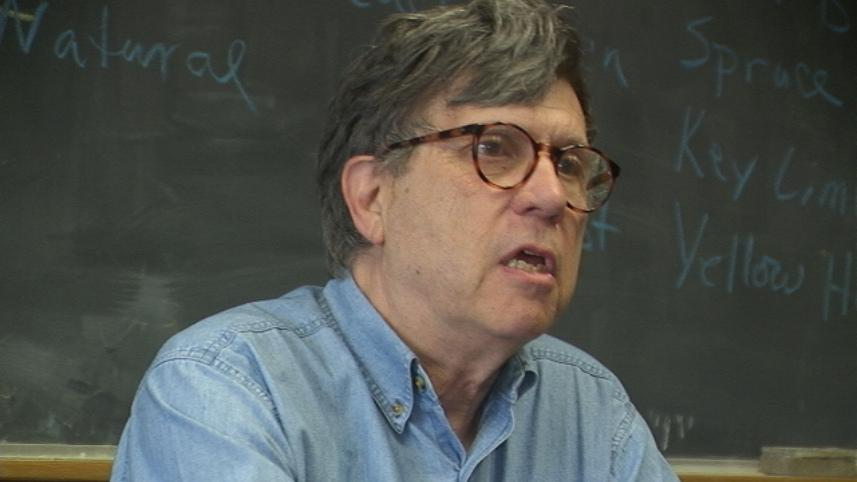
  • Interview with Richard Lewontin

    Interview with Richard Lewontin

    Modern profit driven system tries to put the onus of social oppression on natural biological racial cause justifying the stark contrast of minarets of luxury on one side and sea of tears and misery on the other side. Richard Lewontin punctured the fallacious racial classification in humans. Here is an edited transcript of an interview from documentary Race: The power of an illusion.

    Does racial difference exist on a genetic level?

    Peoples who have occupied major geographical areas for much of the recent evolution of humans look different from one another. Sub-Saharan Africans have dark skin and people who live in East Asia tend to have a light tan skin and an eye color and eye shape and hair that is different than Europeans. So there is this kind of genetic – it is genetic – differentiation of some features of the body between people who live in Central Asia, Africa, Europe, North America, and South America.

    And those features, which are geographically determined, were used to erect notions of different races. There’s the African race, the Black race, the Yellow race, the Red race, the Brown race, and the White race. And it’s mostly skin color plus hair shape and eye shape and so on. That’s the everyday observation, that “they” all look alike – and we all look different.

    The real question is not whether those differences in skin color and hair form are genetic, because they are. We know that because the children of black slaves brought to North America were the same color as their parents were. The question is what else does that tell us about biological differences? How much difference in other genes beside the genes that are relevant to skin color is there between these major geographical groups?

    If we want to use the notion of race in a sensible, biological way, we could only do that if there really were a lot of genetic difference between those groups aside from the superficial differences that we can see. And that’s an important issue which we now understand. We understand it because over the years a lot of data were gathered by anthropologists and geneticists looking at blood group genes and protein genes and other kinds of genes from all over the world. Anthropologists just went around taking blood out of everybody.

    I must say, if I were a South American Indian, I wouldn’t have let them take my blood, but they did. And one of the consequences of that is by the early 1970s, we had a huge amount of information about the different genetic forms all over the world for a large number of genes that had no relevance to those outward manifestations like skin color, but had to do with blood type and proteins.

    And when you brought all that together, it became pretty clear that there really were minor differences in the frequencies of the different gene forms between the major geographical so-called races.

    Since the 20th century, it’s been recognized that there’s what’s called polymorphism of blood type. There are type As and type Bs and type Os and Rh-positive and Rh-negative and so on in every group in the world. But the assumption was that people in Africa would have a very different relative frequency of A and B and O than people would in North America or in Europe and in Asia.

    And what all these studies showed was that that wasn’t true. That you couldn’t really tell the difference between an African population and a European population and an Asian population by looking at the frequency, the relative proportions of the different blood types. They were essentially the same in all these groups.

    That isn’t true for every blood type. There are occasional types which are strongly differentiated between populations. There’s one blood type called the Duffy blood type and that’s very different between Asians, Africans, and Europeans. But that’s an exception rather than a rule.

    For almost every gene we know, either everybody in the world has the same form of the gene, in which case all human beings are the same, or if there’s variation, the frequencies of the different variants are the same relatively speaking, close to the same, in Africans, Asians, North Americans, Austro-Asians, and so on. And only about – well, I estimated 7% of all of human genetic variation could be ascribed to differences between groups, between major races. Anyway, about 75% of all the genes [come in only one form and] are identical in everybody. So there’s very little differentiation.

    How do you measure human genetic variation?

    The way we measure human variation genetically is to look and find all the different forms of a particular gene, the alternative forms of a gene, and then see what percentage of the population has form one, form two, form three, form four, form five, and so on. Now if 99% of the population has one form and only 1% has another then there isn’t much genetic variation in the population for that. And if different populations all have 99% of form one and 1% of form two, then there’s no differentiation between populations because they have all the same percentages.

    If on the other hand one population had 99% of form one and 1% of form two but some other population had 99% of form two and only 1% of form one, then even though within the population almost everybody is the same, between the populations there’d be a big difference.

    So that’s the way you characterize it. You see the percentages of the different forms in different populations and you ask — If I take a sample from one population, are proportions of the different forms similar whether it’s an African population or an Asian population or a European population? If so, there’s no difference BETWEEN populations, and all the difference is found WITHIN populations.


    So what did you discover about population differences?

    Well, the problem back then for evolutionists and population geneticists was always to try to actually characterize how much genetic variation there was between individuals and groups and so on. And nobody knew how to do that because you had to connect genes with some outward manifestation that you could actually observe, and most genes don’t have an outward manifestation in their variation.

    So people didn’t really know whether individuals varied genetically a lot from one another or only a little bit. They could see variation between individuals but they didn’t know how much of all the genes that variation represented. And for a very long time, nobody had the faintest idea how genetically variable our species was from individual to individual.

    And I spent a lot of time worrying about that like other people in my profession. And then I met a guy who had an experimental gimmick and he didn’t know what to do with it, but I knew what to do with it. So I was sort of a person with a problem without a method and he was a guy with a method without a problem and we got together.

    And that method was essentially to extract proteins from individuals and to run them in an electric field and to see whether the proteins moved at different rates in an electric field. If there were alternative forms of the genes that were for that protein, then the proteins would move at a different rate in the electric field, and you could visually identify the proteins by staining them.

    So what you did is you ground up a fruit fly, you stuck it in a slab of jello, you turned on the current, all the proteins moved in the jello, and you turned off the current. You stained it, and sure enough you would see that different individuals had the same protein moving different distances. And that would be because they had a different form of the same gene.

    And that method, which is called gel electrophoresis, a very fancy name, we were able to use it on any organism at all. If you could grind it up, you could do it, and that included people. You didn’t have to grind up the whole person, but you could take a little bit of tissue or blood; you could do it on flies, on mice, on plants, on bacteria, anything. And the result was for 20 years people interested in this question of genetic variation were grinding up organisms and measuring the genetic variation.

    And what they discovered was that organisms within a species were tremendously genetically different one from another. Many people had said, “No, they’re all the same because any genetic differences are mutations and they will be selected out by natural selection. And except for a few superficial differences, everybody in a species is the same.”

    But that’s not true. It turns out that between 25-33% of genes within a species are of the variable kind. They differ from one individual to another. And that’s what that method discovered, that something around a quarter or a third of all your genes — not your genes, but genes of any organism — are variable between individuals of the species. So that gave us a different view of the possibility of evolution. And I thought, “Well, this raises the possibility that we could ask how much genetic differentiation there is between humans in different population groups.”

    It had already been established by a guy named Harry Harris that there was a lot of this genetic variation in humans, the kind that we have found in fruit flies, that people have found in plants. He used the same technique and showed that humans are genetically variable. But what he didn’t know was how much difference there was between Africans and Asians and Europeans and so on. But a certain amount of that data began to accumulate, and by 1972 a lot of those data existed.

    We could then tell from older data on human blood groups, which were known for a long time, and from this more recent data on their proteins which we could visualize in these gels, how much difference there was between any two individuals genetically and between a collection of individuals from France and a collection of individuals from French Equatorial Africa, and from Asia. And that collection of data is now huge, I mean, we know an immense amount about that kind of protein variation in humans. That was before people were sequencing DNA. That’s when we were just looking at people’s proteins.

    And so I thought, “Well, we’ve got enough of this data, let’s see what it tells us about the differences between human groups.” And so I just looked into the literature, and that literature was in books and so on. And so one day I was going to give a lecture, I think it was in Carbondale, Illinois, or somewhere south. I was working in Chicago at the time. So I took a couple of these books with me and a pad of paper, and a table of logarithms which I needed for this purpose, and a little hand calculator, and I sat on this bus trip for three or four hours looking at the books, picking out the data, looking it up in the table of logarithms, doing a calculation, and writing it down in tables.

    And when I got back after the round trip I had all the data I needed to write the paper about how much human genetic variation there was, and so I did it. And that’s been repeated in recent years using DNA and so on. You always get the same result. Shows you it’s worthwhile being afraid to fly, by the way, because you have lots of time on a bus to work.

    So how much difference is there between human groups?

    And the numbers come out as follows:

    Roughly speaking for human beings, for about three-quarters of all our genes, everybody in the world, except a rare individual, has only one form of the gene. So all human beings share that form. For the 25%-33% or so of those genes for which there is some variation – 99 to one or 50/50 or 75/25 of different forms – for almost all of those genes, it doesn’t matter from which population you take the sample; they have the same proportions. That is to say, if it’s 75% of Form One and 25% of Form Two in Europeans, it’s 70% of Form One and 30% of Form Two in Africans and 73% of Form One and 27% of Form Two in Asians, and so on. Most genes are like that.

    But there are a very few genes, like the Duffy blood group, in which in Asian populations there is one very common form, in African populations there are two forms, but they’re not the same as the common one in Asians, and in Europeans there’s another different ratio. So for that gene, there’s a big difference in the frequencies, but that’s rare.

    And if you put it all together – and we’ve now done that for proteins, for blood groups, and now with DNA sequencing, we have it for DNA sequence differences – it always comes out the same: 85% of all the variation among human beings is between any two individuals WITHIN any local population, 85% of all the variation; please remember that 75% of all genes are identical for everybody. But of the variation there is, 85% of that is between individuals within Sweden or within Denmark or within the Ewee or the Ki-kuyu or the Chinese or something.

    Of the remaining 15% of human variation, it’s roughly a 50/50 split of the variation between nationalities within what used to be called a major race, between Swedes, Italians, French, and so on, or between Ewee and Ki-kuyu and Zulu or something. And the other remaining 7% or so is between those major groups — the blacks, browns, yellows, red, and whites.

    What does that tell us about race?

    Well, it might have turned out that there were big genetic differences between groups, and that most genes were highly differentiated between the major races. Now, if that turned out to be true, then at least it would be a possibility, although not demonstrated, that there might be, as some like to dream, high differentiations between groups in their mental abilities or in their temperaments or anything like that. Although nobody knew about any genes for those things, at least it was a living possibility.

    But when we found that there were practically no genetic differences between groups except skin color and body form and a few things like that, it became a great deal less likely and less interesting to talk about genetic differences between groups. And the consequence is that from the biological standpoint those major so-called races – black, brown, yellow, white, and red – were not biologically interesting.

    And that in turn meant that the differences that people were constantly emphasizing for social purposes were social constructs which almost certainly didn’t have any biological basis. And therefore we should stop talking about major races because to talk about major races gave the impression that there were big differences between these groups in things that mattered – I mean, skin color, after all, doesn’t matter except in some vague aesthetic sense – but things that really mattered: people’s characters, their intelligence, their behavior, whether they’re going to compete with other people or not and so on. The evidence then became that there weren’t any interesting differences in such things, and so we should stop talking about race.

    What causes different skin colors?

    Well, the fact of the matter is that geneticists don’t know anything about the genes that influence most characteristics of human interest. In fact, we don’t even know where and how many genes there are that influence skin color – which is certainly influenced by genes, we know that. We don’t know how many genes there are. We don’t know where they are. We don’t know anything about genes for schizophrenia or manic depression or dependency on drugs. Nothing. Zero. People keep making claims, and they take them back again.

    Now why it is that people in these different groups evolved different skin colors is an open question. Nobody knows that. People have tried to tell us stories about it – stories like, well if you live where there’s a lot of sun it’s a good thing to have black skin so you wouldn’t get skin cancer. But that really doesn’t work, because it is true, you’re more likely to get skin cancer if you get a lot of sun and you don’t have dark skin, but that skin cancer doesn’t come on until you’re past your reproductive age anyway. So that wouldn’t have any effect on your evolution.

    The best guess these days is that the reason that people have different hair forms and eye shapes and skin colors, those outward manifestations, is something that Darwin called sexual selection. For some crazy reason which I can’t understand, people in Europe liked washed-out looking people and they tended to select them for their mates, and the consequence is the Europeans became washed-out looking. Whereas people in Africa preferred dark people and so they became dark just by selective mating. And it would be exactly those outward manifestations like eye shape and hair shape and skin color that would have that effect.

    Nobody can select their mate on the basis of blood group because you don’t know what your mate’s blood group is. So for those things which couldn’t be subject to this kind of visual selection, mating selection, no differentiation occurred.

    Why do people still hold on to biological explanations of difference?

    Well, first of all, race is a social reality. I mean, there are people who are dark skinned and they are called black, and that’s a social reality. You can’t deny that. The question is why people hold onto that social reality. There are two reasons, one optimistic one, mainly that just because an idea changes or is seen to be without a basis, it doesn’t go away right away. It takes time as human generations go on.

    But more than that, race and racial categorizations serve a very important social function, namely, they justify the inequalities that exist in a society which is said to be based on equality. Why is it that if all men are created equal – not women, notice, but men – if all men are created equal, then why is there a much greater proportion of black people in jail than white people?

    Is it possible that people are not treating them fairly? “No,” you say, “that can’t be, because we live in a society of equality.” So the easy answer is, “Well, they’re in jail because more black people ought to be in jail because black people have genes that make them criminals.” And the beauty of that ideology that it justifies what is the greatest social agony of American life, certainly, and partly, European life – namely, the huge social inequalities between groups in a society which claims to be a society of equality.

    And you have to cope with that, you have to somehow become at ease with it, because the alternative is to demand a real revolution in social relations, and that’s not easy to do.

    What is biological determinism?

    Biological determinism is this notion that everything that’s important about human beings and the differences between them and their position in the world is determined internally by their biological natures. And I think in our world, the importance of biological determinism really goes back to the American Revolution and the notion that we were going to build a society of equality. “All men are created equal; they’re endowed by their Creator with certain inalienable rights, etc.”

    And the problem with that is, you look around and you see people don’t have equality of wealth or power or status. And the problem then, is to explain how it is that in a society which is supposed to be built on equality there’s so much inequality. And that was a problem that also bothered the English as well and the French in the 19th century; everybody was concerned with explaining tremendous social inequalities despite the fact that they were living in these societies which revolutions had occurred to make equality.

    And there are really only two solutions to that problem. Either it was all fake to begin with – maybe the revolutions weren’t really meant to produce equality; they were just meant to get some people in power instead of the old people – or the alternative is people are as equal as they can be. The reason they’re not more equal is because there are in-built, unchangeable, blood-determined differences between them. (When they said blood, now we talk about genes. But it’s the same thing.) Society has just equalized as much as it can and the people now who are in superior position are there because of their biological natures.

    So that social stratification, social differences, difference in status, wealth, and power are all largely a consequence of your biological nature, which is unchangeable. And that’s what biological determinism is. The structure of society is fixed, and it’s fixed for biological reasons.

    And then there’s another side to it. And the other side is you say, “Well okay, suppose it’s really true that there are unchangeable differences between individuals. Some people by their biology could be professors and others could be only janitors.” You could say, “Alright, I’ll accept that, but maybe we should have a society in which both professors and janitors who are all doing socially useful work, I guess, are rewarded equally. Why should society give differential rewards just because some people can do one thing and other people can do another?”

    And then we have a new form of biological determinism, the kind of thing you see in evolutionary psychology and socio-biology, which says, “Well, but it’s part of biological human nature to create hierarchical societies.” So it’s impossible biologically to make a society in which everybody gets equal status and wealth and power because they’ll naturally create this hierarchies.

    So biological determinism these days really has two forms, two aspects. One is that the differences between us are biologically determined and the second is that we all are similar in one very important respect, namely we all have human nature, and that human nature makes us produce hierarchical societies.

    What is the relationship between your DNA and how you turn out as a person?

    The word that geneticists use for a description of your outward manifestations and your physiology and your metabolism and your anatomy and so on, including your behavior, is phenotype – literally, “what appears,” from the notion of pheno, to appear. And in theory that’s supposed to be the result of the genes that you have, which are called the genotype.

    The question that geneticists have been struggling with for a very long time is, What’s the relationship between those elements in the genotype, the DNA, and what comes out at the end of the developmental process, the phenotype?

    You have to remember, we start as a fertilized egg, and that egg goes through cell divisions and becomes a whole organism, and that organism develops throughout its entire life. We are all developing continuously. We get taller and then we get shorter. We get smarter and then we get dumber. That happens continuously.

    So the question is, What’s the relationship between those inner elements, those genes, the genotype, and the phenotype. And the answer that we know from years of experimental study and ordinary observation is that there’s no simple one-to-one relationship between the genotype and the phenotype. The organism is certainly influenced in powerful ways by the genes – there is no chimpanzee that will be interviewed on television and say the things I’m saying now, because chimpanzees don’t have the genes to enable them to speak, to form these abstract ideas, because their brains are not the right shape and so on.

    So clearly differences between the species are, in some sense, in the genes. But at the same time it’s not the case that every aspect of the phenotype is determined by the genes, because the environment in which you develop, both within the womb and after you’re born, your whole psychic environment, your education, what comes in on you, the food you eat, the society you live in – all that goes to form the phenotype.

    That phenotype can’t be anything in the world. As I said, no matter what environment a chimpanzee lives in it’ll never be a professor, although some professors might be sort of like chimpanzees. No matter what environment we live in, I think it’s extremely unlikely that human beings will live to be 200 years old, for example, because of our genes.

    Now, what’s interesting about our phenotypes, about the variation of phenotypes between individuals, is that they sort of vary continuously – like heights or shapes or colors – there’s not just three different colors or four different heights, yet the genes exist as discrete objects which have particular different forms. You can have form one of the gene or form two of the gene or form three.

    So you have these discreet differences at the genotypic level, which are somehow converted into continuous variation between individuals and their behavior and their morphology and their physiology, and it’s kind of like a pointillist painting, in which, if you stand back from the painting, you see continuous figures, but when you go up close to them you see that they’re made by tiny little dots of paint which fuse together in your eyes and in your brain from a distance, but are discreet and individual.

    And the observer who observers a pointillist painting is performing an action, is making the phenotype out of that underlying genotype, so to speak, by the intervention of their eyes and their central nervous systems. In the same way, our genotype is converted into a phenotype through the developmental process which is occurring in a particular environment. And every environment is different, and environments are changing all the time.

    So there’s a very complicated relationship between genotype and phenotype. People who say, “Well, if only I knew all your genes I’d know exactly all about you,” are wrong. Indeed, the notion that if I cloned an individual by reproducing that person’s genes in another individual, that the cloned individual would be identical with the ones from which the genes came, is wrong.

    When I was a child, the most famous people in the world were the Dionne Quintuplets. The Quintuplets were five girls born in rural Quebec, all identical quintuplets. And they were dressed alike and they had their hair done alike and they looked alike, and they were put into a kind of zoo by their parents and by the doctor who delivered them and by the province of Ontario. And everybody looked at them and they were made as alike as they could be so they’d be the wonder of the modern age. They were clones of each other.

    But in fact, when they got older, when they left this artificial environment, they became quite different from each other. A couple became nuns, some were married and some not, two died and three are still alive – I think a third one died recently. One was schizophrenic, the others weren’t. They were as different from each other as any five girls could be, although they still looked pretty much alike.

    And that’s the important point: that although a lot of our morphology, a lot of our facial features appear not to be greatly influenced by environmental variation, our personalities clearly are tremendously influenced by it, and our abilities. And the Dionne quintuplets are a wonderful example.

    Is it possible that genes could hold the key to social behaviors?

    People are always talking about genes for things – the genes for athletic ability, the genes for making money, the genes for intelligence. And you have to be very careful. Even when there are genes that influence those things, to talk about them as genes for that is not so clear. And a friend of mine gave me a wonderful example. He said, “I know where the genes for knitting are.” And I said, “How can you know where those genes are; what does that mean?”

    And he said, “Oh, the genes for knitting are clearly on the X chromosome, the sex chromosome. Why? Because, after all, all the people I know who knit have two x chromosomes, and everybody I know who has one X chromosome and one Y chromosome doesn’t knit, so the gene for knitting has to be on the X chromosome.” And he’s right, by the way, that that’s the standard method used by geneticists: you find some genetic marker and you see that everybody who has that genetic marker has this trait, everybody who has a different genetic marker has another trait, so you’ve discovered the gene for it.

    Now, when I say the gene for knitting, you’re going to laugh, you’re going to say, “That’s silly. There can’t be a gene for knitting. I know why people knit.” And the reason that we laugh is because we know the whole story about the gene for knitting. We know that the genes on the X and Y chromosome are for plumbing, and X chromosome people have one kind of plumbing and people with a Y chromosome have a different kind of plumbing. Depending on which plumbing you’re born with, you’re socialized as either a female or a male. And if you’re socialized as a female, one of the things you learn to do is to knit, and if you’re socialized as a male, you don’t learn to knit.

    So, of course, people with two X chromosomes knit and people with one X and one Y don’t knit. But you wouldn’t want to say that the genes for knitting are there. The point is, we understand the complete developmental and social story about why people with two X chromosomes knit and people with one X and one Y chromosome don’t knit. And what’s nice about that story is it was exactly the opposite in the 18th century. In the 18th century the gene for knitting was on the Y chromosome, because only men did hand-knitting, not women!

    And the reason why men gave up hand-knitting and left it their wives to do at home is because someone invented the knitting machine and the men went into the factory and did knitting on knitting machines and left the now economically useless work to their wives at home. So maybe what we should say that we know that the X chromosome has the genes for doing economically useless work, and the Y chromosome for doing economically useful work.

    When you put it in those terms, when you really know the complete story, you stop talking about genes for this and genes for that, and you talk about genes having some influence on certain physiological anatomical traits, which are then used as cues by other people.

    So, let’s talk about race. I know where the genes for being incarcerated are. They’re the skin color genes. Now, that doesn’t mean that those genes cause you to be incarcerated. What those genes do is to cause you to have a certain skin color, and social relations and social arrangements are such that people who have dark skin color are incarcerated more than people who don’t have dark skin color, but the genes don’t make you incarcerated. You have to make that distinction very clearly.

    What do you think about new trends in genetics research?

    The so-called “new genetics”, which just puts the action of these biological factors onto a molecular scale, is still as deterministic as ever. People who are doing molecular genetics, who are mapping genes in human beings, are trying to find the genes for schizophrenia, the genes that are responsible for all sorts of diseases.

    The editor of Science magazine, the most prestigious general science magazine, once was asked why we should spend a lot of money on the human genome project when we have all those poor people and homeless people out there, and his response was, “The best way to get rid of homelessness is to study people’s genes because homelessness is in the genes.”

    So the genome project and molecular genetics are simply a new manifestation of an old idea – or they’re created with that same bias, namely, the reason we’re studying all the genes is because genes determine everything. If you didn’t think genes determined what was really important in life, then why would you go and spend all this money and time studying the human genome?

    Look, people said, when the human genome project was floated, once we know what the human genome is, when we see all the genes, we’ll know what it is to be human. A very famous biologist said that. So if you really think you’ll learn what it is to be human by studying human genes, that’s why you study them. But of course, we won’t know what it is to be human by studying the genes. That’s the error. But nevertheless, that’s what the modern manifestation of biological determinism is.

    Let’s take the argument [about genes and homelessness] as the editor meant it. What he’s saying is, Why are people homeless? Many homeless people are de-institutionalized mentally ill people or people who have been on drugs or things of that kind. Why are they on drugs? Because they have a biological dependency on drugs. Why are they mentally ill? Because they have genes that make them mentally ill. So that was his reasoning.

    Homelessness is not, for him, simply the usual manifestation of economic inequality. People who are homeless are homeless because they’re in one way or the other sick, and knowing the genes will cure all the diseases. That’s his claim. Especially drug dependency, schizophrenia, manic depression, and so forth. They’re all due to genes according to that view. Of course, people have been struggling to find the genes for schizophrenia and manic-depressive syndrome for a long time and they haven’t found them. Or rather, they keep planning to find them and then six months later they write a paper saying, “Oh, we made a mistake. They’re not there.”

    Is biological determinism another form of racism?

    Biological racism is just another manifestation of the belief that everything is in the genes. So of course, if people in Africa are not as well off as people in Europe, it’s because they have genes that make them less intelligent and less ambitious, and so on. And the beauty of the race business is that you can identify people by just looking at them. You don’t even have to look at their genes because one manifestation of their genes is there – namely skin color or eye shape or hair shape – and then that’s the key to everything.

    So racism, that kind of biological racism is just part of the general ideology that everything important is in the genes. And of course, if people look different then they must have different genes, and to some extent they do have different genes. And that will explain why slaves were black and masters were white. So racism is part and parcel of that whole thing.


    Where do our ideas of biological determinism come from?

    Biological determinism, which is a desire to understand social inequality, was really built into most 19th century English literature. Dickens, whose the great mystery novelist of the 19th century – all of his mysteries are about the same thing: How do we explain the character people have? Is it upbringing or is it internal? And he believed it was internal.

    Oliver Twist is the most famous example of that. You have to remember Oliver Twist was born in the workhouse, which was the place you had to go to get relief after the New Poor Law of 1834. And his mother was in the workhouse. He was born in the workhouse, he had no education, he was living with all these other kids on gruel, picking oakum, doing all the things that little kids in the workhouse did.

    And then when he left the workhouse without any education, without any culture, without anything, we find him on the road to London. And he meets on the road to London the Artful Dodger, a kid somewhat older than he was, a teenager. And the contrast between Oliver and the Artful Dodger which is drawn by Dickens is extraordinary. Because the Artful Dodger doesn’t speak good English; he drops all his G’s; that’s the thing that you would expect a poor kid from the slums of London to do. And here’s Oliver; he’s described as a delicate child, he uses the subjunctive, his grammar is perfect. Where did he learn all that – in the workhouse, the most degraded institution of 19th century Britain?

    Well, that’s the mystery. The mystery of Oliver Twist is how do we explain the contrast in character between Oliver Twist on the one hand and the Artful Dodger on the other, both of whom were brought up under essentially the same miserable circumstances.

    And at the end of the book you discover that Oliver actually had upper-middle class parents. And even though he never saw them because his mother died in childbirth and he never saw his father, the true nature of that upper-middle class “blood” came out in him, and so he was a child of great moral character. He was honest, he was delicate, he used good English, and so on. And that was a working out of that notion, that what really matters about character is what’s inside, not what’s outside.

    And he’s not the only one. There’s the wonderful story of George Elliott, Daniel Deronda, one of George Elliott’s heroes. We’re told right away he’s the adopted son of an English baroness, and he has all the behavior of the young lord. We meet him in a fashionable watering place and gambling casino in Germany.

    And then mysteriously around the age of 20 or 21, he falls in love with a Jewish woman. Now this is early 19th century Britain. That doesn’t happen every day of the week. The baron falls in love with a Jewish woman. He learns the Talmud, he converts, and he becomes a Zionist; he actually is one of the earliest people to want to go to Palestine. What’s the secret? How do you understand that strange business?

    It turns out – and you only discover this at the end of the book – that his mother is a famous Jewish actress who he finally meets when he’s an adult and it all came through, and he became what his genes made him. So Dickens is not the only one. And that’s true in French literature, it’s true in all literature of the 19th century.

    Aren’t groups like Icelanders genetically distinct because they’ve been more isolated?

    Iceland has been in the news a lot recently because the Icelandic government has awarded the entire Icelandic genome to a private company to exploit. The claim of this company is that the reason why they want to have the genotypes of all Icelanders is because Icelanders are uniquely homogenous people. And why are they uniquely homogenous? Because, the story is, Iceland was founded in the 9th century by people who came from Norway – a very small number of people who came from Norway, just these immigrants. There was nobody in Iceland when they arrived – that’s true – and all Icelanders at the present time are descended from those few immigrants at the very beginning, and therefore Icelanders are all related to each other very closely, and therefore if somehow we could study their genes we could find the genes for disease and other things because everybody’s related to everybody, and we could carry out the pedigree.

    And so the whole thing is based on the claim that Iceland is extremely homogenous, genetically. Now, that’s bolstered by the fact that Icelanders speak a language which elsewhere has been dead for 1500 years; that is to say, they speak a form of Old Norse which is related to Norwegian and Swedish but very different. And also they are claimed all to look alike – they’re all sort of reddish-haired or blond and so on – and they’re isolated and they all know each other; it’s a very small country, only a couple hundred thousand people.

    So all of that comes together, this notion that Iceland is a genetic isolate, a few people came there, they’ve been genetically isolated from everybody ever since, and that’s why they speak this crazy language and everything is homogenous.

    Now, the trouble is that we know that that’s not true, and we know it from a source which is in one sense the source of Icelandic national pride, which is the Icelandic Sagas. The Icelandic Sagas, which were composed or spoken verbally during the Middle Ages by a variety of Icelandic authors and eventually written down, tell us the story of the founding of Iceland, of the wars that the Icelanders, the Vikings, engaged in.

    And they give this impression at first that it’s a very homogenous society. But when you begin to read the sagas, what you discover is that those early Icelanders, those Vikings, were in fact making a living doing exactly the same thing that the Ancient Greeks were doing: namely, half the time they spent farming, and then half the time they were pirates. They got in their boats, and they went around raping and pillaging and taking slaves and just warring everywhere, and that’s what Vikings were. Vikings were pirates. And they didn’t try to excuse it; that was the way of life the Sagas described.

    And in the process of that piratical existence, they took slaves, they brought people back to Iceland from other countries. There a wonderful place in I think it’s Egil’s Saga, which is a story of a guy who wants to buy a concubine. So he goes to Russia and he deals with a Russian trader, and the Russian trader asks him a certain price for this concubine. He said he had a dozen of these women in his hut. And the Icelander says, “Wait a minute, I’m not going to pay that. That’s much more than the usual price for a woman slave.”

    So there was a usual price, which meant that Icelanders were doing this all the time. They were getting women and bringing them back. If you look around northern Scotland, you see lots of town names – this “ness” and that “ness” – Loch Ness, Inverness, so on. Ness is an Iceland word; it means cape. Those are all the places the Icelanders landed and took their slaves. One of the sagas is all about the fighting in the Orkney Islands and how the Icelanders landed in the Orkneys and established their position there and so on.

    So Iceland, in fact, is a place made up, yes, partly of descendants of those early Viking ancestors who fled from Norway to escape the king, but in large part also from slaves they took, from people they brought from all over, and became part of the Icelandic genetic pool. So Iceland turns out, in fact, when you look at Icelanders, when you look at their proteins, you look at their DNA, they turn out to be not any more genetically homogenous than Swedes, Germans, English, French, all of Northern Europe. They look like a typical Northern European country.

  • Heat Dome: A rare weather anamoly or consequence of Global Warming!

    Heat Dome: A rare weather anamoly or consequence of Global Warming!

    In the last two decades or so, people around the globe have been witnessing weather anomalies, which may well be the consequences of global warming.

    During the month of June and the first week of July, an extreme heat wave affected much of Western North America. The Western parts Canada and USA got adversely affected by this rare weather anomaly. The heat wave resulted in the highest temperature ever recorded in Canada, that is 49°C, while cities like Seattle has recorded a temperature of 46°C. The exact data of human casualties is not known until now and the death is still rising, but according to various sources more than 840 people have died due to the heat wave; out of which almost 645 people have died in Canada, while more than 195 people have died in USA. In totality, the heat wave has affected a population of 50 million people living in these regions. This heat wave caused wildfires in some parts of the Western North America, which resulted in the destruction of several square kilometers of forest cover.


    Even, the marine life was not spared by this heat wave. It has been reported that this weather anomaly has killed over 1 billion of aquatic lives along Canada’s Pacific coast. However, we need to understand, what is the cause of such catastrophic weather anomaly.


    The National Oceanic and Atmospheric Administration (NOAA) has said that in order to understand this current meteorological anomaly known as the heat dome, one should consider the Pacific Ocean to a large swimming pool in which the heater is turned on. Once the heater is on, the portions of the pool close to the heating jets will warm up faster and therefore, the temperature in that area will be higher. In the same way, the western Pacific ocean’s temperatures have increased in the past few decades and are relatively more than the temperature in the eastern Pacific.


    This has resulted in creation of a strong temperature gradient, or pressure differences that drive wind, across the entire ocean in winter. Because of convection, the gradient causes more warm air, heated by the ocean surface, to rise over the western Pacific, and decreases convection over the central and eastern Pacific.


    As prevailing winds move the hot air east, the northern shifts of the jet stream trap the air and move it toward land, where it sinks, resulting in heat waves. The high-pressure circulation acts like a lid or a dome, which forces the air downwards, increasing the air column, but even as the air becomes increasingly lighter and hotter due to the sun’s energy, it cannot escape the dome because of the high-pressure lid or dome. This situation is meteorological terms is called heat dome.

    It may well be the case that it is a rare weather anomaly but the fact it became so severe, points out that, it would be virtually impossible without anthropogenic climate change. As warming continues, such weather anomaly will become a lot less rare and much more severe.


    According to a study by ‘World Weather Attribution’ in a world with 2°C of global warming (0.8°C warmer than today which at current emission levels would be reached as early as the 2040s), this event would have been another degree hotter. An event like this – currently estimated to occur only once every 1000 years, would occur roughly every 5 to 10 years in that future world with 2°C of global warming. So, even a relatively small increase in mean global temperatures caused by climate change can pass a threshold that triggers a sharp increase in the probability of extreme heat wave phenomena. Also, according to their studies, weather anomalies such as these would be very rare but their likelihood has increased at least 150 times because of anthropogenic climate change.


    But, in reality, can the whole of humanity be held responsible for the climate change? is it actually anthropogenic change? The answer to these question is just no, its not the whole humanity but more likely the privileged sections of the human population that has brought upon the climate change and hence one should see the reason behind the climate change to be capitalogenic. According to a 2015 study by Oxfam, top 10 percent of the population is responsible for the 49 percent of lifestyle consumption carbon

    dioxide emissions, while the bottom 50 percent are only responsible for 10 percent of total lifestyle consumption carbon dioxide emissions. According to carbon measures report published in 2017, only 100 companies have been the source of more than 70% of the world’s greenhouse gas emissions since 1988.


    The weather anomaly in Western North America has posed serious questions globally. Have we reached the tipping point? How can humanity still thrive, if such anomalies become the norm?


    For now, we must pressurize the governments worldwide to take effective measures against climate change. The struggle for environment conservation should become a mass movement. As, we have seen in Canada and USA, how people who were from underprivileged sections of the society, have been affected the most by this heat wave. So, the governments throughout the world must be made responsible towards such incidents and it must take necessary measures to protect the people against such meteorological anomalies.


    But in the long time, we will have to start looking beyond these climate protocols, which do nothing at all. We must understand as long as this capitalist remains, our environment and climate will always be under threat. This current capitalist system, which has now become illogical must be replaced by more logical system, which knows the value of ecology and environment.


    – Vivek

     
  • Narrow Empiricism of Conspiracy Theorists and a Lesson from History

    Narrow Empiricism of Conspiracy Theorists and a Lesson from History

    It has now been now almost two years but the corona pandemic is in its ever-varying mutations are still raging all over the world, showing no sign of a respite in the immediate future. Millions have already lost their lives and much more is the number of people across the world who have lost their livelihood. Both the extension and spread of the disease is almost unparalleled. But along with the pandemic the world is drowned by unrelenting waves of an infodemic. Deliberate misinformation, ignorance, fake news and conspiracy theories about the origin of the virus and its outbreak have spread worldwide at an equal pace (if not faster) and is growing exponentially.

    There is a wide section of people who consider Covid-19 and the subsequent lockdown implemented by the government, all part of a greater conspiracy. The utter idiocy about covid-19 have earned such people the name “covidiots”. Some of them tell us that it is nothing new, merely the seasonal flu virus, so there is nothing in the corona virus to be afraid of. Then there are people who ‘know’ that the virus is manmade, and has its origin in a secret lab in China/ Bill Gates. There are also those people who believe that the virus is an outcome of a genetic mutation caused by the 5G bandwidth radiations. We also hear that it is the creation of the “big pharma” (the giant pharmaceutical industry) to create a world market of their pre-researched vaccine. The spectrum of these theories is stupendously wide. There are theories of “deep state” and comic-book like interpretations of the whole pandemic, whereby it has been claimed that the deep state wants to control the masses. All these theories are well entrenched and resonating in among the masses, whose reason must be sought in the common sense of the people. It is nothing but an eclectic soup of empiricism (something especially an idea is eclectic when it is chosen freely from diverse sources; an idea which appears best from diverse sources. Empiricism is a philosophy, a view that direct experience of an individual is the only source of knowledge and not the theoretical knowledge and indirect knowledge. It relies on immediate observations or experiments only, without any conceptual realization. Empiricism as a philosophy is popular among common masses, who in their daily struggle for existence are given no opportunity or time to think and hence to theorize. Disregard to theories is an essential feature of empiricism, so an empiricist knowledge of any social, biological phenomenon touches the phenomenon at the surface only, is perceptual and impressionist at its best and hence is incomplete and unscientific). Motely vulgar theories are having a free run, explaining the mechanisms and nature of society. Things get utterly unfortunate when such “unread”, “amazed” empiricists find themselves at the tail of the masses, but come forward to claim that, people do not believe in the existence of coronavirus. But what people believe and not believe cannot be a litmus test of the existence of the coronavirus. We have such empiricists among political activists as well who see the plea of the government that the lockdown was imposed to safeguard the lives of the people by mitigating the spread of the virus, a sham and was executed to kill two birds at a time, to open up new vistas for the profit of the corporate houses on one hand, and to introduce draconian, antipeople dictatorial laws, without the fear of any popular protests. Naturally they demanded that lockdown should be immediately lifted, to save the crashing economy and to end the deprivation of the workers robbed off their livelihood. But soon the spirit of the belief in the non-existence of the virus vaporized into thin air, and they ‘realized’ the reality of the virus, and the only way out then is to remove all road blocks to usher in the stage of herd immunity. This was the view of the believers, of ‘innocent’ people acting in good faith.

    The Dream of Reason Produces Monsters – Francisco Goya

    But the fascists, the status quoists in favor of the antihuman establishments all over the globe raised their clamor, insisting that the virus is not real, and there is no ground for the lockdown which has adversely affected the economy. Facing wide and sharp criticism these right wingers were forced to put the foot in their mouth and started seeing the virus, inviting herd immunity, which is possible only if all sorts of restrictions are removed, was alas the way out for them. Their logic also akin to that of empiricists when they said that only old and weak people would be vulnerable if restrictions are removed, and thus for the good of the younger generation and the healthy sections of the population mitigation procedures such as lockdown should be withdrawn and to be reimposed in the future to keep the economy running. The fascists and the right-wingers lied deliberately to hide the cleavage of haves and have nots of the society, while the empiricists have nothing to blame other than their ignorance and foolishness. But the common conclusion made both the camps conspiracy theorists. It is a case of wrong analysis of the situations leading to a wrong solution for curing and mitigating the disease. But the situation continues to evolve in stages and give birth to new theories. Now we find on stage a new category of “anti-vaxxers”; a category of naturalists who are asserting that vaccination is a conspiracy. Thus, there were popular protests against masks, lockdowns, and the handling of the disease.

    This absurdity was generated and nurtured by the vulgar empiricist’s philosophy, and has been lapped up by the fascists and reactionary forces to propagate their ideology. But everything changes, new empirical facts emerge, contradicting theories based on earlier primitive facts, and so soon conspiracy theory fell into adverse waters, when newer facts started disproving their theories, and forcing them to take new recourse, and mysticism enters the arena. Every conspiracy theory is bound to conceptualize the existence of some mystical, unknown power playing behind the curtains of every phenomenon. Shallow empiricism and modern spiritualism are two opposites that coexist.

     As writer of ‘Dialectics of Nature’ and philosopher of natural science Engels explained that dialectical opposite of shallow empiricism is modern spiritualism: “It is not the extravagant theorising of the philosophy of nature, but the shallowest empiricism that spurns all theory and distrusts all thought. It is not a priori necessity that proves the existence of spirits, but the empirical observations of Messrs. Wallace, Crookes, and Co. If we trust the spectrum-analysis observations of Crookes, which led to the discovery of the metal thallium, or the rich zoological discoveries of Wallace in the Malay Archipelago, we are asked to place the same trust in the spiritualistic experiences and discoveries of these two scientists. And if we express the opinion that, after all, there is a little difference between the two, namely, that we can verify the one but not the other, then the spirit-seers retort that this is not the case, and that they are ready to give us the opportunity of verifying also the spirit phenomena. Indeed, dialectics cannot be despised with impunity. However great one’s contempt for all theoretical thought, nevertheless one cannot bring two natural facts into relation with one another, or understand the connection existing between them, without theoretical thought. The only question is whether one’s thinking is correct or not, and contempt of theory is evidently the most certain way to think naturalistically, and therefore incorrectly. But, according to an old and well-known dialectic law, incorrect thinking, carried to its logical conclusion, inevitably arrives at the opposite of its point of departure. Hence, the empirical contempt of dialectics on the part of some of the most sober empiricists is punished by their being led into the most barren of all superstitions, into modern spiritualism.”

    In the present scenario the big pharma/ the Deep state/ Super powerful corporates are the ‘supernatural’ forces coming to the rescue of the empiricists giving explanations to the ‘inexplicable’ (the origin of the virus, the reason various measures were taken, the wonderfully accelerated pace of reaching the vaccination stage etc.), thus the ‘empirical’ explanations turned into fantastic explanations.

    The problem we are posed with is actually a complicated intricate set of problems. To raise the hidden essence at the phenomenal level, we need to untangle the web and to make the different components distinct. Empiricism is prevalent in medical sciences, over the society, in politics, and has a historicity, we will illustrate the understanding of the current problem with a historical insight of an incident that occurred in Soviet Russia: Lysenkoism.

    Empiricism Prevalent in Natural Science

    To understand the essence of any phenomena we must penetrate the outer appearance and reach its inner structure and constitution. It is achieved when our perceptual knowledge reaches to a stage of conceptual knowledge in practice. It is only in practice that our perception deepens to generalizations, to laws, causality, inner structure, and constitution of a process i.e. to conceptual knowledge. The dish of stars in the sky over us is an apparent reality. It is the past we’re looking into. If we look at the sky with a powerful telescope it is possible that we may be looking at a star that does not exist, it might have died, but its light is still reaching us and it appears that it is still there. Even the stars we see in night sky with naked eye are in range from few light years to thousands of light-years away and it takes thousands of years for light from some stars to reach us. It takes light around eight minutes to reach earth from sun. The sun we see is around eight minutes old. The night sky is an image of the past. We reach to the stage of conceptual knowledge that our sky, window to the universe, reflects a very dynamic picture of our universe. The Special theory of relativity gave us conceptual clarity on this concept. Breeding of larvae on rotten meat leaves the impression that a new form of life grew out of it. But it is only the microorganisms or flies present already in the environment which scavenge the meat and which makes it rot. Louis Pasteur proved it, leading to Germ theory. Robert Koch concluded that diseases are caused by various germs and not by the astrological positioning of planets and stars. Before it, the Miasma theory of Galen was popular according to which the diseases are caused by foul air. The concept of purity and naturalism is still conventional in traditional medical practices like Ayurveda, Yunani medicine and Homeopathy. All of them are based on empirical observations and some pre-modern biology concepts. Many correct observations are made by these empirical practices but that does not make them conceptual science. Many conceptions of these theories stand in contradiction to modern biology. Modern Biology is the study which is one of the youngest all modern sciences. First came the discovery of cell and then germ theory, and since then, each step has reduced the mystical forces to concrete material biological causes. Modern Physics rose with the rise of the bourgeoisie during the period of Renaissance. First it was proven by Copernicus and Galileo that the model of the universe was not Ptolemaic, which stated that the earth is the center of the universe. Apparently, the sun revolves around the earth, but science is required to know that appearance is not the reality and that it is the Earth that revolves around the Sun. Then in Chemistry, the phlogiston theory was also a similar concept according to which things catch fire because of a liquid substance called phlogiston present in them. Though phlogiston theory was a step forward but alchemy still hovered around the fire, explosion, and other chemical changes. Our knowledge of the constitution of chemical substances cleared the alchemy and phlogiston theories. After physics and chemistry matured modern biology was born. And with it grew modern medicine but cobwebs of old medicinal practices are present to this day.

    Theory of Evolution and genetic theory are discoveries of modern science, and we got awareness regarding them only in the 19th and 20th century. Man first gained conceptual knowledge about galaxies and earth, and then only was able to understand himself and his descent. Newton preceded Lyell and Lyell preceded Darwin. The mechanical changes on the terrestrial level and cosmological changes were conceptualized in man’s knowledge before the motion of species, which is called evolution. In this sense, modern biology is a young discipline. Vaccination too, began only after knowing the immunity and other mechanisms of the human body and actions of germs on us. Edward Jenner discovered the vaccine for small pox and later Fleming discovered first antibiotic vaccine. Germ theory was discovered by Louis Pasteur and Koch and it could have developed in the 19th century only. It demolished the theory of spontaneous generation of life. Oparin and Bernal proposed the biochemical origin of life, which was, later proven correct by experiments of Urey and Miller. Discovery of cells, the establishment of the theory of evolution, germ theory and usage of vaccines are important steps in development of human knowledge. This knowledge is the reflection of eternally moving matter on our minds and hence is always relative. There is always a horizon of the unknown and a haziness of uncertainty for human knowledge. In the dialectic of ignorance and knowledge, there remain remnants or old skin of past theories over new conceptions. In science we should not use concepts like truth and error absolutely.

    Remnants of theories of past get negated in practice. Empiricism is contrary to dialectical conception of natural science in the sense that it does not understand that the knowledge grows deeper and in practice, we reach from perceptual knowledge to conceptual knowledge. The spiral of practice-knowledge-practice is unknown to empiricists.  Modern science has proven that its worldview is dialectical. To be dialectical is to recongnize

    unity of opposites. The unity of life and death, positive and negative, positron and electron, wave and particle all are examples of unity of opposites. But various empiricist conceptions are still persistent. As modern biology is a younger science the spots of old empiricist and metaphysical theories are still present on it. Popularity of conspiracy theories around Covid-19 is a perfect example of empiricism widespread in the common masses. If now we see the problem of Covid-19, we can easily understand the different conspiracy theories and their source of ignorance around such theories.

    Covid-19 is caused by SARS Coronavirus-2 and it affects the upper respiratory system of the patient. The virus is a strain of Coronavirus. Common cold is caused by certain strains of Coronavirus, which are different from SARS Coronavirus-2. When defining a disease, we define objective statistical parameters like basic reproduction number R(o) (number of people an infected person can infect), case fatality rate, and infection fatality rate to assess the danger a disease presents. What is a virus? A virus is the genetic material in protein coating that can have a lipid coating. SARS Coronavirus-2 has protein spikes protruding through the lipid coating around protein envelope containing RNA strands. The presence of lipid coating is reason why alcohol-based sanitizers or soaps are effective against the virus. According to the genetic structure it has been predicted that the virus has zoonotic origins (which means that it has passed to humans from some non vertebrate animals) and it has species jumped to humans via an immediate host. Most probably it has jumped from source host bat. Bat virus is genetically very similar to SARS Coranavirus-2. Various genetic structure studies on the virus reject the possibility of its origin in laboratory. All evidences point towards evolution of virus via natural selection. The current state of art technology in lab does not allow such evolution to be carried out in laboratory.

    Viruses do not have a metabolic mechanism and depend upon living organisms for their propagation. Genetic material inside protein envelope is either DNA or RNA, which is the material of heredity. All characteristic information of an organism is present in this genetic material. The virus attacks a multicellular organism body by entering inside the cell and makes use of the metabolism of cells to replicate itself. SARS Coronavirus-2 enters the human body and gets attached to enzyme present on human cells through its protein spikes. The immune system of our body tries to attack the virus and immune responses are triggered. There are two types of immune responses: innate and adapted. The innate response is associated with the release of certain chemicals like cytokines, which tries to kill the infected cell and thus produce a systemic response like fever. All other symptoms like runny nose, sore throat, and muscle soar are effects of our immune system’s innate response to the pathogens. Thus, symptoms of flu, common cold, and Covid-19 are similar. Empiricists postulating on phenomenal knowledge there upon declare these diseases to be identical. Empirically Covid-19 can be called a viral infection identical to flu and common cold. The reason for the common masses believing in conspiracy theories is precisely because of this reason. The various medical practitioners of Homeopathy and Ayurveda also propagate such mysticism appertaining to the different viruses. These are practices based upon empirical observations to counter diseases when the body is invaded by foreign bodies. These are symptom-based. How will it counter Covid-19? They cannot. Many medical quacks use these empirical similarities to disprove the existence of novel Coronavirus.

    The second type of immunity response is called adapted immunity response. Adapted immunity responses involve lymphocyte cells and antibodies that have particular response to specific pathogen. This immunity triggers the response whenever identifies a pathogen (a foreign substance) and produces antibodies, and cells specific to them, counter these pathogens and memorize the characteristic structure, called antigen, of pathogen so to attack the virus if it enters into our body again. Adaptive immunity can be natural or artificial. Artificially adapted immunity is developed through vaccines. It is the introduction of a vaccine, which has characteristic structure of disease-causing pathogen but does not harm our body, and our immune system recognizes the characteristic structure of the pathogen and attacks the pathogen when it actually infects us. This is a very simplified picture of a very complex process, but it was necessary to understand the basics about pathogens, immunity system and vaccination. But our covidiots, including empiricists, in absence of knowledge regarding vaccine and virology or epidemiology start to sing in chorus with anti-vaxxers that vaccine is a fraud and to recover from infection we must let our natural acquired immunity to work. But this is rejection of modern biology and if anyone lauds it, he must not declare himself having scientific outlook. This is the logic they give in support for herd immunity likewise. They maintain that scientists are working for pharmaceutical corporate giants not to produce vaccines but a commodity and to secure their profits. But this does not mean that vaccination is fakery. E=mc2 was used by scientists to make nuclear bomb resulting in annihilation of lakhs of people in Hiroshima and Nagasaki but that does not mean that equation is incorrect. We must differentiate the science from how this system utilizes it.

    A virus is not a matter of speculation as you can observe the virus under a microscope. Sars Coronavirus-2 has also been observed under electron microscope. You can test it by testing the antigen, protein of SARS coronavirus-2, present in the body. Or through RT PCR (reverse transcript polymerase condensation reaction) test of the virus, this tests the RNA of virus in upper respiratory tract of patient. It is unique for the virus. It is an objective fact. The biological structure of the virus, which distinguishes it from other viruses, is an objective fact. But the lack of knowledge of science leads to belief in all sorts of conspiracy theories.

    These theories help to put a veil over the contradictions of capitalism. The COVID-19 spread among humans is due to the destruction of the environment. The habitat of wildlife is shrinking on a large scale because of the blind and anarchic growth of industrialization and agriculture. When their habitat is destroyed virus specific to particular species of wildlife come into contact with our society. Since the time human society has come into existence, viruses have been infecting us. But the blind profit drive is the reason why such viruses have started to enter human society causing severely frequent pandemics since the 1970s. The process of a virus entering human hosts is through ‘species jump’ where a virus associated with species of wildlife encounters humans, and through genetic evolution, starts to affect humans.

    In capitalism, we are cursed with frequent epidemics as capitalists try to “rule over nature like a conqueror” and on the other hand, the public health infrastructure has been dismantled and health has been made a commodity. This wrecks havoc on the poor population. The ‘angel of death’, as Engels referred to the pandemics, spreads its wings over slums but does not leave the housing of the rich also. Unable to understand this socio-ecological origin and spread of virus Covidiots claim that scientists working under Big Pharma are creating these viruses in laboratory. Empiricists also share these fantasies.

    Another point to note is that, whenever scientists had to revise their analysis Covidiots celebrated that this proves that scientists are wrong. The revision of death counts in some countries or the revisions of analysis of origin of virus was ridiculed. Science does not have answer to every question and is historically conditioned by our observations. But on this uncertainty and unknown, the metaphysician comes with a fantastic explanation to it. Scientists can only answer questions with uncertainties and unknowns. This is what separates it from religion.

    In the analysis of Coronavirus whenever there is an error in observation and analysis, it is used by propagandists of conspiracy theoriststo uphold that scientists are wrong. Conspiracy theorists exploit empiricism prevalent in masses and are backed by various half-cooked theories regarding genes and other scientific concepts. One version of the conspiracy theory claims that through the Covid-19 vaccine, quantum dot bots will be introduced into the body, which will control the humans. It is just a fallacious concept. It resemblant to the theory that the new 500- and 2000-Rupee currency notes in India introduced after demonetization will have nanochips to track currency through satelite! The incomprehension of Complexity leads to such absurd mystic explanations of things. This is the modern spiritualism prevalent as a shadow of empiricism.

    The genetic mutation of the virus by 5G technology and other claims are impractical. But due to ignorance, these ideas always reverberate. The lack of knowledge due to empiricism is always full of mystic theories the way magic worked in the primitive era. A magical explanation has been found for the unexplained. The primitive man acted for the celestial and terrestrial phenomena and to increase the chances in hunting. Empiricism has always been followed by spiritualism as its shadow.

    Furthermore, lockdown and its implementation under the profit driven capitalist system, even in liberal democracies, will always be dictatorial for the common people. Secondly, if the implementation of lockdown is not followed with testing, contact tracing, quarantine, and treatment then it will fail. Lockdown failed to control infection in many countries. The failure to control covid-19 was due to the downfall of public health services, which had been systematically destroyed in every capitalist nation to support the private sector. The failure of the public health system wrecked havoc in general. Patients of cancer, cardiovascular diseases also faced a severe health crisis. There was a mental health crisis. Indeed, these factors were absolutely aggravated during the pandemic, but the pandemic is not the source of these factors, but all these facts are merged by empiricists, and for every tragedy the lockdown was held responsible. This is a simplification of the problem by empiricists and unable to grasp the essence of pandemic they seek the shallow reason behind the various phenomena present. Yes, most certainly, Big Pharma looks for every opportunity in the pandemic to make profits. Many governments used the pandemic to pass draconian laws. Bailout packages were announced, and few capitalists made huge profits. But pandemic was not the cause of these factors. The causation is reversed here. Big Pharma will seek profit in every tragedy, Fascists and the right-wing will seek every opportunity to impose draconian laws. But to reduce the problem caused by the structural crisis of capitalism on the pandemic, in fact, gives it a clean chit. Thus, it can be seen how the narrow empiricism of Covidiots leads them to absurd conclusions.

    Genetics and narrow empiricism in Lysenkoism

    In USSR during socialist era a similar mistake was committed. By socialist era we mean 1917 to 1954. The Lysenko movement led to the hinderance in the study of genetics. It was made difficult to criticize the incorrect views of Lysenko. A very naïve solution to the problem in agriculture was sought by Lamarckian understanding of Lysenko, which got support from socialist state machinery in the name of criticism of reactionary philosophy in Science. But that does not shadow the great heights the Soviet science has reached. We will present a detailed critique of all these positions in another article but here we will limit ourselves to the empiricist and layman understanding of Lysenko and his ridicule of theory which must serve as a lesson for empiricists of various shades. It was a blunder to support a metaphysical empiricist theory against the correct dialectical materialist theory of change in species. This was an example of mechanist understanding prevalent in the leadership of Communist Party. The Zhadanov thesis of 1946 is an example of this mechanist trend when art works of Eisenstein, Shostakovich, Vakhtangov and others were criticized for being ‘abstract’. Overall, a tendency of production forces first and economism was prevalent in Bolshevik Party. To gain a better understanding we should briefly seek the historical setting in which Lysenkoism grew. The period when Lysenkoism grew was post-NEP and inception of collectivization movement. Famine created by hoarding of grains also put pressure on agriculture. Secondly, there was a wide gap between agriculture and industry. Agricultural surplus was utilized for industrial expansion. This was an objective limitation, as only with large scale production, socialism could have sustained. To increase the output of agricultural produce was thus an immediate objective requirement. The historical condition was the first of objective conditions which prepared the ground for the mistake of Lysenkoism.

    Secondly, the conditions for agriculture are difficult in Russia geographically. In such situations any agricultural technique or theory which yields better produce will obviously gain. Lysenko utilized vernalization, grafting and hybridization to lead better agricultural produce. Vernalization is to freeze the seeds and sowing them in spring season. The word is derived from Latin- Vernum which means spring. Lysenko was experimenting with grafting of various plants. He claimed this to be following Michurin on this stand and developed a Lamarckian evolutionary theory. Lysenko’s genetic theory model was Michurin-Darwinian. The geography of Soviet Russia is very difficult for agriculture. Grafting and various techniques helped overcome this handicap. Also, the crisis of agriculture required urgent measures. Lysenko came with an immediate solution. This was the second objective condition.

    Thirdly, the young generation which grew up in socialist Russia was reaching University and technical institutes. Sons and daughters of workers and peasants were at the front of socialist construction. They were reaching universities and challenging the university elite from the pre-revolutionary era. Wind of change was blowing all through the education institutes. In 1930 collectivization movement began. The situation of famine created by kulaks, need for agricultural surplus and the collectivization movement, all asked the soviet workers and peasants to stand for the socialist construction. Five year plans were initiated and a healthy socialist competition was building socialism. Lysenko was one among many peasants who responded to political situation. He was the one who took the challenge raised by conditions of agricultural crisis. Correct political response of Lysenko was the third reason for the rise of Lysenkoism.

    Fourthly, the state of genetics at that moment was still in its infancy. The genetics was modeled on Morgan and Mendel’s experiments, hence called Morgan-Mendel genetics. It was the basis on which modern genetics grew. The best model of the study was Drosophila (fruit fly). The scientists associated, were ridiculed by Lysenko as theorists without practice. The genetics was still in its infancy and the experiments of the theory could only be smaller steps at that time. Various scientists of Genetics from the western world were openly racist and reasoned that the white race was genetically hierarchic to the black race. The rulers and the ruled were predetermined according to heredity. Genetics was still building castles in air and had no practical say on many questions faced by soviet economy. The crisis of agriculture required urgent measures, but genetics provided only cautions and confusion. Lysenko openly claimed that through grafting and vernalization he will increase the harvest. It was the one of major cause of the rise of Lysenkoism.

    Morgan-Mendelian Genetics was presumed to be a reactionary science mainly due to its practice in west and the political positions of leading scientists of genetics. It was associated with the eugenetics which was a racist theory. An alternative Lamarckian understanding of genetics, Michurian-Darwinian was proposed by Lysenko which rejected the existence of genes. Furthermore, it was speculated that the Morgan-Mendelian genetic science was not practical and those geneticists were “fly breeders and people haters”. A narrow empiricism was the philosophical cornerstone of Lysenkoism which criticized the genetic theory by defining it as reactionary ideology. According to Lysenko, “It is better to know less, but to know just what is necessary for practice.” He used revolutionary slogans to support his theory and condemn Mendelian Morganist school for propagating reactionary philosophy. His peasant background was also used as propaganda to counter pre-revolutionary era intellectuals. Earlier healthy debate continued between Lysenkoist group and the genetic school. Whole philosophical shell to the kernel of grafting and vernalization of Lysenko was created by Prezent. Mitin rightly criticized Prezent in 1939 and asked to divide the result of agronomy of Lysenko from philosophical scholasticism of Prezent. Although the whole Lysenkoist problem is filled in academia with anti-Stalin Propaganda, anti-socialist propaganda and fake facts. Yes, a mistake was committed but not what is often claimed in academia. The so-called objective study of Loren Graham and Joravasky is also heavily biased with anti-Stalin and anti-Soviet point of view. Helena Sheehan presents an objective picture, but her analysis misses the historical analysis. Levins and Lewontin present the best analysis of the Lysenko problem claiming it a conjecture of historical, political and scientific development of that time, although their understanding of problems of socialist construction is amateurish. We will present a thorough critique of Lysenko problem in a separate article and will limit ourselves to the content of present article.

    Lysenko proposed that species of grain can be altered by altering the environmental conditions. The acquired characteristics during the lifetime of a plant will be transferred to its progeny; this Lamarckian understanding that only Environment decides characteristics of the organism was the theoretical premise of Lysenko. But this is incorrect. This was an empiricist understanding of change in species. But the experiments of Lysenko were yielding results, and harvest did improve. The reason for this improvement was not a Lamarckian adaptation of the seeds, but it can be explained by multiple factors among which the primary factors were technique of grafting and vernalization. Lysenkoist position explained that the phenotype of an organism depends only on environment; while the genetics school pointed out that it depends only on the genotype. Although, the genetic school upheld that the expression of genes is only dependent on genes, but the expression is probable while Lysenko proposed deterministic solutions to the problems of speciation. On one hand, the Genetic school put emphasis only on genes and ignored the environment and on the other hand, the Lamarckian standpoint of Lysenko put emphasis only on the environment but rejected the existence and influence of genes. Both of the standpoints were incorrect, but genetics school was less erroneous than Lamarckian school. Genes primarily decide the phenotype, but environment provides condition for its development. Secondly, while genetic school was probabilistic and never cared to explain the probabilistic nature of its origin rather claimed it to be an intrinsic property. It put more emphasis on ‘contingency’. Lysenko’s theory was deterministic and emphasized on ‘necessity’. The dialectic of necessity and contingency was broken. The debates between Lysenko and Genetic school became a public topic. Workers’ magazines were debating both theories. Lysenko was winning the narrative because he responded to a political question and claimed that he can end the agricultural crisis. Contrary to the claims of academia and media Lysenko never was supported by state machinery because of his theory during Great Purge. In Great Purge, people both from Lysenkoist and the Genetic school side were persecuted for conspiracy against state and not for their biological standpoint. Only in 1948 after the Second World War and the announcement of the cold war, ‘wrong’ Genetics was condemned, and Lysenko was made the head of agronomical institute and Genetics institute of academy of science. Again, contrary to the claims of academia, research in genetics continued but with Lysenko as the head of the agronomical and genetic studies. Research on genetics was Lysenkoist i.e. Michurian Darwinian and not Morgan-Mendelian. This was incorrect standpoint of the party. The understanding contradicts the understanding of soviet union leader Lenin, who said that we must differentiate between the philosophical point of view of a scientist and his scientific theory. It is an important lesson which we must keep a note of, as Lenin was very clear on how we should treat the theory of natural science and philosophical position of scientists concerned. Lenin emphasized:

    “It should be remembered that the sharp upheaval which modern natural science is undergoing very often gives rise to reactionary philosophical schools and minor schools, trends and minor trends. Unless, therefore, the problems raised by the recent revolution in natural science are followed, and unless natural scientists are enlisted in the work of a philosophical journal, militant materialism can be neither militant nor materialism. Timiryazev was obliged to observe in the first issue of the journal that the theory of Einstein, who, according to Timiryazev, is himself not making any active attack on the foundations of materialism, has already been seized upon by a vast number of bourgeois intellectuals of all countries; it should be noted that this applies not only to Einstein, but to a number, if not to the majority, of the great reformers of natural science since the end of the nineteenth century.”

    The method of natural science is dialectical. That is we must divide one into two and not merge two into one. First is the method of dialectics, while the other is the metaphysical method.

    This dialectical treatment was blurred during the Lysenko debate, but it owes to the nascent state of genetics also. But the mechanist understanding prevalent in Soviet Russia allowed growth of such narrow empirical theory and pushed back the development of Soviet genetics. The reductionism of Lysenkoism also is repeated by Empiricists in Covid-19 that the scientists engaged in research are from rich class.

    In the current scenario, the analysis of coronavirus has been refuted akin to Lysenkoism where slogans have replaced concrete analysis and narrow empiricism is prevalent instead of scientific analysis. Coronavirus is a virus that jumped species from a bat or some other wild animal and caused an upper respiratory infection. To just follow empiricism or layman stance our Covidiots claim the disease, to be only seasonal flu or common cold. The different infection fatality rate and case fatality rate are objective facts for the different diseases. They claim that government is conspiring and fooling people whenever facts appear which are contradictory to their stance. The implementation of lockdown, its autocratic implementation, its failure in some countries and aggravation of the economic crisis were not product of conspiracy of few capitalists and deep state. Narrow empiricist viewpoint is at root of all these conspiracy theories.

    – Dr. Sunny Singh

  • Science of the History of Science (Part 3)

    Science of the History of Science (Part 3)

    The first step of human on earth

    Life on earth first took form around 320 crore years ago. Since then, several forms of life – from the simplest single cell creatures to complex organisms such as dinosaurs- emerged, and eventually died out and went extinct. As time and evolution proceeded, life took various forms, various complex organisms emerged. And about 3 million years ago, humans came into existence.

    The study of the emergence of science also starts around this period. In one way, we can say that when human beings tried to find ways to protect themselves from the vagaries and dangers of their natural environment, human thought and creativity emerged. This thought and creativity manifested in the form of technologies, scientific ideas and expressive objects. The making of the simplest tool, like sharpening a stone so it could be used to break the hard shell of fruits, was a technological development and a manifestation of scientific thought aimed at fulfilling a basic need. The resultant tools that were created tell us the story not only of human scientific thought and its evolution but also of human society and culture, the ways of life and living and engagement between humans and nature, among individual persons and groups. In actuality, or in lived experience, in the early era of human evolution as in present times, there was no segregation between art, culture, science, technology. Anything that was created was created by human thought and effort, which was expressive- and so, it was artistic; involved logical thinking – and so, was scientific; required communication between people and learning from each other- and so, was social; and, was created as a result of interaction between people and their environment and to serve some need of living- and so, was cultural. This is also true for the ways in which our world and everything in it is created today. The magazine that you are reading, for example, is a result of the invention of printing technology. But it is also a tool of communication and expression. The words and images in it are created so someone can communicate certain ideas to someone else. If a thousand years from today this magazine is found by someone, they will look at it and learn about our culture, our society and the scientific and technological advances that our civilization had achieved. Thus the magazine of our present times, just like the stone tools of prehistoric times, is an object that encompasses within it a history of human culture, social customs, scientific ideas and technological advances.

    However, in order to study the evolution of thought in early human beings, in this article we will try to separate out these various threads, just like we dismantle a mechanical toy to see its various components to understand how it works.

    Human beings evolved from the anthropoid ape. How did humans become differentiated from other animals? During the process of evolution from apes to humans, they had acquired various physical features from their ancestors which played an important role in their development and evolution. A crucial feature in this evolution was the shifting of humans from living on trees to walking on the ground. This shift meant that now their hands were free, and used for different things like touching and feeling objects that they found around them. Hand eye coordination improved, because of which, they could hold objects better, understand their shape and form. Their eyes were better able to perceive distance, and their complex nervous system was able to match the object in their hand to the image perceived by their eyes. These developments enabled early humans to make tools. In this process the creation or development of language was also extremely important because this allowed individuals and groups to share knowledge and ideas with each other. Without this sharing and collaboration, human beings would have been unable to make any creations or advancements.

    The development of this consciousness is what differentiates humans from other animal species. Some apes also use tools but their usage of these is very very limited. Moreover, these animals carry out these activities as out of habit and as part of daily life, but without any particular consciousness of the act – very much like human babies cry or blink their eyes. Animals also create all sorts of simple and complex structures ranging from nests to hives to colonies to dams, canals and lodges, but what differentiates humans creation from that of these other animals is that human creations are based on an actively imagined idea, i.e., before the effort of creating comes idea of something towards which the effort is directed. This process is what is called work, labour or exertion- of thinking of or imagining something and then putting in effort to make it a reality.

    It is this quality, this process of life, that made humans “human”. It is this process that leads to the creation of all other things that further differentiate humans from other animal species. In the words of Gordon Childe, humans made themselves.

    Often in films or on television, we see a reconstruction of ancient times. If we could borrow a time machine from fantasy we could perhaps visit the time when human beings were first coming to ‘be’, when they were first beginning to see themselves as “human”- the formation of groups and tribes, the worship of totems, the making of tools, the beginning of language… But these imaginary devices are a winged form of the knowledge we have amassed through the hard work of historians and archaeologists.

    What we have learnt about those times is based on a relatively small number of objects such as pieces of pottery or metalware found in the remains of prehistoric settlements, mummified skeletons, cave paintings, and so on. Unlike more recent human history, such as the Middle Ages or the Mughal Period, there is no written record from these prehistoric times, which we can read to learn about this period of time. Many of the objects that are found in archaeological excavations can be put through the processes of carbon dating through which we can learn about their age. In addition to this, we can use the science of biostatistics which helps us map the rate of human evolution by mapping the rate at which the human gene changes. But even with all this knowledge and technology the reconstruction of that period is quite difficult because the knowledge that we have about it is quite scattered. For one, the period itself that we refer to as prehistoric ranges from the start of human life- 3,3 million years ago, to the first signs of writing- which is only in 5300 years ago- so it is not a few hundred but many thousands of years. For another, throughout this period, human beings moved about from continent to continent, setting up bases here and there, moving because of the changing climate, and changing as their physical features, needs, ideas and ways of living evolved. Thus, in trying to study this period we are trying to cover a vast terrain- across time and across geography- and doing so with a relatively very small number of findings and evidence.

    In comparison, it is easier to learn about the times in human history from where humans started “writing”, or developed “scripts” as visual forms of communication. This too, however, presents its own set of challenges in understanding history. For example, early written documents were either speaking about fantasies and imaginary worlds or were religious texts which have to be deconstructed and interpreted to understand what they say about the actual conditions of those times. In any age, history is written from a certain perspective and ideology. In order to find the ‘truth’ or the many truths that lie beneath the surface of what is written as ‘history’ we need to first brush off the preconceptions with which we first look at history. We can see the history of human species in looking at our own selves, our own times. We too, are living artefacts that hold clues about the long history of human evolution and it is in this story that we find the place of science.

    Through the use of tools and their progressive brains, human beings developed the means to live a better life. These developments have sustained because of human culture, because all human knowledge- about gathering edible fruits, building fire, sensing danger, hunting animals, making tools, vessels and weapons, preserving meat, even stories of magic and illusions- was (and is) continuously passed on from generation to generation. Thus, the history of science is the history of human culture and not of the physical and biological evolution of human beings. Science is the knowledge of the laws of nature within the story of human life, a story made up of tools and technologies, myths and tales, music and paintings. Music and painting and science all emerge from human sociality- the interaction and sharing between human beings and the interaction between humans and their environment. Even though we think of science and art and music as separate, they are not- science forms an imprint on the art that is created in every era. The kind of art or science or music that is produced in any time is a product of that time, it is created as a result of several factors, some human, some non-human that make up the world at that period of time- thus, all of these- science, art, music, literature, technology- are, fundamentally, creations of history.

    In his book ‘German Ideology’ Marx had said that there is no history of art, instead there is art located in history. Influenced by this idea, GD Bernal, instead of naming his book ‘A History of Science’, had named it ‘Science in History’.

    Science in Paleolithic Times

    If we look at it from the perspective of the emergence of human civilization, in some ways we can say that the first phase of human history was the paleolithic age. Perhaps the first species to make a tool was the Austropethicus Robustus but this is not something that has been completely proven as yet and scientists are divided in their opinions on the matter. Homo Habilis, it has already been proven, were making tools. How did human beings start making tools?

    An important source for learning about science in history is the process of tool making by human beings and their knowledge of animals and plants. But before we get into the details of this, let us zoom out and learn a bit about the earth at that time.

    If we look at the geological timeline, the paleolithic period coincides with the Plasticine Epoch. In this epoch (or era) temperature had reduced drastically all over the earth which brought on repeated Ice Ages. One third of the northern hemisphere was also covered in layers of ice. Considering the geography of today- New York City, London, Moscow and all the area between these cities was covered in ice. Between the many Ice Ages that made up this period, there would be some periods where the temperature would rise. These were called interglacial periods. In one of the interglacial periods which occurred about 1,12,000 years ago, homo sapiens came into existence. About 12,000 years ago, the era of Ice Ages ended. In the paleolithic period human beings spent a lot of evolutionary time adapting to the changes occurring in the earth because of the Ice Ages and the interglacial periods between these. They could only depend on gathering and hunting as means for survival. In studying the paleolithic period scientists look at it in a division of three parts. The first is the early paleolithic- which occurred about 26,00,000 years ago. After this came the mid-paleolithic period, about 3.5 lakh years ago, and then was the late paleolithic period which lasted from 40,000 to 10,000 years ago. Excavations at archaeological sites have thrown up various tools that show that human beings of this era had developed specialised skills to make tools of various kinds, for various uses. Through the use of carbon dating we have been able to place different tools in different period of the paleolithic age.

    In this era, in the beginning, the productive activities of human beings were mostly limited to gathering food for survival. With the development of tools, human beings were able to develop their hunting skills, and thus came to be more dependent on hunting for their food. In all, the economic activity of the paleolithic age was limited to hunting and gathering. The life of the human beings at this time was made up of an earth covered with ice, of jungles and waterfalls, of caves and hills, and the difficulties encountered while wandering for food, and the night sky studded with bright stars. What we know as knowledge has been created in trying to understand and modify this very world. Knowledge of nature- or nature science- is a branch of knowledge. According to Marxist philosophy knowledge is created from behaviour. There are chiefly three sources of knowledge: production, class struggle, and scientific experimentation. In the period that we are talking about there was no segregation of classes but there were certain relations between different members of the society. The main source of knowledge then in this era must have been the practice undertaken in production of food, i.e., in hunting and gathering. Scientific experimentation has taken place continuously in both areas- of production, and that of social behaviour. Now we will divide our study of science in the paleolithic age into these two areas of behaviour- that of scientific experimentation and of social interaction and behaviour.

    The Practice of Production: Tools, Weapons, Ways of Living and the Discovery of Fire

    How was science created in the process of production? In order to learn about the science we will have to study the techniques used by humans, as well as the tools, utensils, clothes, spaces of living, et cetera that they made and used.

    Tools made of animals’ teeth and claws greatly advanced human beings. Tools became like an extension of human limbs. Whether it is the axe, or the lathe machine, or the comet lander Philae, the story of tools is the story of humans gaining power. In the famous film ‘2001: A Space Odyssey’ director Stanley Kubrick shows juxtaposes the images of a bone used as a tool by early humans with a spaceship – a tool created by contemporary humans. Bernal has written that tools are an extension of human limbs- the stone is an extension of the mouth and teeth, the stick is an extension of the hand or arm, the pouch or the basket is an extension of the mouth and the hand, or- a completely different kind of extension- a satellite of the body, when the stone is thrown to hit a target. First of all, it is important to know that humans do not create tools in accordance with some natural, inherent tendencies. This means that a tool is a social production. The creation or invention- and selection of tools is based on a social process. every tool is created based on social needs. In the tools that have been found in archaeological excavations, in spite of differences in time (within the lower Paleolithic period) and location of production, there are similarities in the objects themselves. This is indicative of the processes of making of these tools and the tradition of teaching and learning to make and use them. This tradition, which might have included teaching everything related to making of a plinth or a pear, starting from selecting the stone to polishing and sharpening it, is where we can find the seeds of today’s educational institutions.

    Bernal has said that because of these processes of social adaptation, humans always had access to tools that were worth reproducing.

    In the beginning of the article we have spoken about the timeline of the prehistoric ages. Broadly, different kinds of tools can be differentiated based on different kinds of industries- by industries here we mean the cultures of making tools. The categorisation of these (tools or industries?) has today become extremely refined. They are labelled from Mode-0 to Mode-5, but we are not going to go into such details. The first known examples of stone tools are from 33,00,000 years ago. These were made by the species Australopithecus. But the creation of proper tools came about only with the genus Homo. The oldest culture of the stone age is Oldowan where ordinary tools were found which fal in the category of ‘core tools’. (prehistoric tools have been divided into two categories- ‘core’ and ‘flake’.) these tools were made from the core , i.e., inner nucleus of the stone (?) using stones from riverbeds. Scientists and archaeologists refer to the cultures that made such tools as ‘industries’. Core tools were also made in the acheulian culture but their specialty was that these were more carved or chiselled tools. The hand axe is an example of such a tool. A more developed culture (or industry) was the Mousterian in which sharp edged tools made of the ‘flake’ were made. Very long flake tools which are called ‘blades’ were made in the upper half of the paleolithic period (or the Upper Paleolithic period) which were more complex. Before the start of agriculture, i.e., the neolithic age, the most developed tools of the paleolithic age were composite tools in which microliths were used. This journey of the development of tools indicates improvements in hunting. Alongside this, it also indicates the development of science.

    Advances in the processes of tool-making and the rise of natural sciences

    How are tools made? We have discussed so far that human bodily structure, hand-eye coordination, complex neural machinery were preconditions for the development of tools. The earliest tools were stones found in nature which were occasional or circumstantial, i.e., stones found in their natural state which humans used as per their needs. Making use of this occasional stone, they brought out the form in which they could use it. They tried to make the form that they required, gaining independence from the ‘natural state’ of stone. This is where they tried to mould the stone into a standard form. Nicholas Toth has worked on this process of tool making. He has shown through his work that this was the output of an extremely complex mind. Before the making of the tool, the conception or the tool had to be present- selecting the appropriate kind of stone, hitting that stone with another using the correct amount of force and at a precise angle so that among the broken pieces one could find a piece which had qualities which matched that of the standard form of the tool. Gathering her experiences, the early human was giving rise to conception from behaviour or practice. Like Newton’s three laws, in that era too, there must have been laws for making tools from stone, even if they were simply an aggregation of random experiences. Only then could the process of tool making have been passed on from one generation to the next and developed generation after generation. These experiences can be seen as the foundation of the natural sciences, the foundation of the fundamental laws of force and speed. By studying the mechanism of stones crashing against each other and breaking, one learned about the properties of stones. This was the emergence of geology and mechanical science. In the beginning of the Paleolithic age these tools were used only to attack animals. Prey could be killed not only by attacking it with a great force but also by piercing its body with a sharp object. From this realisation came the beginning of sharp tools. Giving a sharp edge to tools was in itself a technological advancement. The hand axe is a physical manifestation of this need. The shape of these sharp edged tools was like a wedge, i.e., sharp at the front and thick at the back. This form was achieved by hitting the edge of the core towards the inside- thus using centripetal force. Then a smooth stone (steatite or soapstone) would be used to give the piece a sharp edge. By this time, early humans had created a categorisation of many different kinds of stones, just like today we have different categories for rocks and stones. This procedure started with understanding stones and their internal geometry. This technique of making a hand axe out of core stone was a more refined technique than that of making tools by crashing or hitting stones against each other, as had been practiced earlier in that period in the Oldowan culture. Peeling off the skin of the prey after killing it, separating the bone from the flesh- special tools were made for these tasks as well. The making of tools for specific purposes like chopping, cleaving and scraping also emerged around this time. Among the techniques used for making tools from stone, the Lavellois technique holds a special place. At Lavellois in France archaeologists found tools that were identical in shape to each other. In the technique used to make these tools, flakes- which are the shards that are carefully broken off from the core stone in the process of shaping it into a tool, were used to make flake tools. In the process of making these tools the makers had gone beyond simply hitting one stone with another- they had used sharp tools to separate pieces of flake from the core. The procedure is similar to peeling an onion- one layer of skin is to be removed from the layer underlying it. For carrying out a process like this, on many pieces of stone, producing what were identical pieces, language must have been a necessary precondition, because such a production had to have been a collective effort, which could not have been possible without language.

    In the view of science, in the techniques of tool making, a major development was that of projectile tools. This developed from the need to target animals that were at a distance from the person. This is where kinematics or the science of speed and movement emerged.

    In throwing the spear what should be the angle and the force applied so that the tip of the spear may pierce the hide of the mammoth. In the act of hunting the fundamental mathematical formulae of speed and force were taking birth. Among all projectile tools the bow had to be the most advanced discovery of the paleolithic age. This reflects the science of the stone age. The bow was among the first machines used by humans which would transmit energy into the arrow. Alongside the bow, the bow drill was also discovered which could be used to pierce through the thickest of bones. This is an example of rotation mechanics. With the discovery of the bow, the first string instrument was also discovered. This first string instrument was the predecessor of all our string musical instruments… guitar, sitar, violin, cello, santoor. The most advanced of the paleolithic industries was involved in making microlith flakes. Microliths were very small flakes, carved with a lot of effort and skill, used as the sharp piercing tips in assembled tools such as spears and arrows. This concept that a tool can be made by joining multiple smaller parts was a major jump in the consciousness of early humans. The journey of tools, going from incidental or occasional tools to assembled tools shows the deepening of human knowledge.

    With the use of tools, humans adopted many new materials. Caves were utilised for accommodation and shelter; animal hide, or leather, was used as clothing for protection from the cold. Sticks and tools for making fire were carried along, on the person of humans. Besides basic clothing created from animal hide, ivory and other animal bones were carved to make ornaments. This shows us that humans were conscious of their bodies. Although no remnants of leather clothing have been recovered, the discovery of sewing needles indicates that animal hide was made into cloaks and capes. The development of woven cloth was an evolution of the basic coverings made from animal hide. Moreover, lice, which must have evolved from the head lice of humans, were discovered in the remains of human clothing from that period. By studying the rate of DNA mutation of that lice, it has been calculated that it must have appeared about 15 to 8 lakh (15,00,000 – 8,00,000) years ago. These living fossils are important for the study of human evolution as a technique to connect artefacts. From various discoveries and findings, we can surmise that early humans first used intestines, veins and muscles of animals as thread for sowing.

    It is true that some animals also weave and sew – such as the ability of birds to weave straws and leaves into nests- but human beings understood the science behind this technique- that the thread that can be used for sowing together or joining pieces of other material can itself become an entire material. This knowledge became the basis for weaving. Knowing this, we understand that human knowledge was quite developed.

    One discovery by early humans, which animals are unable to do automatically or unconsciously, is that of controlling fire. How to make and how to control fire is among the most important of human discoveries. By making controlled fires, humans could survive cold nights, scare off predators, and ease the process of preparing food. This made it possible for them to eat many things which they earlier could not, to digest food items like animal flesh by expending less energy. We can only imagine how these discoveries might have come about. It must have been an extremely difficult process. Fire that was not made by humans existed in the form of volcanoes, in areas with natural gas, or wildfires raging in forests. Perhaps after the first time that humans ate animal flesh roasted in a wildfire, they were in search of fire and desired a way to control it too. Perhaps the spark created from the rubbing of stones in the process of being made into tools set fire to a nearby clump of dry grass. This might have given them a clue about how to make fire.

    They might have seen flashing fire converting solid wood to ash and smoke. This sight must have given rise to abstract (but now clear) experiences and conceptions about fire. Translating this experience into their behaviour, they might have for the first time thought of roasting their hunt in the fire. Here, the culinary arts came into being. Culinary art, which is a unique merger of science and art, must have given humans several new challenges to think about. Meat could have been cooked directly but boiling it was still difficult because this would require a vessel. Water could, so far, be collected in empty animal bones or in large eggshells, but these would not be sufficient for boiling water in. In excavations of paleolithic sites, chipped stones have been found, which indicate that humans must have placed buckets made of leather onto stones heated on fire. But even so, it was a difficult task. A better technique or implement was required. Covering these buckets with clay opened up a new dimension. Clay replaced leather, another major development which gave rise to the skills of pottery. Now, clay utensils could be used to keep all sorts of substances. Fermentation and other chemical changes in various substances could take place in these vessels, and thus be observed by humans. This knowledge must also have given form to the knowledge of dyeing and working with leather- that materials could be dipped into different liquids to change their colour or form. The first experiments and principles of chemistry emerged from the kitchens of early humans. The animals and plants that humans ate also were part of the knowledge they gathered- knowledge of the prey’s habits and habitat were essential to hunting; knowledge of which plants were edible and which were not, and where the edible ones could be found. This, of course, is the foundation of contemporary biological science.

    In the passages above we have summarised the knowledge created by the productive nature of human beings. Even though humans might have had little understanding of their times, in some areas the processes and concepts they amassed were rather complex. These were mostly an aggregation of experiences, which could be passed on to the next generation. In this period the concepts that humans developed to explain some of these experiences was ‘magic’. All the knowledge sources that have been discussed above were woven into preconceptions of magic. And this is what was possible. In the process of understanding their society and the natural world in which they lived, humans created abstractions and principles that explained the world as per their magical preconceptions.

    Bernal has said that humans wanted to use magic to trick nature. But perhaps this is not entirely correct: humans of the paleolithic era conceived nature and society as they saw it, or as it appeared to them, which was as a magical creation.

    Social behaviour – language, totem and art

    in our excavations of paleolithic sites we find tools made by early humans, we find their fossilised skeletons, but what we do not find are their thoughts. An excavation of thoughts can be undertaken through an exploration of our thoughts, and in fact, of human thought across history. We learn about the evolution and development of human thought by studying the evolution of language, the aboriginal cultures of our times, and to some degree, the remnants of the paleolithic period. Humans of that period too buried their dead. In some excavations, tools that probably belonged to the buried have also been found alongside the body. The cave paintings of this period are examples of magical preconceptions of the world. Human society, which lived in tribes, was organised- it had a particular structure. The transformation of the social organisation from small groups into tribes was also reflected in the magical preconception of humans. Every tribe had its own totem, which was usually an image or a sign depicting an animal or a plant considered sacred or symbolic of the beliefs of the tribe. Totems, as representative of these beliefs, were used as the basis for exchange and communication between tribes. The creation of these totems, and the creation of tribes can be seen in conjunction with the human tendency to create new classes and categories as a means of understanding the social and natural worlds. Members of tribes created cultural artefacts such as dances, paintings and ornaments that propagated their totem, much like we create cultural artefacts to propagate our beliefs and ideas today. The rituals organised around these totems served to pass on knowledge and concepts about the world to the next generation. Some of these concepts, reflective of the magical preconceptions of the world, can be seen today in the cave paintings from this period or even in certain dance forms. Dance has always been a representation of the relationship between humans and nature. Commonplace activities such as hunting and complex ideas like the beliefs attached to a totem could all be depicted through dance. Cave paintings were the attempts to create this same kind of depiction through another medium- making visual marks. Shamans or the mendicants of the tribe would depict the process of the hunt at a site in the cave that was distant from other tribe members. She would make these images repeatedly, often at the same site. This subject of depiction and representation of the daily activities and beliefs in different forms is in itself a very interesting one, but for now, we return to the core subject of the discussion. These various depictions were an attempt by human beings to place the ‘created’ in place of the ‘actual’. This formed the conceptual basis of contemporary art as well as science. Both these disciplines are different forms of understanding and representing the ‘actual’ world that we live in, they are both made up of images and symbols. The act of placing food in the grave while burying one’s companions, or keeping it warm, shows us that humans had a conception of the soul as continuing to exist beyond death.

    Human knowledge has emerged from ideas and scientific experiments in both of these areas- art and science. In this article we have discussed, very briefly, the origins of mechanics, the science of motion and speed, geometry, chemistry and biology. This knowledge was an aggregation of some experiments and experiences and some behavioural concepts. The gaps in knowledge and information in these were filled in with concepts of magic. While tools were made for hunting, those tools were validated through totem rites. Fire was created by rubbing stones against each other, but the fire was seen as a mythical power. Thus, in paleolithic times, humans’ scientific knowledge was trapped inside magical preconceptions of the world, which would eventually be broken down by progress.

    We have seen here, in brief, the moments of emergence of science. The seeds of today’s CERN experiments can be found in magical preconceptions and the experiments carried out in developing tools. The space shuttles launched into the sky by humans are an extension of the first projectile tools made. In the next article, we will explore the role of science as humans enter the age of agriculture, discover metal, and move towards creating a new world, and through this, we will continue our study of science in history.

    – By Dr. Sunny Singh

  • EIA मे प्रस्तावित पर्यावरण विरोधी सुधार वपास लो !

    EIA मे प्रस्तावित पर्यावरण विरोधी सुधार वपास लो !

    आज इस बात से इंकार नही किया जा सकता कि पूंजी की निर्बाध लूट के कारण पूरा विश्व पर्यावरणीय संकट से गुजर है । मुनाफे की अंधी हवस ने पारिस्थितिकी तंत्र को बहुत नुकसान पहुंचाया है । भारत भी इस से अछूता नही है । भारत मे 1991 मे निजीकरण,उदारीकरण व भूमंडलीकरण की नीतियाँ लागू होने के बाद से ही जिस अभूतपूर्व गति से भारत की प्राकृतिक संपदाओं का दोहन हुआ उसके कारण से देशभर मे वन्य क्षेत्रों, नदियों, वेटलैण्ड्स व उनपर आश्रित जीवों के अस्तित्व खतरे मे आ चुका है ।

    भारत की जनता द्वारा संघर्ष के जरिये पर्यावरण संरक्षण के लिए जिन कानूनों को बनवाने के लिए पूर्ववर्ती सरकारें मजबूर हुयी थी, आज मौजूदा भाजपा सरकार उन कानूनों को भी तिलांजलि देकर भारत की प्राकृतिक संपदा को देशी विदेशी पूंजी की लूट के लिए खुला छोड़ देने के लिए आमादा है ।

    मार्च माह मे भाजपा सरकार ने EIA यानी एनवायरनमेंट इम्पेक्ट एसेसमेंट के प्रावधानों मे बदलाव प्रस्तावित किए थे । ज्ञात हो कि किसी भी औद्योगिक परियोजना को शुरू करने से पहले EIA के तहत उक्त परियोजना के कारण उस क्षेत्र विशेष पर पड़ने वाले प्रभाव का अध्ययन किया जाता है व उस क्षेत्र के लोगो की भी राय (पब्लिक कॉन्सल्टेशन) जानी जाती है। अगर उक्त परियोजना EIA के सारे नियामको पर खड़ी नही उतरती है तो फिर उसे मंजूरी नहीं देने का भी प्रावधान है । परंतु नया मसौदा EIA जो इस वर्ष मार्च मे पेश किया गया था, उसमे कई खामियाँ है । 40 औद्योगिक परियोजनाएं जैसे मिट्टी व रेत खनन, सोलर थर्मल पावर प्लांट आदि के लिए अग्रिम एनवायरनमेंटल क्लीयरेंस लेने से ही छूट दे दी गयी है ।

    बी 2 श्रेणी की परियोजनाओं जैसे सिंचाईं, रसायनिक खाद उत्पादन, बायोमेडिकल वेस्ट ट्रीटमेंट संयंत्र , हाइवे निर्माण आदि को शुरू करने के पहले पब्लिक कॉन्सल्टेशन की प्रक्रिया से मुक्त रखा गया है । साथ ही अगर कोई उद्योगिक परियोजना का विस्तार अपने पूर्ववर्ती आकार का 25 फीसदी से कम हो, तो फिर उसे EIA अध्ययन से दोबारा गुजरने की अवश्यकता नही होगी, यह तो अजीब मूर्खता हुयी कि परियोजनाओं का विस्तार हो व उससे पर्यावरण को भले ही नुकसान हो, परंतु ऐसी परियोजनाओं पर कोई प्रश्न उठे । खनन व नदी घाटी परियोजनाओं को मिलने वाली एनवायरनमेंटल क्लीयरेंस की वैधता की सीमा तक बढ़ा दी गयी है । परंतु, जो प्रावधान सबसे ज्यादा आपत्तिजनक है वह यह है कि अगर कोई परियोजना नियामको का उल्लंघन करती है तब भी वहाँ की जनता इस पर शिकायत दर्ज नही करा सकती है । सरकार इस मामले मे सिर्फ सरकारी संस्थाओं व उक्त उल्लंघनकर्ता की रिपोर्ट पर संज्ञान लेगी । अब इससे ज्यादा हास्यास्पद क्या हो सकता है !

    क्या हमारे समक्ष अतीत के उदाहरण नही है जब स्टरलाइट , एस्सार जैसे कंपनियों ने अपनी परियोजनाओं के कारण पर्यावरण को रहे नुकसान की जानकारी छुपाई हो । ऐसे मे ऐसे उल्लंघकर्ताओं की रिपोर्ट को ही तरजीह देना कहाँ तक जायज है ? यहाँ यह बात भी स्पष्ट हो जाती है कि मौजूदा केंद्र सरकार ऐसे मसलों में जनता की सीधी भागीदारी को एकदम से खत्म कर रही है, जो कि गैर जनवादी है ।

    कहने के लिए तो EIA के नए मसौदे को जनता की राय शुमारी के लिए 11 अगस्त तक खुला रखा गया था । परंतु, इसकी उम्मीद कम है कि सरकार मूल मसौदे मे ज्यादा बदलाव करेगी । गोदी मीडिया ने इस पूरे मामले मे चुप्पी सी साध रखी है व विपक्ष ने भी इसपर जुबानी जमाखर्ची के अतिरिक्त कुछ नही किया है । अगर EIA मे प्रस्तावित नए सुधार पारित हो गए, तो यह देश की प्राकृतिक संपदा के लिए विनाशकारी होंगे । इन नए सुधारों का विरोध करना अति आवश्यक है । साइंटिस्ट्स फॉर सोसाइटी इन पर्यावरण विरोधी बदलावों को विरोध करता है व मांग करता है कि केंद्र सरकार प्रस्तावित बदलावों को वापस लें ।

  • स्कोप्स – मंकी ट्रायल

    स्कोप्स – मंकी ट्रायल

    चित्र विवरण : सन् 1925 मे स्कोप्स पर चल रहे मुकदमे के दौरान सुनवाई का दृश्य

    क्या आप कल्पना कर सकते है कि किसी अवधारना को पढ़ाने को लेकर एक स्कूल अध्यापक पर मुकदमा चले, वो भी किसी तीसरी दुनिया के पिछडे देश मे नही अपितु अमेरिका जैसे देश मे।

    हैरान न हो ऐसा हुआ है, सन् 1925 मे अमेरिका के टेनेसी राज्य के डायटन शहर मे जीव विज्ञान के स्कूली शिक्षक जॉन टी स्कोप्स पर छात्रों को डार्विन के उद्विकास का सिद्धांत को पढ़ाने के कारण उन पर मुकदमा चला था। दरअसल संयुक्त राज्य अमेरिका के टेनेसी राज्य मे 1920 के दशक ईसाई कट्टरपंथियों का प्रभाव था, इस वजह से मार्च, 1925 मे टेनेसी मे एक कानून पारित हुआ था, जिसे बटलर एक्ट भी कहा जाता है, इस कानून के अनुसार टेनेसी राज्य के स्कूलों मे मानव के आविर्भाव को लेकर बाइबल मे वर्णित वृतांत से इतर कुछ भी पढ़ाना गैर कानूनी था। बस जॉन टी स्कोप्स ने इसी कानून का उल्लंघन किया, उन्होंने अपने छात्रों को डार्विन द्वारा प्रतिपादित उद्विकास के सिद्धांत के बारे मे पढ़ाया । उनके खिलाफ अभियोग लगाया गया व मुकादमा चलाया गया। 21 जुलाई को टेनेसी क्रिमिनल कोर्ट ने फैसला सुनाते हुए उनपर 100 डॉलर का जुर्माना लगाया (उस समय के हिसाब से बड़ा जुर्माना ), इसके उपरांत यह मामला ऊँची अदालत मे पहुंचा जहाँ बटलर एक्ट को सही बताते हुए, स्कोप्स को उद्विकास का सिद्धांत को पढ़ाने का दोषी घोषित किया गया। वहां की प्रेस ने इस मुकदमे को स्कोप्स मंकी ट्रायल का नाम दिया। स्कोप्स ने इसके बाद पढ़ाना छोड़ दिया, व भूगर्भ विज्ञान की पढ़ाई के लिए वे शिकागो चले गए, लेकिन प्रेस व कट्टरपंथी उनके पीछे पडे रहे, जिससे वे अवसाद मे चले गए। उन्हें टेनेसी राज्य मे काम करने से प्रतिबंधित तक कर दिया गया, इन सबसे परेशान होकर 1930 के आस पास वे टेनेसी छोड़ कैंटकी मे बस गए। इस घटना के लगभग चार दशक बाद सन् 1967 मे बटलर एक्ट खत्म किया गया ।

    स्कूलों मे क्या पढ़ाया जाएगा, अगर ये किसी धर्म के हिसाब से निर्धारित किया जायें, तो इस किस्म की कई त्रासदियां सामने आती है। ऐसा सिर्फ एक उदाहरण नही है, इतिहास मे ऐसे ढेरों वाकये भरे हुए है। गैलिलियो जैसे महान वैज्ञानिक तक को अपनी प्रस्थापनाओ के कारण मुश्किले झेलनी पड़ी थी। अपने ही देश का उदाहरण अगर ले, यहाँ के एच आर डी राज्य मंत्री सत्यपाल सिंह ने कहा था, कि डार्विन का सिद्धांत पूर्णतया गलत है और तो और देश के प्रधानमंत्री ने साइंस कांग्रेस मे यहाँ तक कहा था कि शिव द्वारा गणेश को हाथी का सर लगाना, प्राचीन भारत मे प्लास्टिक सर्जरी के होने का उदाहरण है । जब मिथको को वैज्ञानिक तथ्य बनाकर पेश किया जाता है व वैज्ञानिक तथ्यों को प्राचरित करने मे बाधायें डाली जाती है, तब अंजाम काफी बुरे हो सकते है। और ऐसा राज्यसत्ता जानबूझकर करती है ताकि जनता मे वैज्ञानिक चेतना का प्रादुर्भाव न हो, वो तार्किक न बने । जिससे राज्यसत्ता से वह किसी भी मुद्दे पर सवाल ही न कर पाये। जनता की इसी अज्ञानता का इस्तेमाल राज्यसत्ता अपने शोषणात्मक एजेंडे को लागू करने के लिए करता है ।

    अत : यह जरूरी है कि लोगो के बीच वैज्ञानिक चेतना व तार्किकता का प्रचार प्रसार किया जाए। आसान भाषा मे विज्ञान के सिद्धांतो को लोगो समझाया जाए। स्कूलो मे भी अगर शिक्षण पद्धति मे कोई खामी सामने आये तो उसे लेकर सरकार पर सवाल खड़े किये जाने चाहिए । ये वर्तमान के ऐसे दायित्व है जो विज्ञान मे रुचि रखने वाले हर छात्र, शोधार्थी व शिक्षक के कंधो पर है।