

December 28, Delhi
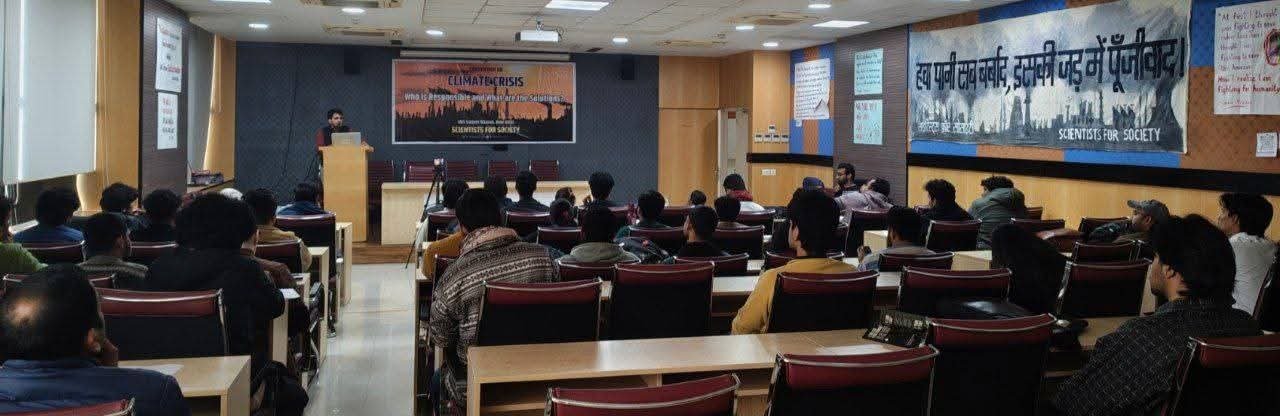
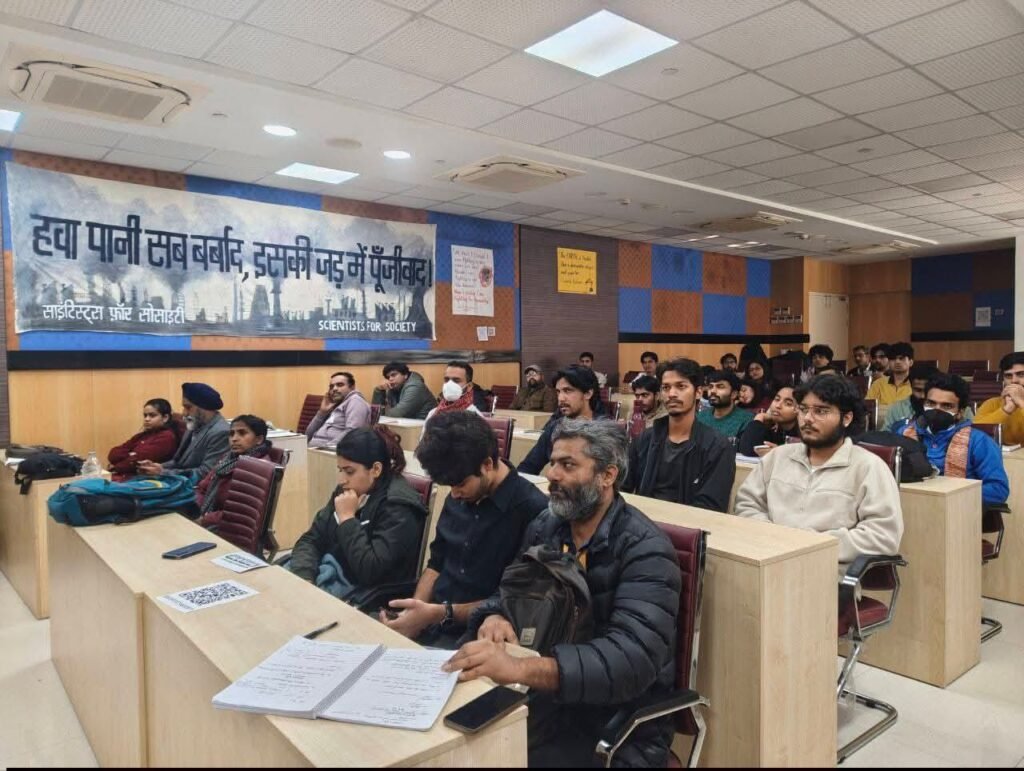
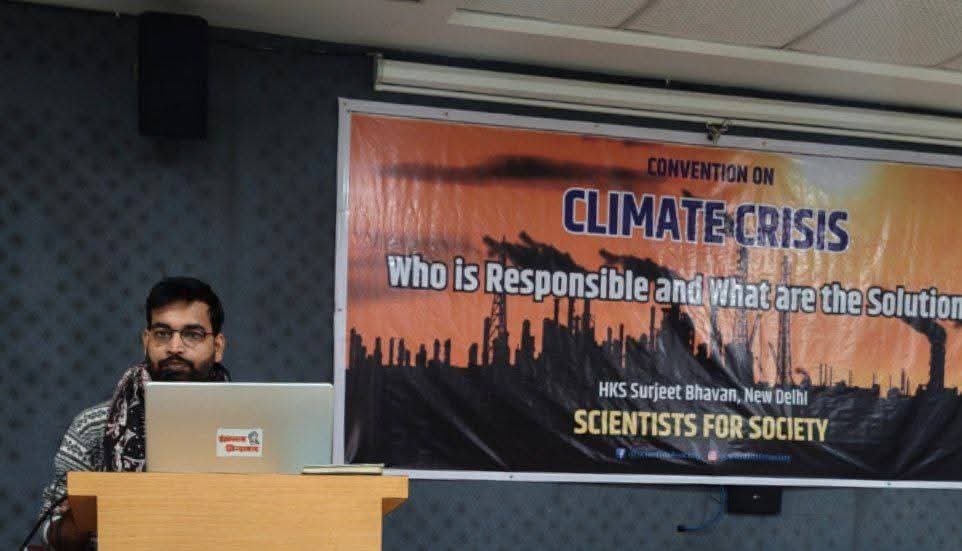
Scientists for Society organized a convention on “Climate crisis, who is responsible and what are the solutions?” at HKS Surjeet Bhavan on December 28. The convention was attended by concerned students, researchers, scientists, activists, and representatives of progressive mass organizations.
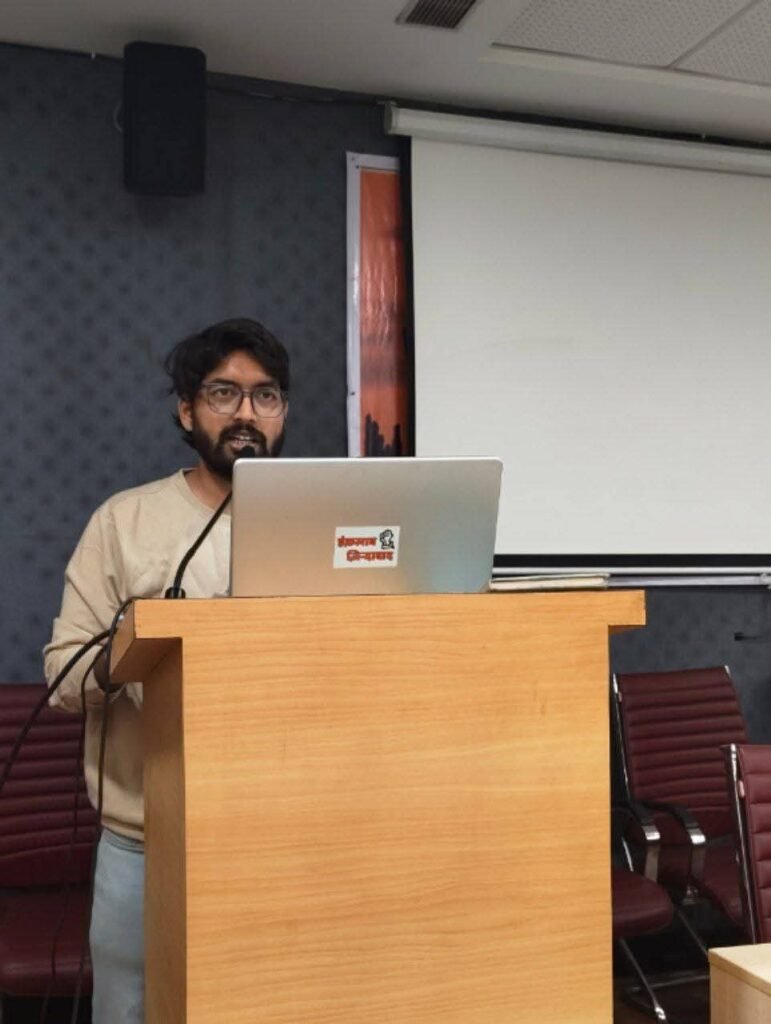
Aditya from Scientists for Society addressed several prevalent myths surrounding pollution, including explanations based on geographical location, population, and technology. These narratives were described as distractions from the core issues, particularly the year-round operation of industries in the Delhi-NCR region without adequate regulation or restrictions. Vehicular emissions and construction activity were also identified as major contributors. The presentation emphasized that the climate crisis is not confined to Delhi alone, as reflected in recurrent cloudbursts in the Himalayas and large-scale deforestation across regions such as the Aravallis, the North East, Andaman, Hasdeo, and Kerala. It was further argued that while the challenges may appear difficult, many are reversible, but not within the framework of the existing capitalist system.
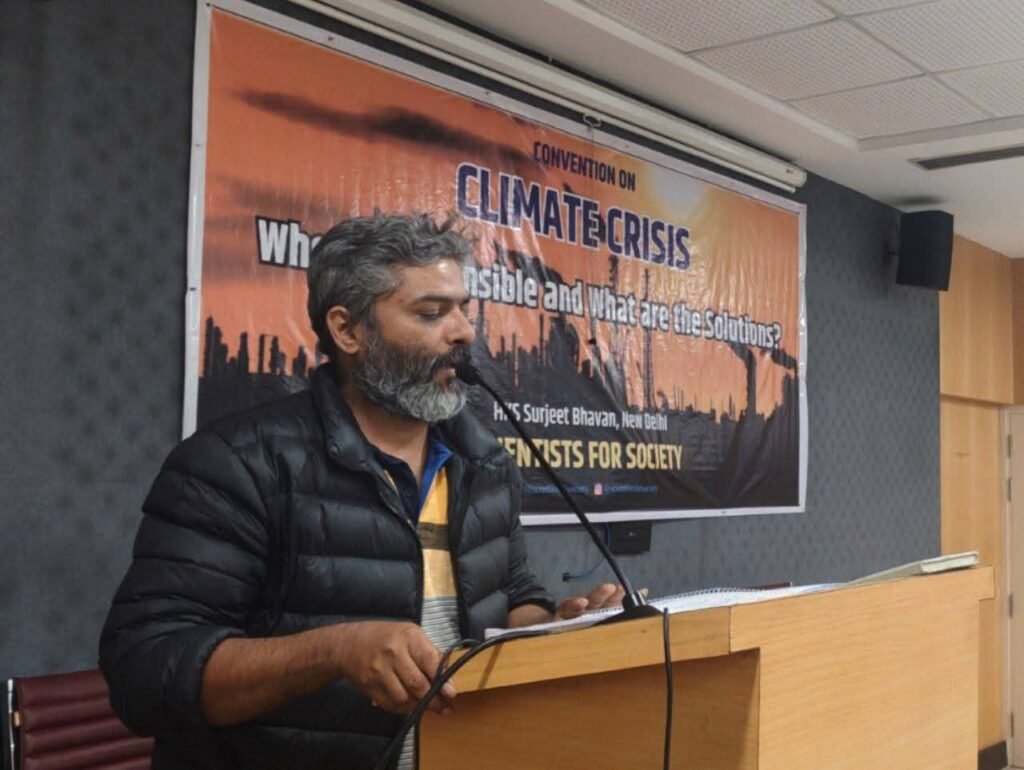
Dr. Sunny Singh from Scientists for Society discussed the systematic destruction of nature at the global level, identifying the capitalist mode of production as the central cause. Reference was made to the scientific characterization of the present era as the Anthropocene, with particular attention to the crossing of planetary boundaries such as climate stability, soil health, and biodiversity. The speaker argued that countering this destruction requires a struggle for a human-centric social system. The failure of Conferences of Parties (COPs) and other global initiatives was highlighted, with criticism directed at their reliance on technocratic and market-oriented approaches such as carbon markets, electric vehicles, and the Green New Deal, or tendencies to blame humanity and technology while advocating a vague “return to nature.” The argument stressed that discussions on climate change remain inadequate if capitalism and class struggle are excluded. The role of monopoly capital and inter-imperialist conflicts in ecological destruction, including in regions such as Gaza and Ukraine, was also emphasized. The limitations of certain eco-socialist proposals were noted, particularly the tendency to remain within Keynesian economic frameworks while hesitating to advance toward socialism.
Kesaw from Disha Students’ Organization drew attention to the daily exposure of students to severe pollution due to inadequate hostel facilities and the absence of affordable public transport support, forcing long commutes by bus. The health consequences of such exposure were also highlighted. He also pointed to the irony that students demanding clean air at India Gate were arrested and labelled as “anti-national”, whereas the release of individuals convicted of grave crimes by the state. The address concluded by referring to the growing scale of countrywide and international protests on these issues.
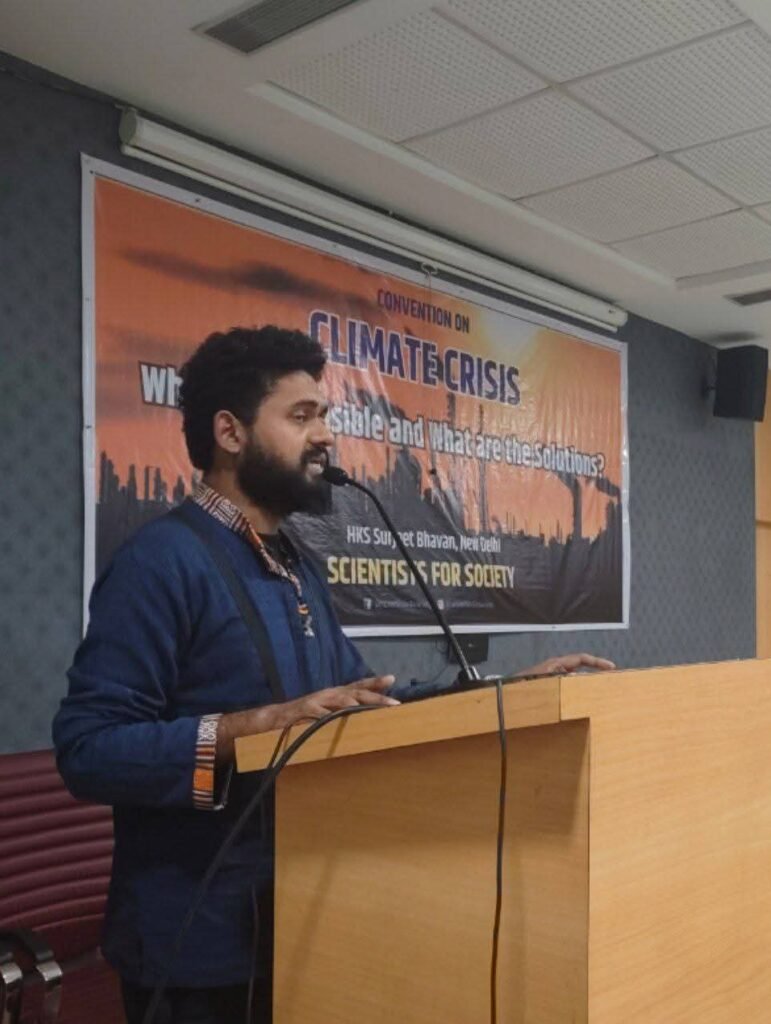
Vishal from Naujawan Bharat Sabha highlighted stark inequalities within Delhi itself. Central areas were described as having relatively better green cover and offices equipped with air purifiers, while peripheral regions present a contrasting reality. These peripheral zones host major industrial activities and experience the worst levels of air pollution. Residents in these areas face severe hardships, lacking access to air purifiers and, in many cases, even basic protective equipment such as N95 masks for entire families. These regions were described as among the most ignored and isolated, despite bearing the heaviest burden of pollution. Vishal asserted that genuine solutions require collective action involving citizens, students, and intellectuals. It was emphasized that neither political parties nor non-governmental organizations have demonstrated the capacity or willingness to address the crisis, making a sustained mass campaign essential.
Many participants actively engaged in post-presentation discussions on various dimensions of air pollution and the broader climate crisis. A charter of demands was read out and unanimously adopted by those present. Scientists for Society, along with other participants, committed to continuing efforts to keep the issue alive until a meaningful and lasting solution is achieved.

